„Ci, co najbardziej zasługują na pochwały, najlepiej znoszą krytykę.”
Źródło: „Przekrój”, tom 2, Krakowskie Wydawnictwo Prasowe, 1976, s. 10.
Alexander Pope – czołowy poeta angielskiego Oświecenia, zdeklarowany katolik i torys.
Za właściwy debiut literacki Alexandra Pope'a uważa się publikację poematu Wiersz o krytyce, wzorowanego na kodeksie XVIII-wiecznego klasycyzmu Nicolasa Boileau. Od tego czasu jego twórczość − choć jednolita stylistycznie i spójna światopoglądowo − obejmowała całą różnorodność znanych wówczas gatunków literackich oraz kręgów zainteresowań, od satyry oraz poematu heroikomicznego, którego był przedstawicielem, aż do poważnych poematów filozoficznych krzewiących wiarę w dobroć Boga, a nawet pieśni religijnych.
Alexander Pope od przeszło dwustu lat pozostaje na językach krytyki literackiej jako bohater jednego z największych sporów w historii poezji angielskiej, w której niektóre stronnictwa obniżają rangę jego twórczości, a nawet odbierają mu miano poety. Jednocześnie, jako aforysta, jest obok Williama Szekspira najczęściej cytowanym Wyspiarzem. Do dziś uważa się go również za największego poetę swojego pokolenia, pierwszego mistrza angielskiej satyry oraz najwybitniejszego twórcę poematu heroikomicznego.
Choć Pope uosabiał wszystkie cechy angielskiego Oświecenia, a więc epoki niejako przestarzałej w ujęciu rodzącego się romantyzmu, jego dzieła odegrały ważną rolę w twórczości takich poetów, jak George Gordon Byron czy Adam Mickiewicz, a współcześni badacze coraz częściej widzą w nich niejasny zwrot w stronę „rewolucji romantycznej”. Wątek ten stanowi jeszcze jedno pole sporu o poezję Pope'a.
Dewizą Alexandra Pope'a było powiedzenie: „Wszystko co jest, jest właściwe”. Wikipedia
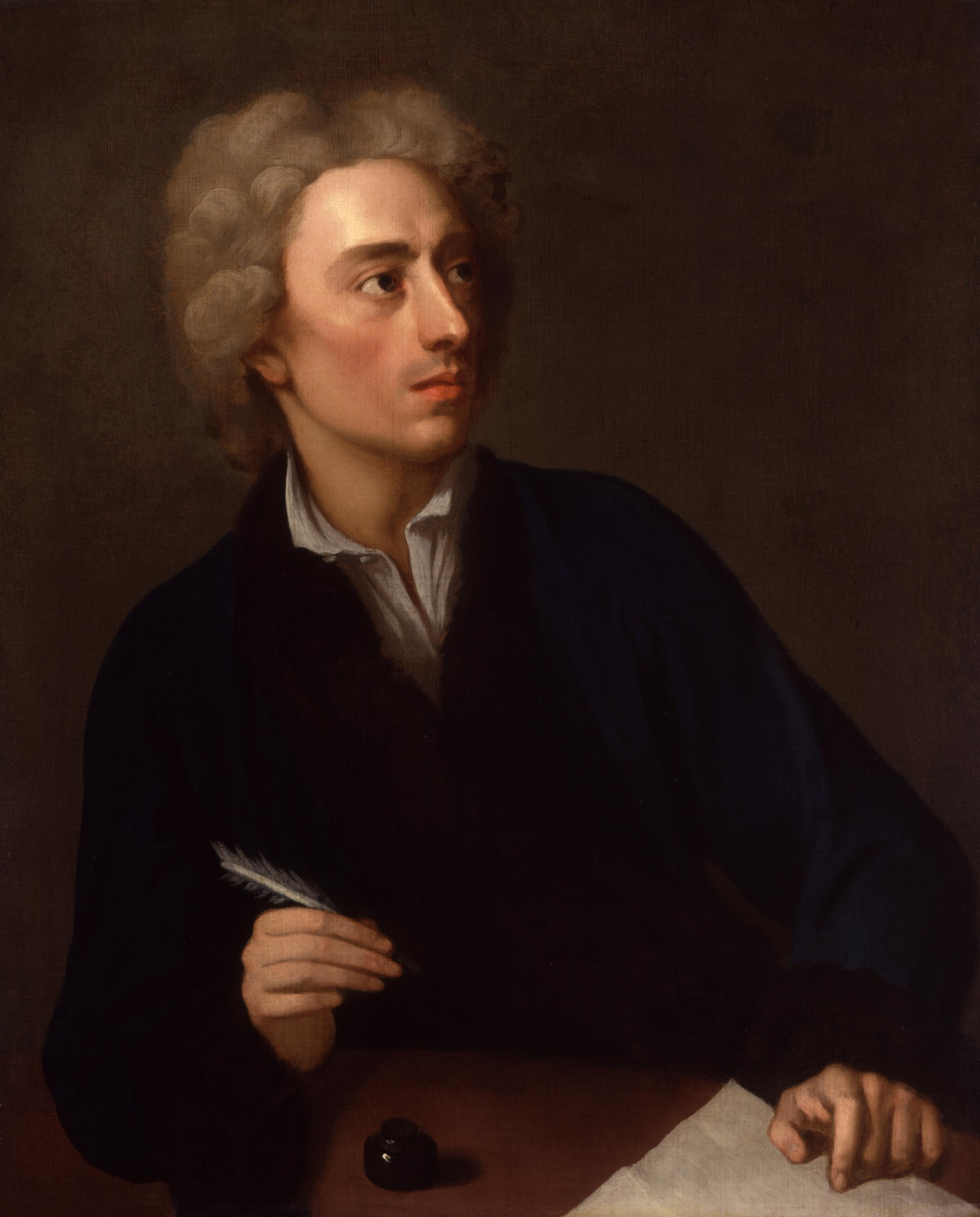
„Ci, co najbardziej zasługują na pochwały, najlepiej znoszą krytykę.”
Źródło: „Przekrój”, tom 2, Krakowskie Wydawnictwo Prasowe, 1976, s. 10.
„Choć rankiem chwalą to, co potępiają w nocy,
mówią, że ostatnie tylko zdanie w mocy.”
Źródło: Eleanor Herman, W łóżku z królem. 500 lat cudzołóstwa, władzy, rywalizacji i zemsty. Historia metres królewskich, tłum. Katarzyna Kołaczkowska, Wydawnictwo Jeden Świat, Warszawa 2006, ISBN 8389632268, s. 155.
How happy is the blameless vestal’s lot?
The world forgetting, by the world forgot.
Eternal sunshine of the spotless mind.
Each prayer accepted and each wish resigned. (ang.)
„Duma, nigdy niezawodząca przywara głupców.”
Pride, the never-failing vice of fools. (ang.)
Źródło: O krytyce, część II
„Ten, kto szuka czegoś bezbłędnego, wszędzie myśli o tym, czego nie było, nie ma i nie będzie.”
Źródło: „Przekrój”, wydania 1–13, Krakowskie Wydawnictwo Prasowe, 2000, s. 28.
„Błądzić to rzecz ludzka, przebaczać – boska.”
Źródło: „Przekrój”, wydania 1–13, Krakowskie Wydawnictwo Prasowe, 2000, s. 28.
Alexander Pope książka Windsor Forest
Źródło: Windsor Forest (1713), Line 131.
Statement of 1739, as quoted in Observations, Anecdotes, and Characters, of Books and Men (1820) by Joseph Spence, p. 286.
Variant reported in Familiar Short Sayings of Great Men (1887) by Samuel Arthur Bent, p. 451: "True politeness consists in being easy one's self, and in making every one about one as easy as one can."
Attributed
In his letter to Atterbury Bishop of Rochester. Sept. 23. 1720.
Epilogue to Rowe's Jane Shore (1714).
“This casket India's glowing gems unlocks
And all Arabia breathes from yonder box.”
Alexander Pope The Rape of the Lock
Canto I, line 134.
The Rape of the Lock (1712, revised 1714 and 1717)
“The hungry judges soon the sentence sign,
And wretches hang that jurymen may dine.”
Alexander Pope The Rape of the Lock
Canto III, line 21.
The Rape of the Lock (1712, revised 1714 and 1717)
“Know, sense, like charity, begins at home.”
"Umbra", first published in Miscellanies (1727).
“Luxurious lobster-nights, farewell,
For sober, studious days!”
"A Farewell to London" (1715), st. 1.
Letter, written in collaboration with Dr John Arbuthnot, to Jonathan Swift (December 5, 1732) upon the death of John Gay.
"Sappho to Phaon", line 52 (1712).
Alexander Pope książka Windsor Forest
Źródło: Windsor Forest (1713), Line 11.
“Unblemish'd let me live, or die unknown;
O grant an honest fame, or grant me none!”
Closing line.
The Temple of Fame (1711)
“Now lap-dogs give themselves the rousing shake,
And sleepless lovers, just at twelve, awake.”
Alexander Pope The Rape of the Lock
Canto I, line 15.
The Rape of the Lock (1712, revised 1714 and 1717)
Źródło: The Temple of Fame (1711), Lines 449-458.
Letter to Edward Blount (27 August 1714); a similar expression in "Thoughts on Various Subjects" in Swift's Miscellanies (1727): Party is the madness of many, for the gain of a few.
“A god without dominion, providence, and final causes, is nothing else but Fate and Nature.”
Isaac Newton: Principia Mathematica (1687); Rules of Reasoning in Philosophy, Rule IV.
Misattributed
“On her white breast a sparkling cross she wore
Which Jews might kiss, and infidels adore.”
Alexander Pope The Rape of the Lock
Canto II, line 7.
The Rape of the Lock (1712, revised 1714 and 1717)
As quoted in Anecdotes, Observations, and Characters, of Books and Men (1820) by Joseph Spence [published from the original papers; with notes, and a life of the author, by Samuel Weller Singer]; "Spence's Anecdotes", Section IV. pp. 134–136.
Attributed
Źródło: The Works of Mr. Alexander Pope (1717), Elegy to the Memory of an Unfortunate Lady, Line 51.
“Let opening roses knotted oaks adorn,
And liquid amber drop from every thorn.”
Alexander Pope Pastorals
Autumn, line 36.
Pastorals (1709)
“On all the line a sudden vengeance waits,
And frequent hearses shall besiege your gates.”
Źródło: The Works of Mr. Alexander Pope (1717), Elegy to the Memory of an Unfortunate Lady, Line 37.
“For he lives twice who can at once employ
The present well, and e'en the past enjoy.”
Imitation of Martial, reported in Mr. Pope's Literary Correspondence (1737), Vol. V, p. 232; The Poems of Alexander Pope, ed. John Butt, sixth edition (Yale University Press, 1970), p. 117. Compare: "Ampliat ætatis spatium sibi vir bonus; hoc est Vivere bis vita posse priore frui" (Translated: "The good man prolongs his life; to be able to enjoy one's past life is to live twice"), Martial, X, 237.; "Thus would I double my life's fading space; For he that runs it well, runs twice his race", Abraham Cowley, Discourse XI, Of Myself, stanza xi.


