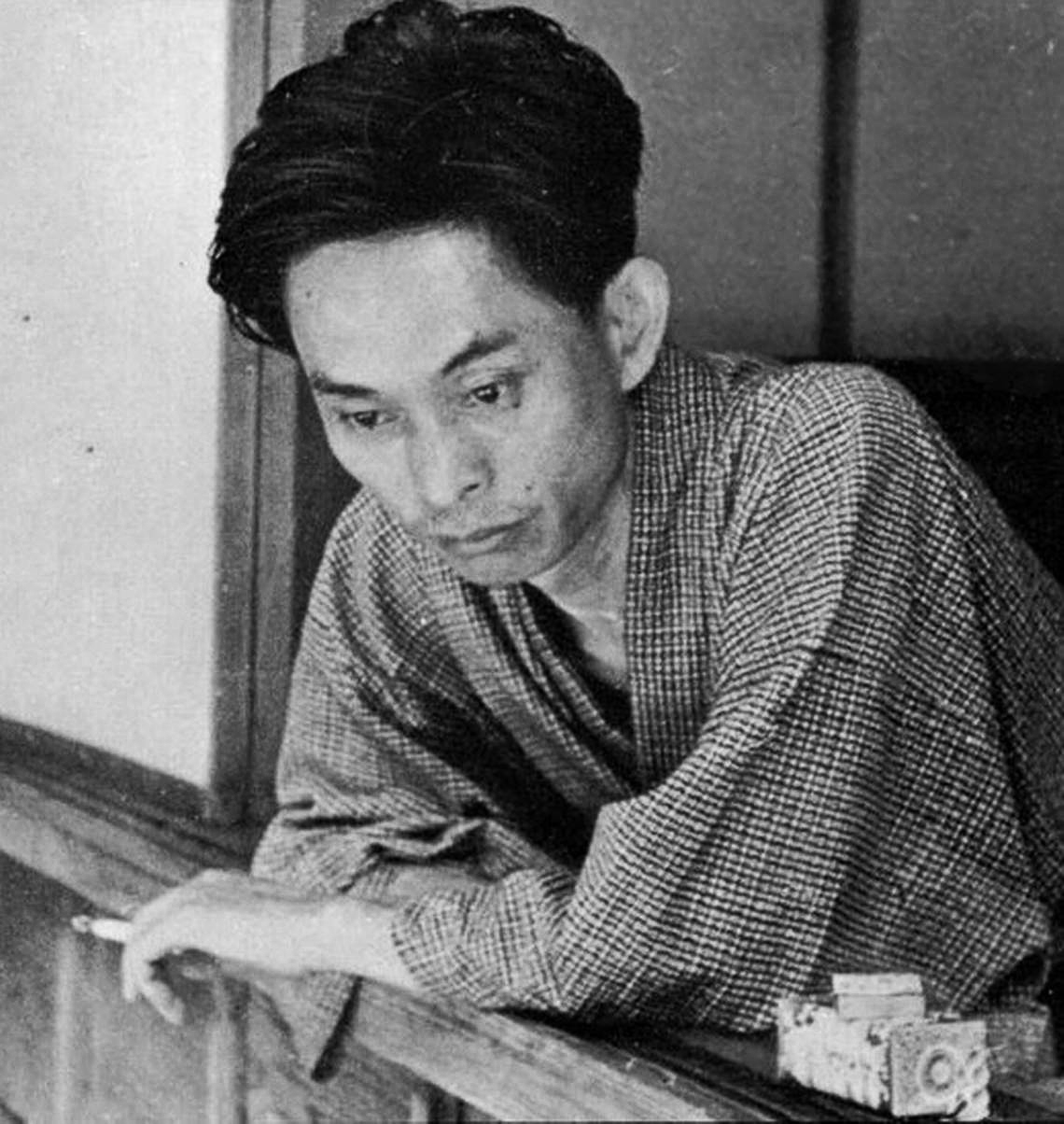
Yasunari Kawabata cytaty
strona 2

Yasunari Kawabata ur. 14 czerwca 1899 w Osace, zm. 16 kwietnia 1972 w Zushi – prozaik i poeta japoński. Laureat Nagrody Nobla w dziedzinie literatury za rok 1968 jako pierwszy pisarz japoński.

Urodził się w Osace w bogatej i wykształconej rodzinie. Jego rodzice zmarli, kiedy miał 3 lata, parę lat później zmarła jego babcia, a tuż po niej jedyna siostra, co wywarło wielkie piętno na jego życiu i twórczości.

W latach 1920–1924 studiował na Cesarskim Uniwersytecie w Tokio. Poznał tam Kana Kikuchi , który zaprosił go do pracy w redakcji Bungei Shunjū, a po studiach w 1924 r. wraz z Riichi Yokomitsu założył pismo Bungei Jidai. Stało się ono ośrodkiem nowej orientacji literackiej, nazwanej neosensualizmem.

Pierwszy sukces pisarski odniósł w 1925 r., autobiograficznym opowiadaniem Izu no odoriko .

W 1931 r. ożenił się i zamieszkał w Tokio.

W czasie II wojny światowej zajmował się pracą naukową i podróżował po Mandżurii.

W latach 1948-1965 był prezesem japońskiego PEN Clubu. Wtedy też opublikował swoje najsłynniejsze powieści – Tysiąc żurawi i Głos góry , które przyniosły mu w 1959 r. prestiżowy Medal Goethego we Frankfurcie, a w 1968 r. Nagrodę Nobla w dziedzinie literatury.

Pod koniec życia był bardzo schorowany. W 1972 r. – dwa lata po samobójstwie swojego przyjaciela, Yukio Mishimy – również popełnił samobójstwo.


✵ 11. Czerwiec 1899 – 16. Kwiecień 1972
Yasunari Kawabata Fotografia
Yasunari Kawabata: 55 cytatów0 Polubień

Yasunari Kawabata słynne cytaty

„Niewykluczone, że kryteria zła, zatarte przez zwyczaje i porządki społeczne, uległy stępieniu.”

Yasunari Kawabata

przemyślenia starca Eguchiego.
Śpiące piękności

Yasunari Kawabata Cytaty o śmierci

„Stary człowiek to sąsiad śmierci.”

Yasunari Kawabata

Śpiące piękności

„Śmierć przekracza wszelkie rozumienie.”

Yasunari Kawabata

Tysiąc żurawi

Yasunari Kawabata: Cytaty po angielsku

“The train came out of the long border tunnel — and there was the snow country. The night had turned white.”

Yasunari Kawabata książka Snow Country

First lines (as translated by Edward Seidensticker).
Snow Country (1948)

“"Among those who give thoughts to things, is there one who does not think of suicide?" With me was the knowledge that that fellow Ikkyu twice contemplated suicide. I have "that fellow", because the priest Ikkyu is known even to children as a most amusing person, and because anecdotes about his limitlessly eccentric behavior have come down to us in ample numbers. It is said of him that children climbed his knee to stroke his beard, that wild birds took feed from his hand. It would seem from all this that he was the ultimate in mindlessness, that he was an approachable and gentle sort of priest. As a matter of fact he was the most severe and profound of Zen priests. Said to have been the son of an emperor, he entered a temple at the age of six, and early showed his genius as a poetic prodigy. At the same time he was troubled with the deepest of doubts about religion and life. "If there is a god, let him help me. If there is none, let me throw myself to the bottom of the lake and become food for fishes." Leaving behind these words he sought to throw himself into a lake, but was held back. … He gave his collected poetry the title "Collection of the Roiling Clouds", and himself used the expression "Roiling Clouds" as a pen name. In his collection and its successor are poems quite without parallel in the Chinese and especially the Zen poetry of the Japanese middle ages, erotic poems and poems about the secrets of the bedchamber that leave one in utter astonishment. He sought, by eating fish and drinking spirits and having commerce with women, to go beyond the rules and proscriptions of the Zen of his day, and to seek liberation from them, and thus, turning against established religious forms, he sought in the pursuit of Zen the revival and affirmation of the essence of life, of human existence, in a day civil war and moral collapse.”

Yasunari Kawabata

Japan, the Beautiful and Myself (1969)

Podobni autorzy

Pablo Neruda Fotografia
Pablo Neruda6
poeta chilijski, noblista None
Mishima Yukio Fotografia
Mishima Yukio4
japoński pisarz i działacz polityczny None
Gabriele d'Annunzio Fotografia
Gabriele d'Annunzio8
włoski poeta, dramaturg i prozaik None
Borys Pasternak Fotografia
Borys Pasternak71
rosyjski poeta i prozaik None
Elias Canetti Fotografia
Elias Canetti58
poeta i dramaturg austriacki, noblista None
Hermann Hesse Fotografia
Hermann Hesse40
prozaik, poeta i eseista niemiecki, noblista None
Thomas Mann Fotografia
Thomas Mann57
prozaik niemiecki, noblista None
Paul Valéry Fotografia
Paul Valéry16
poeta francuski None
Haruki Murakami Fotografia
Haruki Murakami81
pisarz japoński None
Rudyard Kipling Fotografia
Rudyard Kipling32
angielski pisarz, poeta i prozaik None