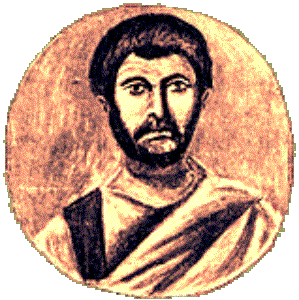
Terencjusz słynne cytaty
„Znam naturę kobiet: kiedy chcesz, odmawiają, kiedy nie chcesz, pragną.”
Novi ingenium mulierum: nolunt ubi velis, ubi nolis cupiunt ultro (łac.)
Eunuch
Źródło: 812
Quot homines tot sententiae: suo' quoique mos. (łac.)
Phormio
Źródło: 454
Terencjusz cytaty
„Nie rób tego, co już jest zrobione.”
Actum ne agas. (łac.)
Phormio
Źródło: II, III, 72
„Ustępliwość przysparza przyjaciół, prawda nienawiść rodzi.”
Inne tłumaczenia: Schlebianie przysparza przyjaciół, prawda wrogów. / Prawda rodzi nienawiść, ustępliwość przyjaciół.
Obsequium amicos, veritas odium parit. (łac.)
Andria
Źródło: 68
„Kłótnie kochanków umacniają ich miłość.”
Amantium irae amoris integratio est. (łac.)
Andria
Źródło: 555
„Szczyt prawa jest często szczytem zła.”
Terencjusz Heauton Timorumenos
Ius summum saepe summast malitia. (łac.)
Źródło: Heauton Timorumenos, 796
Fortis fortuna adiuvat. (łac.)
Inne tłumaczenia: Dzielnych los wspomaga. / Szczęście sprzyja silnym. / Śmiałym los sprzyja.
Parafraza: Do odważnych świat należy.
Phormio
Źródło: 203
„Człowiekiem jestem; nic, co ludzkie, nie jest mi obce.”
Homo sum; humani nil a me alienum puto. (łac.)
Heauton timorumenos
Źródło: I, I, 25
„Gdy dwaj robią to samo, to nie jest to samo.”
Si duo faciunt idem, non est idem. (łac.)
Bracia (165 p.n.e.)
Źródło: V, 3, 37
Heauton timorumenos
Źródło: I, 3, 21
„Wszechświat, wieczność trzech dni!”
Heu! universum triduum! (łac.)
Znaczenie: Niestety! Całe trzy dni oczekiwania!
Eunuch
Źródło: II, I, 17
Dictum, factum.
Andria
Źródło: 2, 3, 7; także Samodręk, 5, 1, 31
„Trzeba się zająć serio robotą.”
Ad rastros seriores redit.
Heauton timorumenos
Źródło: 51, 58
Potior est, qui prior est. (łac.)
Phormio
Źródło: II, 3
Davus sum, non Oedipus. (łac.)
Znaczenie: jestem prostym człowiekiem, nie umiem rozwiązywać zagadek.
Źródło: Dziewczyna z Andros, 1, 2, 23
„Opis: pol. odpowiednik: O wilku mowa!”
Wilk w bajce!
Lupus in fabula! (łac.)
Bracia (165 p.n.e.)
Źródło: 537
Terencjusz: Cytaty po angielsku
“So many men, so many opinions: to each his own way.”
Quot homines tot sententiae: suus cuique mos.
Terence Phormio
Act II, scene 4, line 14 (454).
Variant translations:
There are as many opinions as there are people: each has his own view.
There are as many opinions as there are people: each has his own correct way.
There are as many opinions as there are people: everyone has their own way of doing things.
Phormio
“It is a maxim of old that among themselves all things are common to friends.”
Terence Adelphoe
Act V, scene 3, line 18 (803).
Adelphoe (The Brothers)
“I only wish I may see your head stroked down with a slipper.”
Terence Eunuchus
Act V, scene 7, 4, line 1028.
Eunuchus
Terence Adelphoe
Act III, scene 3, line 61 (415).
Adelphoe (The Brothers)
“What now if the sky were to fall?”
Terence Heauton Timorumenos
Act IV, scene 3, line 41 (719).
Heauton Timorumenos (The Self-Tormentor)
“Moderation in all things.”
Ne quid nimis.
Terence Andria
Not anything in excess, a translation from the Greek μηδὲν ἄγαν. "Nothing in excess" as inscribed on the Temple of Apollo at Delphi.
Źródło: Andria (The Lady of Andros), Line 61.
Terence Eunuchus
Act II, scene 2, 1, line 232.
Eunuchus
“Look you, I am the most concerned in my own interests.”
Terence Andria
Act IV, scene 1, line 12 (636).
Andria (The Lady of Andros)
Terence Andria
Act II, scene 5, line 15 (426).
Andria (The Lady of Andros)
“Many a time,… from a bad beginning great friendships have sprung up.”
Terence Eunuchus
Act V, scene 2, 34, line 873.
Eunuchus
“Some might, but not you.”
Aliis si licet, tibi non licet.
Terence Heauton Timorumenos
Act IV, scene 5, line 49 (797).
Variant translations:
Though others were at liberty, you are not at liberty.
Even though it is permitted for others, it isn't permitted for you.
Heauton Timorumenos (The Self-Tormentor)
Terence Eunuchus
Act II, scene 3, 28, line 319.
Eunuchus
“Hence these tears.”
Hinc illae lacrimae.
Terence Andria
Variant translation: Hence all those tears shed.
Źródło: Andria (The Lady of Andros), Line 126.
“Time removes distress.”
Diem adimere aegritudinem hominibus.
Terence Heauton Timorumenos
Act III, scene 1, line 12 (421).
Variant translations:
Time heal all wounds.
Time assuages sorrow.
Heauton Timorumenos (The Self-Tormentor)