To tłumaczenie czeka na recenzję. Czy to jest poprawne?
Wariant: Spróbowałem. Poniosłem porażkę. Nieważne. Spróbuję jeszcze raz. Znowu poniosę porażkę. Tym razem lepszą/mniejszą.
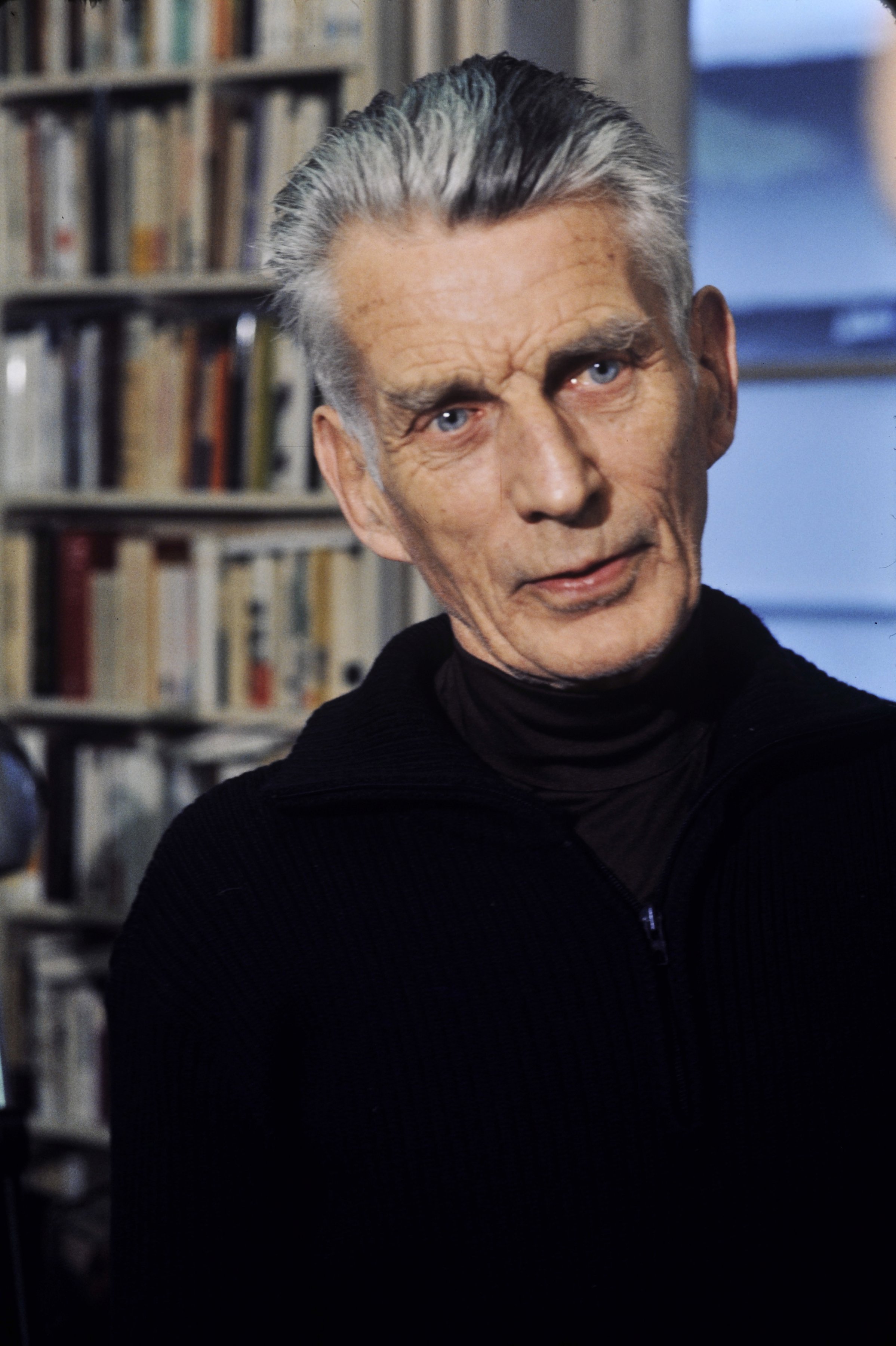
Samuel Barclay Beckett – irlandzki dramaturg, prozaik i eseista, tworzący początkowo w języku angielskim, a od 1945 – francuskim. Jeden z twórców teatru absurdu. Jego powieści są pozbawiane tradycyjnej narracji, utrzymane w klimacie skrajnego pesymizmu i podkreślające bezsens ludzkiej egzystencji. Wikipedia
Wariant: Spróbowałem. Poniosłem porażkę. Nieważne. Spróbuję jeszcze raz. Znowu poniosę porażkę. Tym razem lepszą/mniejszą.
„Wszyscy rodzimy się szaleni. Niektórzy już tacy pozostają.”
Samuel Beckett Czekając na Godota
Czekając na Godota
Źródło: akt II, tłum. Antoni Libera
„Tu leży ten. co zwiał z tak daleka,
że nie wcześniej niż teraz stąd ucieka.”
Ci-gît qui y échappa tant. Qu’il n’en échappe que maintenant. (fr.)
Źródło: Pierwsza miłość, tłum. Maria Ziębina
„z każdą inaczej i tak samo
z każdą brak miłości jest inny
z każdą brak miłości jest ten sam”
Źródło: przychodzą… z cyklu Wiersze 1937–1939, tłum. Julia Hartwig
„Jeden z łotrów został zbawiony. Przyzwoity procent.”
Samuel Beckett Czekając na Godota
Czekając na Godota
Źródło: akt I, tłum. Antoni Libera
„(…) w tym miejscu i w danym momencie ludzkość cała to my, czy nam się podoba, czy nie.”
Samuel Beckett Czekając na Godota
Czekając na Godota
Źródło: akt II, tłum. Antoni Libera
Samuel Beckett książka Molloy
For it does not beat, not my heart, I’d have to refer you to hydraulics for the squelch that old pump makes. (ang.) <br class="br">Źródło: Molloy http://books.google.pl/books?id=sglVtT7_nH4C&printsec=frontcover&source=gbs_ge_summary_r&cad=0#v=onepage&q&f=false, Grove Press, 1994, s. 121.
„Musi być pan bardzo zmęczony.”
odpowiedź na zdanie „Czytam pana dzieła przez całe życie”.
Źródło: Mel Gussow, Conversations With and About Beckett
„Pierw taniec, następnie myśl. Taki jest naturalny porządek.”
Dance first. Think later. It’s the natural order. (ang.)
„Oto właśnie cały człowiek, winę nogi zwala na but.”
Samuel Beckett Czekając na Godota
Czekając na Godota
Źródło: akt I, tłum. Antoni Libera
„Każde słowo jest jak niepotrzebna plama na ciszy i nicości.”
Every word is like an unnecessary stain on silence and nothingness. (ang.) <br class="br">Źródło: Beckett wins a Nobel prize http://books.google.pl/books?id=5FAEAAAAMBAJ&printsec=frontcover&source=gbs_ge_summary_r&cad=0#v=onepage&q&f=false [w:] „Life” nr 19, rocznik 67, 7 listopada 1969, s. 93.
Samuel Beckett książka Three Dialogues
Also quoted in "Conversations with Samuel Beckett and Bram van Velde by Charles Juliet" by Nicholas Lezard, in The Guardian (23 January 2010) http://www.theguardian.com/books/2010/jan/23/conversations-samuel-beckett-van-velde <br class="br">Three Dialogues (1949)
“I grow gnomic. It is the last phase.”
The Letters of Samuel Becket 1929–1940 (2009), p. 209
The Calmative (1946)
"Gnome" in Dublin Magazine Vol. 9 (1934), p. 8
Samuel Beckett książka Watt
Part III, p. 201
Watt (1943)
“To him who has nothing it is forbidden not to relish filth.”
Samuel Beckett książka Molloy
Molloy (1951)
Samuel Beckett książka The Unnamable
The Unnamable (1954)
“Dear incomprehension, it’s thanks to you I’ll be myself, in the end.”
Samuel Beckett książka The Unnamable
The Unnamable (1954)
Samuel Beckett książka The Unnamable
The Unnamable (1954)
Samuel Beckett książka The Unnamable
The Unnamable (1954)
Samuel Beckett książka Molloy
Molloy (1951)
Said about Waiting for Godot, from Jonathan Croall, The Coming of Godot (2005) ISBN 1-840-02595-6, p. 91
Tom F. Driver, "Beckett by the Madeleine" (1961), Columbia University Forum 4 (Summer 1961): 21-25; it later appeared in Stanley A. Clayes, ed., Drama and Discussion (1967), pp. 604-7, as quoted in "Rick On Theater" 25 January 2018 http://rickontheater.blogspot.com/2018/01/beckett-by-madeleine.html.
Samuel Beckett A Piece of Monologue
A Piece of Monologue (1979)


