John Milton książka Raj utracony
Raj utracony (1667)
Źródło: księga II
John Milton – angielski poeta i pisarz, autor poematu Raj utracony .
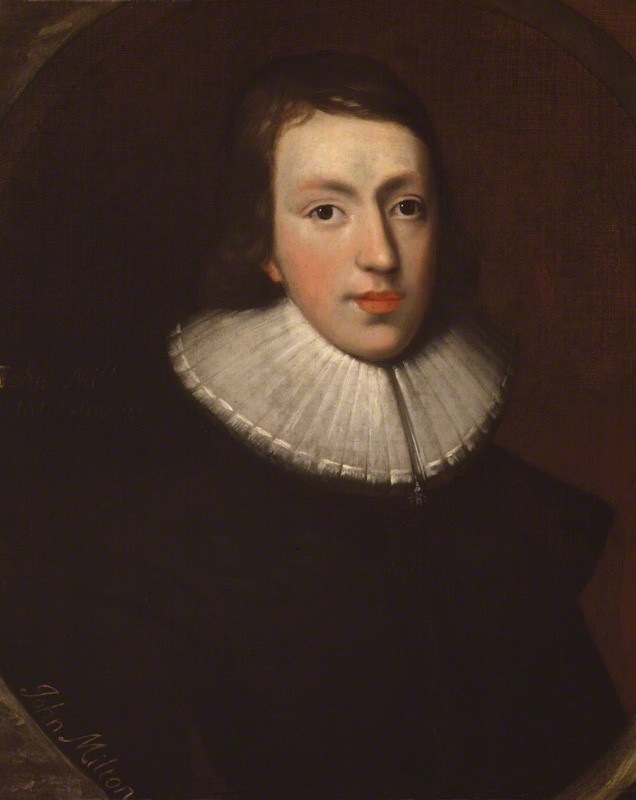
John Milton książka Raj utracony
Raj utracony (1667)
Źródło: księga II
„Umysł jest niezależną jednostką i sam może sprawić, że niebo stanie się Piekłem, a piekło Niebem.”
Źródło: Małgorzata Kronenberger, Muzykoterapia. Podstawy teoretyczne do zastosowania muzykoterapii w profilaktyce stresu, Mediatour, Szczecin 2003, ISBN 8391200620.
John Milton książka Raj utracony
Raj utracony (1667)
Źródło: księga III
Źródło: Druga obrona (ang. Defense of the English People), 1654, tłum.J. Zychowicz.
„Lepiej być panem w piekle, niźli sługą w niebiosach”
John Milton książka Raj utracony
Tis better to reign in Hell, than to serve in Heaven. (ang.)
Raj utracony (1667)
John Milton książka Raj utracony
Raj utracony (1667)
Źródło: księga II
Źródło: L'Allegro (1631), Line 127; comparable to: "Wisdom married to immortal verse", William Wordsworth, The Excursion, book vii
“Let not England forget her precedence of teaching nations how to live.”
The Doctrine and Discipline of Divorce Preface: "TO THE PARLAMENT OF ENGLAND" https://www.dartmouth.edu/~milton/reading_room/ddd/parliament/text.shtml (1643)
“Of which all Europe rings from side to side.”
To Cyriack Skinner, upon His Blindness (c. 1655)
Sonnet VIII: When the Assault was Intended to the City
Źródło: Il Penseroso (1631), Line 65
John Milton On the Morning of Christ's Nativity
Hymn, stanza 19, line 173
On the Morning of Christ's Nativity (1629)
“Beholding the bright countenance of truth in the quiet and still air of delightful studies.”
The Reason of Church Government, Introduction, Book ii
“He knew
Himself to sing, and build the lofty rhyme.”
John Milton Lycidas
Źródło: Lycidas (1637), Line 10
John Milton Lycidas
Źródło: Lycidas (1637), Line 166
“And every shepherd tells his tale
Under the hawthorn in the dale.”
Źródło: L'Allegro (1631), Line 67
“The end of learning is to know God, and out of that knowledge to love Him and imitate Him.”
Quote reported in Josiah Hotchkiss Gilbert, Dictionary of Burning Words of Brilliant Writers (1895), p. 364
“Truth is as impossible to be soiled by any outward touch as the sunbeam.”
The Doctrine and Discipline of Divorce (1643), Introduction. Compare: "The sun, which passeth through pollutions and itself remains as pure as before", Francis Bacon, Advancement of Learning, Book ii (1605)
“Time will run back and fetch the Age of Gold.”
John Milton On the Morning of Christ's Nativity
Hymn, stanza 14, line 135
On the Morning of Christ's Nativity (1629)
“Blind mouths! That scarce themselves know how to hold
A sheep-hook.”
John Milton Lycidas
Źródło: Lycidas (1637), Line 119
“O nightingale, that on yon bloomy spray
Warbl'st at eve, when all the woods are still.”
Sonnet, To the Nightingale (c. 1637)
The Doctrine and Discipline of Divorce (1643), Introduction
“No man who knows aught, can be so stupid to deny that all men naturally were born free.”
Tenure of Kings and Magistrates (1649)
Introduction to Paradise Lost Added, 1668
John Milton Lycidas
Źródło: Lycidas (1637), Line 139
“Swinges the scaly horror of his folded tail.”
John Milton On the Morning of Christ's Nativity
Hymn, stanza 18, line 172
On the Morning of Christ's Nativity (1629)
“Lawrence, of virtuous father virtuous son”
To Mr. Lawrence (1656)
“Such as may make thee search the coffers round.”
At a Vacation Exercise. Line 31, reported in Bartlett's Familiar Quotations, 10th ed. (1919)


