„Przebaczaj swoim wrogom, ale nigdy nie zapominaj ich nazwisk.”
Źródło: Wielka księga mądrości, wybór Jacek i Tomasz Ilga
John Fitzgerald Kennedy, „JFK”, „Jack Kennedy”, „Ken” – amerykański polityk, 35. prezydent Stanów Zjednoczonych, zginął w zamachu.
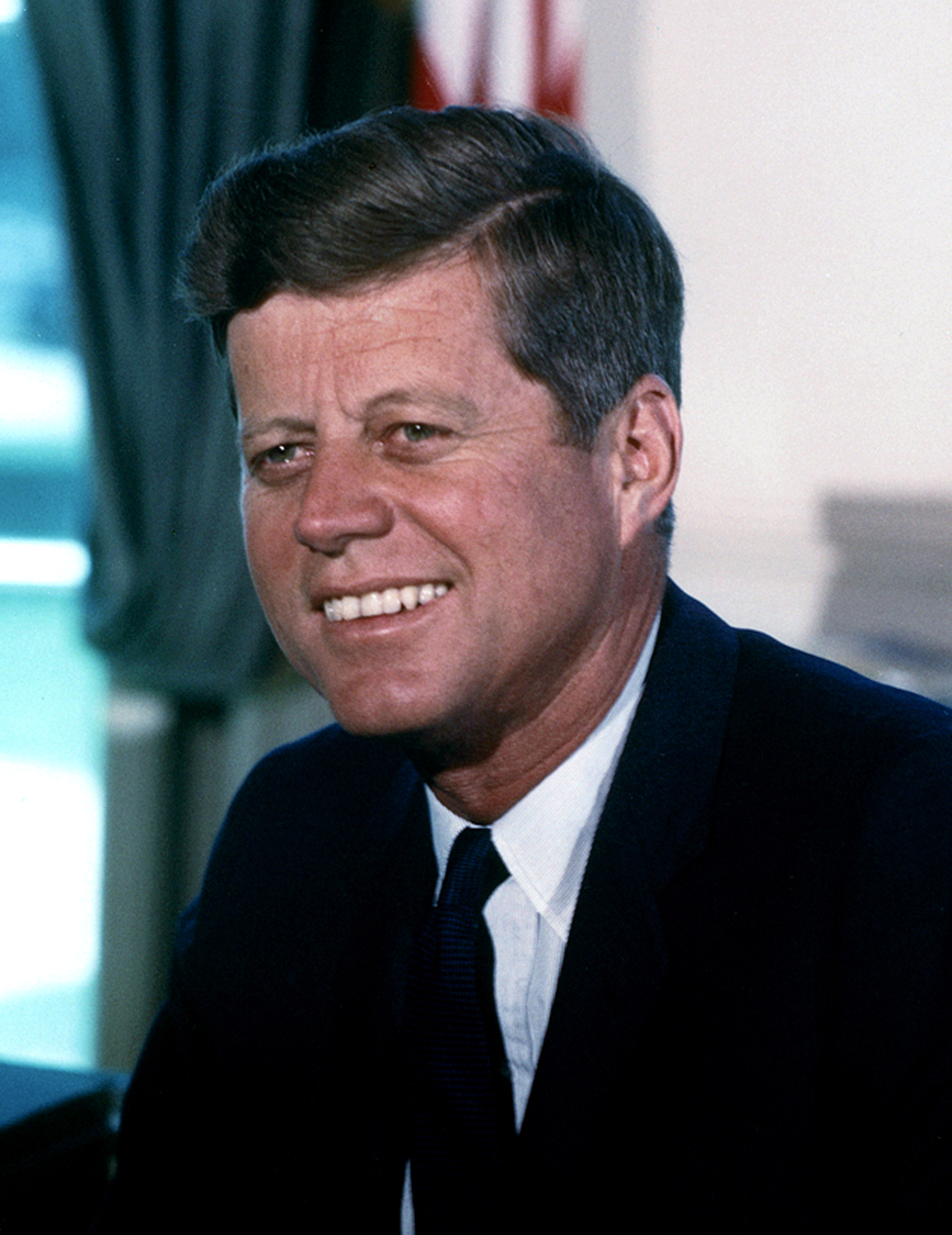
„Przebaczaj swoim wrogom, ale nigdy nie zapominaj ich nazwisk.”
Źródło: Wielka księga mądrości, wybór Jacek i Tomasz Ilga
Źródło: National Archives and Records Administration, cyt. za: Oliver Stone’s Untold History of the United States (2012), tłum. Anna Rajca, Mirosław Filipowicz, odcinek 6
„Nie pytajcie, co kraj może zrobić dla was; pytajcie, co wy możecie zrobić dla kraju.”
Inne tłumaczenie: Nie pytajmy, co może zrobić dla nas ojczyzna. Pytajmy, co my możemy dla niej uczynić.
And so, my fellow Americans: ask not what your country can do for you – ask what you can do for your country. (ang.)
przemówienie inauguracyjne, 20 stycznia 1961
„Nasze problemy zostały stworzone przez ludzi i mogą zostać przez ludzi rozwiązane.”
Our problems are manmade – therefore, they can be solved by man. (ang.)
przemówienie na The American University, Waszyngton, 10 czerwca 1963
25 maja 1961.
Źródło: Gerard Degroot, Byle nie wyorbitować, „The Daily Telegraph”, tłum. „Forum”, 11 kwietnia 2011.
John Fitzgerald Kennedy książka Ich bin ein Berliner
Ich bin ein Berliner. (niem.)
przemówienie skierowane przeciw ZSRR (budowa muru berlińskiego)
na tajnej naradzie w NASA zwołanej tuż po udanym locie orbitalnym Jurija Gagarina w kwietniu 1961.
Źródło: Gerard Degroot, Byle nie wyorbitować, „The Daily Telegraph”, tłum. „Forum”, 11 kwietnia 2011.
przemówienie z czerwca 1963, wygłoszone przed podpisaniem układu ze Związkiem Radzieckim o ograniczeniu prób nuklearnych.
Źródło: Oliver Stone’s Untold History of the United States (2012), tłum. Anna Rajca, Mirosław Filipowicz, odcinek 6
po zakończonej klęską próbie inwazji na Kubę.
Źródło: Oliver Stone’s Untold History of the United States (2012), tłum. Anna Rajca, Mirosław Filipowicz, odcinek 6
Źródło: Gerard Degroot, Byle nie wyorbitować, „The Daily Telegraph”, tłum. „Forum”, 11 kwietnia 2011.
fragment przemówienia.
Źródło: Oliver Stone’s Untold History of the United States (2012), tłum. Anna Rajca, Mirosław Filipowicz, odcinek 6
Źródło: przemówienie inauguracyjne, 20 stycznia 1961 http://avalon.law.yale.edu/20th_century/kennedy.asp; cyt. za: Avalon Project – Documents in Law, History and Diplomacy, Yale Law School Lillian Goldman Law Library.
All my life I’ve known better than to depend on the experts. How could I have been so stupid, to let them go ahead? (ang.)
po inwazji w Zatoce Świń.
Źródło: Theodore C. Sorensen, Kennedy, 1965
We choose to go to the moon in this decade and do the other things, not because they are easy, but because they are hard, because that goal will serve to organize and measure the best of our energies and skills (…).
przemówienie na Rice University, Houston, 12 września 1962.
gdy spytano go, dlaczego lot na Księżyc jest taki istotny.
Źródło: Gerard Degroot, Byle nie wyorbitować, „The Daily Telegraph”, tłum. „Forum”, 11 kwietnia 2011.
„Mur jest najbardziej oczywistą i widoczną demonstracją fiaska systemu komunistycznego.”
przemówienie skierowane przeciw ZSRR (budowa muru berlińskiego)
1963, Address at Vanderbilt University
"Remarks upon signing the Maternal and Child Health and Mental Retardation Planning Bill (434)" (24 October 1963)]
1963
1963, American University speech
1963, Civil Rights Address
1961, Address at the University of Washington
Address at a White House dinner honoring Nobel Prize winners (29 April 1962), quoted in The White House Diary, at the JFK Library http://www.jfklibrary.org/white%20house%20diary/1962/April/29 <br class="br">1962
Quoted in Bill Adler, "The Presidency," The Wit of President Kennedy (1964).
[JFK was speaking]...To a group of women delegates to the United Nations who had suggested that there might one day be a woman President.
Attributed
1960, Speech to the Greater Houston Ministerial Association
“A wall is a hell of a lot better than a war.”
Upon hearing about the construction of the Berlin Wall, as quoted in "Savage century" in "The Sunday Times (28 May 2006) http://entertainment.timesonline.co.uk/tol/arts_and_entertainment/books/non-fiction/article724547.ece <br class="br">Attributed
1961, UN speech
“The quality and spirit of our own society must justify and support our efforts abroad.”
1963, American University speech
1963, Remarks Intended for Delivery to the Texas Democratic State Committee in the Municipal Auditorium in Austin
Remarks at the United Negro College Fund, Indianapolis, Indiana (12 April 1959) http://www.jfklibrary.org/Research/Research-Aids/Ready-Reference/JFK-Quotations.aspx; Box 902, Senate Speech Files, Pre-Presidential Papers, John F. Kennedy Papers, John F. Kennedy Presidential Library; also in Remarks at Valley Forge Country Club, Pennsylvania (29 October 1960), Box 914, Senate Speech Files, Pre-Presidential Papers, John F. Kennedy Papers, John F. Kennedy Presidential Library <br class="br">Pre-1960
1963, Address at Vanderbilt University
1963, Address at the Free University of Berlin
After visiting such Nazi strongholds as were found in Berchtesgaden and Kehlsteinhaus; Personal diary (1 August 1945); published in Prelude to Leadership (1995)
Pre-1960
“O God, thy sea is so great and my boat is so small.”
"Remarks in New York City at the Dedication of the East Coast Memorial to the Missing at Sea (203)" (23 May 1963) http://www.jfklibrary.org/Research/Research-Aids/Ready-Reference/JFK-Quotations.aspx Quoting an old Breton fishermen's prayer that Admiral Rickover had inscribed on plaques that he gave to newly commissioned submarine captains. Rickover presented President Kennedy with one of these plaques, which sat on his desk in the Oval Office. http://www.jfklibrary.org/Research/Research-Aids/Ready-Reference/JFK-Quotations.aspx <br class="br">1963
1960, Speech to the Greater Houston Ministerial Association
1962, Address at Independence Hall
1961, Berlin Crisis speech
President Kennedy's 13th News Conferences on June 28, 1961 John Source: F. Kennedy Presidential Library & Museum http://www.jfklibrary.org/Research/Research-Aids/Ready-Reference/Press-Conferences/News-Conference-13.aspx <br class="br">1961
1960, Sport at the New Frontier: The Soft American
1963, Third State of the Union Address
Third Nixon-Kennedy Presidential Debate (13 October 1960)
1960
1963, President John F. Kennedy's last formal speech and public words
1963, Civil Rights Address
Speech at the Coliseum, Raleigh, North Carolina" (17 September 1960) http://www.presidency.ucsb.edu/ws/?pid=74076 <br class="br">1960
Special message to the Congress on National Health Needs (65)" (27 February 1962) http://www.jfklibrary.org/Research/Research-Aids/Ready-Reference/JFK-Quotations.aspx <br class="br">1962


