Herman Melville książka Moby Dick
Ismael, Moby-Dick or, The Whale
Źródło: Moby Dick
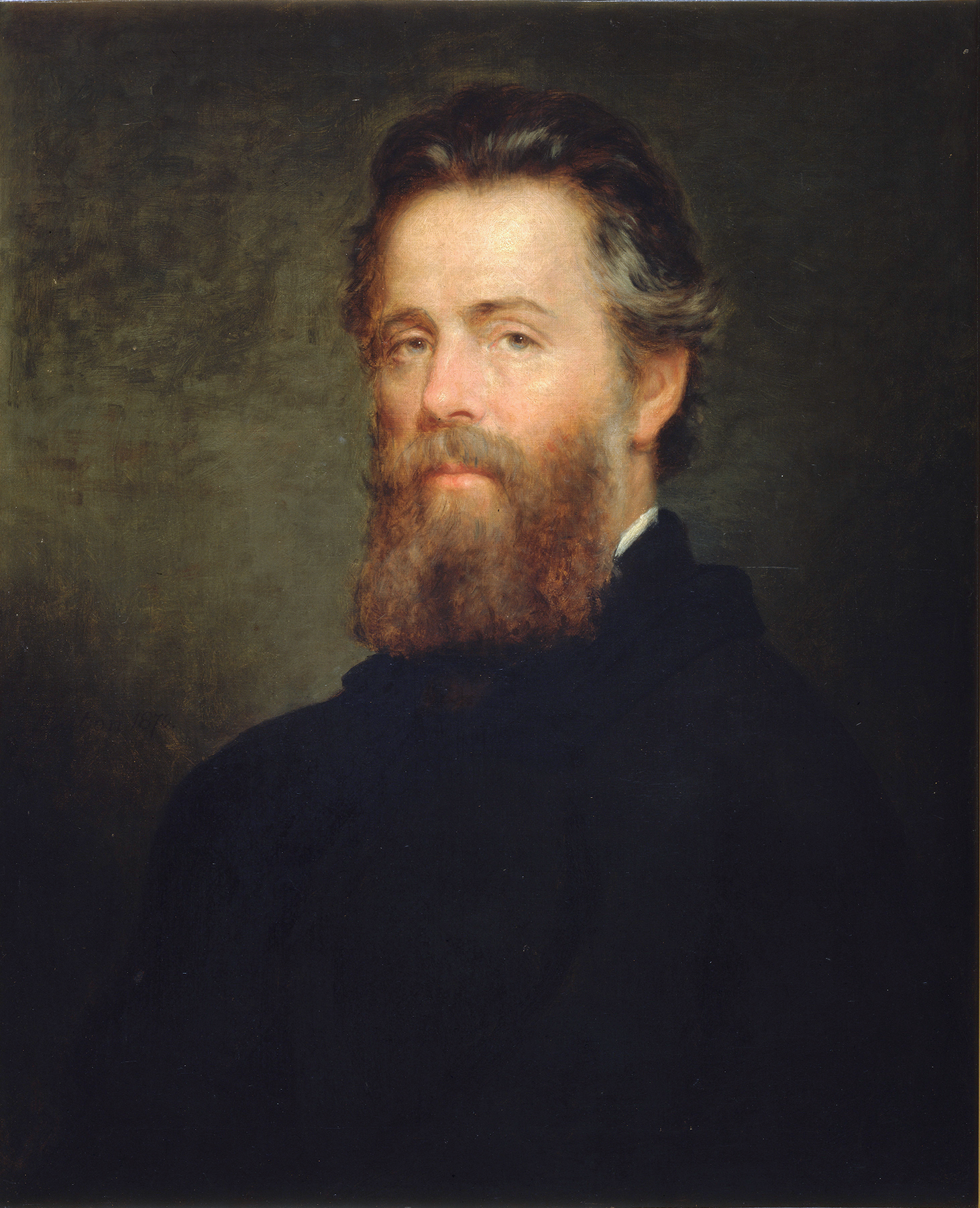
Herman Melville – amerykański powieściopisarz, poeta i eseista.
Był synem kupca pochodzenia szkockiego. Jego ojciec zbankrutował, kiedy Herman miał 15 lat. Wcześnie musiał rzucić szkołę i imał się różnych zajęć. Był między innymi robotnikiem rolnym, ekspedientem, urzędnikiem bankowym i nauczycielem. Wiele lat spędził na morzu, na statku wielorybniczym, a swoje doświadczenia zawarł w późniejszej twórczości.
Jego najsłynniejszym dziełem, zaliczanym do kanonu literatury światowej, jest Moby Dick, fikcyjna opowieść o białym kaszalocie. Pomysł do jej napisania zaczerpnął Melville z prawdziwej historii statku wielorybniczego Essex. Przedstawił w niej żywy obraz społeczności wielorybników i właścicieli statków wielorybniczych oraz zawarł alegorię odwiecznej walki dobra ze złem.
Herman Melville książka Moby Dick
Ismael, Moby-Dick or, The Whale
Źródło: Moby Dick
„Choć jednak niewiele bywa prawdziwej wiedzy, przecie książek jest mnóstwo.”
Postać: Izmael
Moby Dick czyli biały wieloryb
Źródło: rozdział XXXII
„(…) baranie łby nigdy nie powinny szukać logicznych przesłanek.”
Postać: Ahab
Moby Dick czyli biały wieloryb
Źródło: rozdział CVIII
Herman Melville książka Moby Dick
Ismael, Moby-Dick or, The Whale
Źródło: Moby Dick
Herman Melville książka Moby Dick
Moby-Dick or, The Whale
Herman Melville książka Moby Dick
Ismael, Moby-Dick or, The Whale
Źródło: Moby Dick
Herman Melville książka Moby Dick
Ismael, Moby-Dick or, The Whale
Źródło: Moby Dick
Herman Melville książka Moby Dick
Moby-Dick or, The Whale
Herman Melville książka Moby Dick
Ismael, Moby-Dick or, The Whale
Źródło: Moby Dick
Herman Melville książka Billy Budd, Sailor
Źródło: Billy Budd, the Sailor (1891), Ch. 21
Źródło: Billy Budd, Sailor
Kontekst: Who in the rainbow can draw the line where the violet tint ends and the orange tint begins? Distinctly we see the difference of the colors, but where exactly does the one first blendingly enter into the other? So with sanity and insanity. In pronounced cases there is no question about them. But in some supposed cases, in various degrees supposedly less pronounced, to draw the exact line of demarcation few will undertake tho' for a fee some professional experts will. There is nothing nameable but that some men will undertake to do it for pay.
“Think not, is my eleventh commandment; and sleep when you can, is my twelfth.”
Źródło: Moby-Dick or, The Whale
“It is the easiest thing in the world for a man to look as if he had a great secret in him.”
Herman Melville książka Moby Dick
Źródło: Moby-Dick
“Truth uncompromisingly told will always have its jagged edges.”
Herman Melville książka Billy Budd, Sailor
Źródło: Billy Budd
“A noble craft, but somehow a most melancholy! All noble things are touched with that.”
Herman Melville książka Moby Dick
Źródło: Moby-Dick
Letter to Nathaniel Hawthorne (July 1851); published in Memories of Hawthorne (1897) by Rose Hawthorne Lathrop, p. 157
Kontekst: In me divine magnanimities are spontaneous and instantaneous — catch them while you can. The world goes round, and the other side comes up. So now I can't write what I felt. But I felt pantheistic then—your heart beat in my ribs and mine in yours, and both in God's. A sense of unspeakable security is in me this moment, on account of your having understood the book. I have written a wicked book, and feel spotless as the lamb. Ineffable socialities are in me. I would sit down and dine with you and all the Gods in old Rome's Pantheon. It is a strange feeling — no hopelessness is in it, no despair. Content — that is it; and irresponsibility; but without licentious inclination. I speak now of my profoundest sense of being, not of an incidental feeling.
“See how elastic our prejudices grow when once love comes to bend them.”
Źródło: Moby-Dick or, The Whale
“Top-heavy was the ship as a dinnerless student with all Aristotle in his head.”
Źródło: Moby-Dick or, The Whale
Bartleby, the Scrivener (1853)
Źródło: Bartleby the Scrivener
“Life’s a voyage that’s homeward bound.”
Herman Melville książka White-Jacket
Wariant: Whoever afflict us, whatever surround, Life is a voyage that's homeward-bound!
Źródło: White-Jacket (1850), Ch. 93
Kontekst: The worst of our evils we blindly inflict upon ourselves; our officers cannot remove them, even if they would. From the last ills no being can save another; therein each man must be his own saviour. For the rest, whatever befall us, let us never train our murderous guns inboard; let us not mutiny with bloody pikes in our hands. Our Lord High Admiral will yet interpose; and though long ages should elapse, and leave our wrongs unredressed, yet, shipmates and world-mates! let us never forget, that, Whoever afflict us, whatever surround, Life is a voyage that's homeward-bound!
Źródło: Bartleby the Scrivener
“There is no folly of the beast of the earth which is not infinitely outdone by the madness of man.”
Wariant: for there is no folly of the beast of the earth which is not infinitely outdone by the madness of men
Źródło: Moby-Dick or, The Whale
“Better sleep with a sober cannibal than a drunken Christian.”
Wariant: Better to sleep with a sober cannibal than a drunk Christian.
Źródło: Moby-Dick or, The Whale
“Let faith oust fact; let fancy oust memory; I look deep down and do believe.”
Herman Melville książka Moby Dick
Źródło: Moby-Dick


