Herman Melville książka Moby Dick
Ismael, Moby-Dick or, The Whale
Źródło: Moby Dick
Herman Melville – amerykański powieściopisarz, poeta i eseista.
Był synem kupca pochodzenia szkockiego. Jego ojciec zbankrutował, kiedy Herman miał 15 lat. Wcześnie musiał rzucić szkołę i imał się różnych zajęć. Był między innymi robotnikiem rolnym, ekspedientem, urzędnikiem bankowym i nauczycielem. Wiele lat spędził na morzu, na statku wielorybniczym, a swoje doświadczenia zawarł w późniejszej twórczości.
Jego najsłynniejszym dziełem, zaliczanym do kanonu literatury światowej, jest Moby Dick, fikcyjna opowieść o białym kaszalocie. Pomysł do jej napisania zaczerpnął Melville z prawdziwej historii statku wielorybniczego Essex. Przedstawił w niej żywy obraz społeczności wielorybników i właścicieli statków wielorybniczych oraz zawarł alegorię odwiecznej walki dobra ze złem.
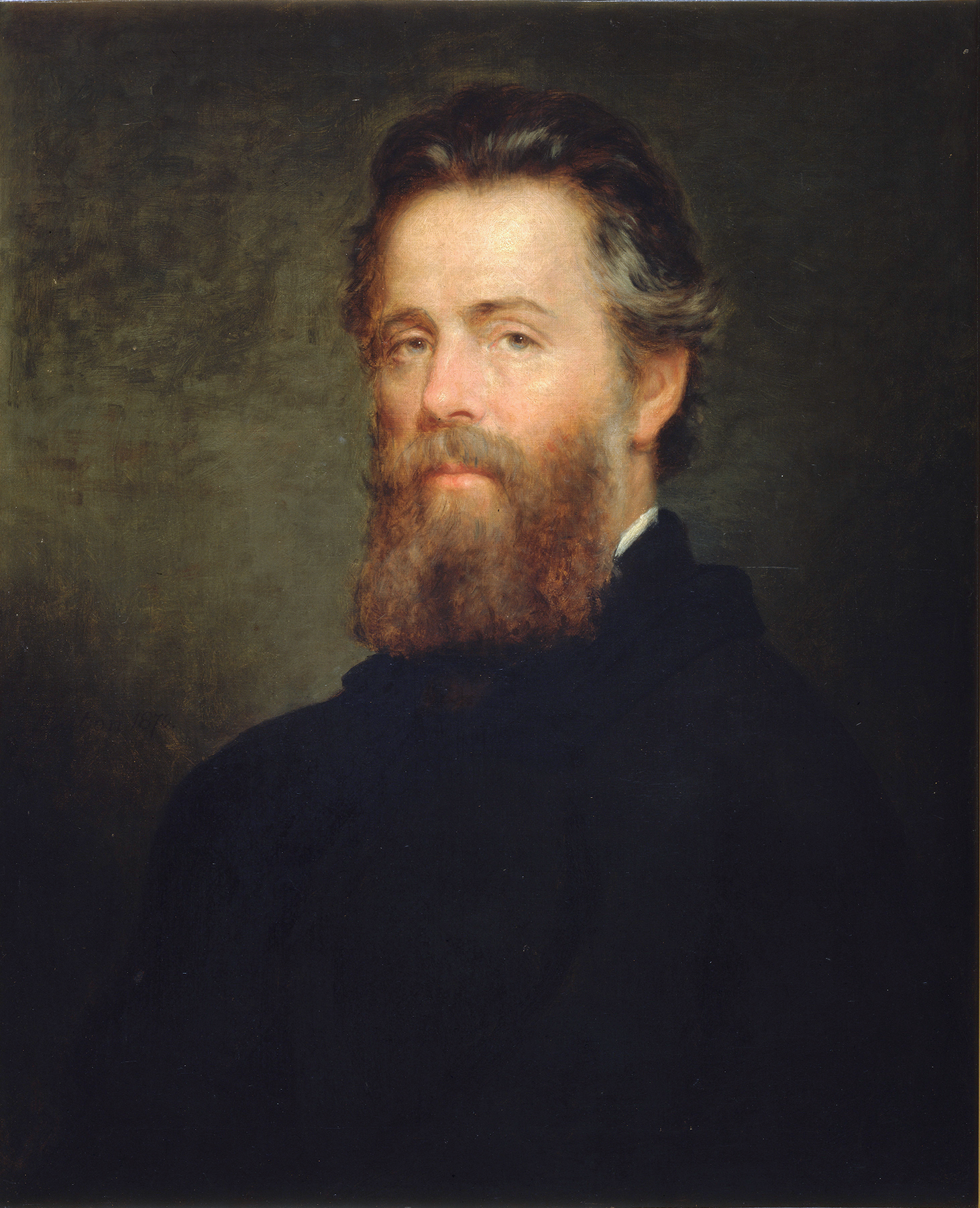
Herman Melville książka Moby Dick
Ismael, Moby-Dick or, The Whale
Źródło: Moby Dick
„Choć jednak niewiele bywa prawdziwej wiedzy, przecie książek jest mnóstwo.”
Postać: Izmael
Moby Dick czyli biały wieloryb
Źródło: rozdział XXXII
„(…) baranie łby nigdy nie powinny szukać logicznych przesłanek.”
Postać: Ahab
Moby Dick czyli biały wieloryb
Źródło: rozdział CVIII
Herman Melville książka Moby Dick
Ismael, Moby-Dick or, The Whale
Źródło: Moby Dick
Herman Melville książka Moby Dick
Moby-Dick or, The Whale
Herman Melville książka Moby Dick
Ismael, Moby-Dick or, The Whale
Źródło: Moby Dick
Herman Melville książka Moby Dick
Ismael, Moby-Dick or, The Whale
Źródło: Moby Dick
Herman Melville książka Moby Dick
Moby-Dick or, The Whale
Herman Melville książka Moby Dick
Ismael, Moby-Dick or, The Whale
Źródło: Moby Dick
Źródło: The Confidence-Man: His Masquerade (1857), Ch. 5
Herman Melville książka Benito Cereno
Benito Cereno, Putnam's Monthly ( October 1855 http://books.google.com/books?id=TlYAAAAAYAAJ&q=%22In+armies+navies+cities+or+families+in+nature+herself+nothing+more+relaxes+good+order+than+misery%22&pg=PA356#v=onepage)
Herman Melville książka Pierre: or, The Ambiguities
Bk. V, ch. 7
Pierre: or, The Ambiguities (1852)
Herman Melville książka Billy Budd, Sailor
Źródło: Billy Budd, the Sailor (1891), Ch. 21
Herman Melville książka White-Jacket
Źródło: White-Jacket (1850), Ch. 41
“Many sensible things banished from high life find an asylum among the mob.”
Herman Melville książka White-Jacket
Źródło: White-Jacket (1850), Ch. 7
Letter to Samuel Savage (24 August 1851), as published in The Writings of Herman Melville : The Northwestern-Newberry Edition (1993), edited by Lynn Horth, Vol. 14, p. 203
“Nothing so aggravates an earnest person as a passive resistance.”
Herman Melville książka Bartleby, the Scrivener
Bartleby, the Scrivener (1853)
Herman Melville książka Pierre: or, The Ambiguities
Bk. XXV, ch. 4
Pierre: or, The Ambiguities (1852)
Timoleon, Fragments of a Lost Gnostic Poem of the Twelfth Century, Fragment 2
Herman Melville książka White-Jacket
Źródło: White-Jacket (1850), Ch. 1, First lines
Since at least 1954 this has also been published at times as "Truth is forced to fly like a sacred white doe…", apparently a typographical error.
Hawthorne and His Mosses (1850)
“You must have plenty of sea-room to tell the truth in.”
Hawthorne and His Mosses (1850)
Herman Melville książka Billy Budd, Sailor
This statement is usually attributed entirely to Melville, but the way he presents it in the story indicates that he might be quoting a lesser known author.
Źródło: Billy Budd, the Sailor (1891), Ch. 21
Herman Melville książka White-Jacket
Źródło: White-Jacket (1850), Ch. 27
Herman Melville książka Billy Budd, Sailor
Źródło: Billy Budd, the Sailor (1891), Ch. 24
“It is hard to be finite upon an infinite subject, and all subjects are infinite.”
Hawthorne and His Mosses (1850)
Letter to Nathaniel Hawthorne (July 1851); published in Memories of Hawthorne (1897) by Rose Hawthorne Lathrop, p. 158
Hawthorne and His Mosses (1850)
I would to God Shakspeare had lived later, & promenaded in Broadway. Not that I might have had the pleasure of leaving my card for him at the Astor, or made merry with him over a bowl of the fine Duyckinck punch; but that the muzzle which all men wore on their soul in the Elizebethan day, might not have intercepted Shakspers full articulations. For I hold it a verity, that even Shakspeare, was not a frank man to the uttermost. And, indeed, who in this intolerant universe is, or can be? But the Declaration of Independence makes a difference.—There, I have driven my horse so hard that I have made my inn before sundown.
Letter to Evert Augustus Duyckinck (3 March 1849); published in The Letters of Herman Melville (1960) edited by Merrell R. Davis and William H. Gilman, p. 79
“The drama's done. Why then here does any one step forth?”
Because one did survive the wreck.
Epilogue
Moby-Dick: or, the Whale (1851)


