Friedrich Schiller cytaty
strona 4

Johann Christoph Friedrich von Schiller – niemiecki poeta, filozof, historyk, estetyk, teoretyk teatru i dramaturg, przedstawiciel tzw. klasyki weimarskiej, autor „Ody do radości”. Wikipedia  

✵ 10. Listopad 1759 – 9. Maj 1805  •  Natępne imiona Friedrich de Schiller, Иоганн Кристоф Фридрих фон Шиллер
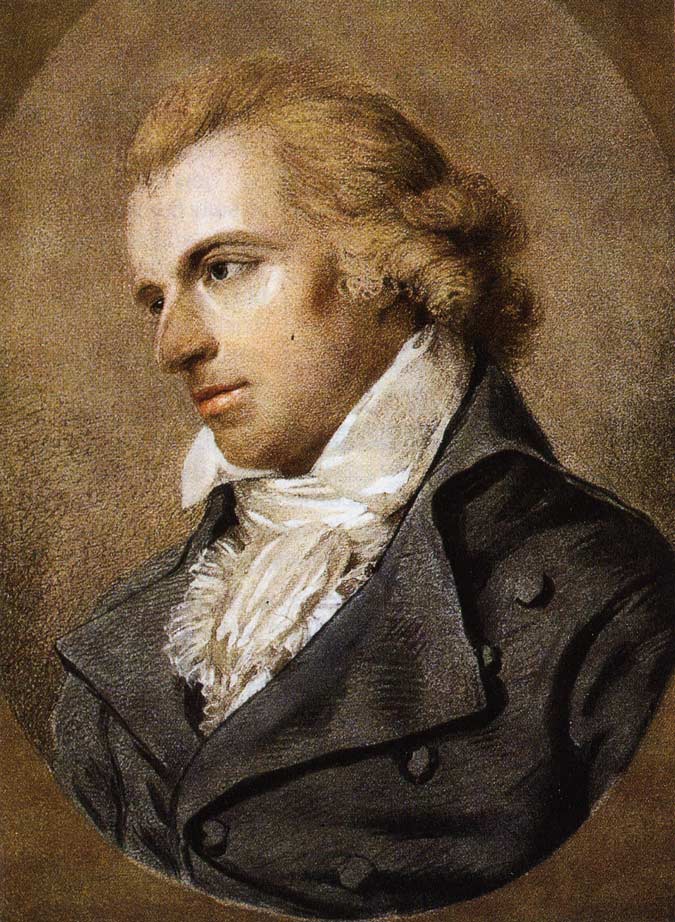
Friedrich Schiller Fotografia
Friedrich Schiller: 153 cytaty29 Polubień

Friedrich Schiller słynne cytaty

„Między zmysłową radością a pokojem duszy
Pozostaje człowiekowi tylko niepokojący wybór.”

Friedrich Schiller

Źródło: Eleanor Herman, Królowe i ich kochankowie. 900 lat intryg, namiętności i pasjonującej polityki, tłum. Barbara Tarnas, Wydawnictwo Jeden Świat, Warszawa 2007, ISBN 9788389632319, s. 7.

„Silny jest najpotężniejszy (gdy jest) sam.”

Friedrich Schiller

Der Starke ist am mächtigsten allein. (niem.)
Źródło: Wilhelm Tell 1, 3 (1804)

Friedrich Schiller Cytaty o świecie

„Historia świata jest sądem nad światem.”

Friedrich Schiller

Die Weltgeschichte ist das Weltgericht. (niem.)
Rezygnacja (1784)
Źródło: 68

„O radości, iskro bogów!Elizejskich pól dziewico!Wchodzim do twych świętych progówZ pełną ogniów twych źrenicą. Co czas rozprzągł i zwyczaje,Czarodziejstwo twoje sprzęga;Braćmi cały świat się staje,Kędy błogi lot twój sięga.Uściśnijmy się, miliony!Pocałunek całej ziemi!Musi nad gwiazdami temiOjciec mieszkać upragniony.”

Friedrich Schiller Oda do radości

Do radości – przekład Karola Brzozowskiego wyd. w 1933; wersja instrumentalna Ody do radości Ludwiga van Beethovena (fragment IX symfonii) jest hymnem Unii Europejskiej.
Źródło: An die Freude (pol. Do radości) (1785)

Friedrich Schiller Cytaty o czasie

„Przypadków nie ma; to, co jawi się nam jako ślepy traf, pochodzi właśnie z najgłębszych źródeł.”

Friedrich Schiller

Źródło: „Najwyższy czas!”, tom 19, wydania 18–39, Oficyna Liberałów, 2008, s. XVI.

Friedrich Schiller cytaty

„Żeby ocalić wszystko, musimy wszystko zaryzykować.”

Friedrich Schiller

Źródło: Sprzysiężenie Fieska w Genui, 1784

„Dwoje serc i w skromnej chatce
Może w szczęściu błogim trwać.”

Friedrich Schiller

Raum ist in der kleinsten Hütte
für ein glücklich liebend Paar. (niem.)
Źródło: Chłopiec nad strumieniem, tłum. Wanda Markowska

„Pokora jest ozdobą chrześcijanina.”

Friedrich Schiller

Źródło: Przykazania etyki prawniczej: księga myśli, norm i rycin, oprac. Roman Tokarczyk, wyd. Wolters Kluwer Polska, s. 63.

„Taki ma koniec, co piękne na ziemi!”

Friedrich Schiller

Das ist das Los des Schonen auf der Erde! (niem.)

„Z głupotą sami bogowie walczą nadaremno.”

Friedrich Schiller Dziewica Orleańska

Mit der Dummheit kämpfen Götter selbest vergebens. (niem.)
Źródło: Dziewica Orleańska, 1801

„Dwadzieścia trzy lata przeżyłem,
I cóż zdziałałem dla nieśmiertelności?”

Friedrich Schiller Don Carlos

Dreiundzwanzig Jahre,
und nichts für die Unsterblichkeit getan! (niem.)
w wydaniu I z 1785 nie było tych słów.
Don Carlos (1787)

„W moich posiadłościach słońce (nigdy) nie zachodzi.”

Friedrich Schiller Don Carlos

Die Sonne geht in meinem Staat nicht unter. (niem.)
por. Owidiusz, Fasti 2, 136, Wergiliusz, Eneida, 6, 795
Don Carlos (1787)
Źródło: 1, 6

„Mimowi (aktorowi) potomność nie splata wieńców.”

Friedrich Schiller

Dem Mimen flicht die Nachwelt keine Kränze. (niem.)
Źródło: Trylogia o Wallensteinie i wojnie trzydziestoletniej, cz. I, Obóz Wallensteina (1799), Prolog, 41

„Zbiegły dni wesołego w Aranchwes pobytu.”

Friedrich Schiller Don Carlos

Die schönen Tage in Aranjuez sind nun zu Ende. (niem.)
Don Carlos (1787)
Źródło: 1, 1, tłum. Adam Mickiewicz

„Jedynie dobry smak wnosi harmonię do życia społecznego, albowiem wprowadza ją w życie jednostki.”

Friedrich Schiller

Źródło: Listy o estetycznym wychowaniu człowieka i inne rozprawy, tłum. I. Krońska i J. Prokopiuk, Warszawa 1972, s. 167.

„Murzyn zrobił swoje, Murzyn może odejść.”

Friedrich Schiller

Der Mohr hat seine Arbeit getan; der Mohr kann gehen. (niem.)
Źródło: Fiesco 3, 4

„I ja urodziłem się w Arkadii.”

Friedrich Schiller

Auch ich war in Arkadien geboren. (niem.)
Rezygnacja (1784)

Friedrich Schiller: Cytaty po angielsku

“Life is earnest, art is gay.”

Friedrich Schiller Wallenstein

Prologue
Wallenstein (1798), Prologue - Wallensteins Lager (Wallenstein's Camp)

“One people will we be, — a band of brothers;
No danger, no distress shall sunder us.
We will be freemen as our fathers were,
And sooner welcome death than live as slaves.
We will rely on God's almighty arm,
And never quail before the power of man.”

Friedrich Schiller William Tell

Wir wollen sein ein einzig Volk von Brüdern,
in keiner Not uns trennen und Gefahr.
Wir wollen frei sein, wie die Väter waren,
eher den Tod, als in der Knechtschaft leben.
Wir wollen trauen auf den höchsten Gott
und uns nicht fürchten vor der Macht der Menschen.
Act II, Sc. 2, as translated by C. T. Brooke
Variant translation: We shall be a single People of brethren,
Never to part in danger nor distress.
We shall be free, just as our fathers were,
And rather die than live in slavery.
We shall trust in the one highest God
And never be afraid of human power.
Wilhelm Tell (1803)
“Welcome, all ye myriad creatures!
Brethren, take the kiss of love!”

Friedrich Schiller Oda do radości

Chorus 1
An die Freude (Ode to Joy; or Hymn to Joy) (1785)

“Law can only be applied to foreseeable cases.”

Friedrich Schiller

History of the Thirty Years War - Volume II
The Thirty Years War

“Many a crown shines spotless now
That yet was deeply sullied in the winning.”

Friedrich Schiller Wallenstein

Act II, sc. ii
Wallenstein (1798), Part II - Wallensteins Tod (The Death of Wallenstein)

“He who has done his best for his own time has lived for all times.”

Friedrich Schiller Wallenstein

Prologue
Wallenstein (1798), Prologue - Wallensteins Lager (Wallenstein's Camp)

“Posterity weaves no garlands for imitators.”

Friedrich Schiller Wallenstein

Prologue
Wallenstein (1798), Prologue - Wallensteins Lager (Wallenstein's Camp)

“Virtue is no empty echo.”

Friedrich Schiller Die Worte des Glaubens

Die Worte des Glaubens (The Word of the Faithful), st. 3 (1797)

“If thou canst not give pleasure to all by thy deeds and thy knowledge
Give it then, unto the few; many to please is but in vain.”

Friedrich Schiller

Kannst du nicht allen gefallen durch deine That und dein Kunstwerk, // Mach es wenigen recht, vielen gefallen ist schlimm.
Tabulae Votivae (Votive Tablets) (1796), "Choice"; tr. Edgar Alfred Bowring, The Poems of Schiller, Complete (1851)

“Time is man's angel.”

Friedrich Schiller Wallenstein

Act V, sc. xi
Wallenstein (1798), Part II - Wallensteins Tod (The Death of Wallenstein)

“The world is narrow, broad the mind—
Thoughts dwell easily side by side
Things collide violently in space”

Friedrich Schiller Wallenstein

Act II, sc. ii
Wallenstein (1798), Part II - Wallensteins Tod (The Death of Wallenstein)

Podobni autorzy

Johann Wolfgang von Goethe Fotografia
Johann Wolfgang von Goethe104
niemiecki poeta None
Georg Christoph Lichtenberg Fotografia
Georg Christoph Lichtenberg230
pisarz niemiecki, aforysta None
John Milton Fotografia
John Milton9
poeta i pisarz angielski None
Immanuel Kant Fotografia
Immanuel Kant31
niemiecki filozof None
Gotthold Ephraim Lessing Fotografia
Gotthold Ephraim Lessing29
pisarz niemiecki None
Gottfried Wilhelm Leibniz Fotografia
Gottfried Wilhelm Leibniz21
niemiecki filozof, matematyk, inżynier-mechanik, fizyk i dy… None
Johann Herder Fotografia
Johann Herder9
filozof i pisarz niemiecki None
Alexander Pope Fotografia
Alexander Pope14
poeta angielski None
William Shakespeare Fotografia
William Shakespeare125
angielski poeta i dramatopisarz None
Michał Anioł Fotografia
Michał Anioł20
włoski rzeźbiarz, malarz, architekt i poeta None