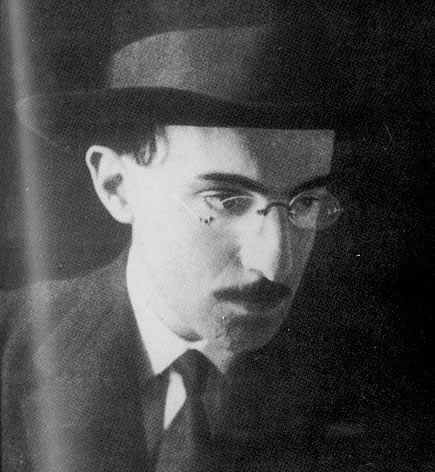
Fernando Pessoa słynne cytaty
Fernando Pessoa Cytaty o myślach
Fernando Pessoa książka Księga niepokoju
The Book of Disquiet
Fernando Pessoa książka Księga niepokoju
The Book of Disquiet
Fernando Pessoa książka Księga niepokoju
The Book of Disquiet
Fernando Pessoa cytaty
Fernando Pessoa: Cytaty po angielsku
Fernando Pessoa książka Księga niepokoju
Źródło: The Book of Disquiet
“I know not what tomorrow will bring”
Last sentence (29 November 1935), quoted in A Little Larger Than the Entire Universe by Richard Zenith (Penguin Classics, 2006)
Fernando Pessoa książka Księga niepokoju
Ibid., p. 123
The Book of Disquiet
Oryginał: Todos os problemas são insolúveis. A essência de haver um problema é não haver solução. Procurar um facto significa não haver um facto. Pensar é não saber existir.
Fernando Pessoa książka Księga niepokoju
A Factless Autobiography, Richard Zenith Edition, Lisbon, 2006, p. 40
The Book of Disquiet
Oryginał: Considero a vida uma estalagem onde tenho que me demorar até que chegue a diligência do abismo. Não sei onde ela me levará, porque não sei nada.
Fernando Pessoa książka Księga niepokoju
Ibid., p. 265
The Book of Disquiet
Oryginał: Todo o prazer é um vício, porque buscar o prazer é o que todos fazem na vida, e o único vício negro é fazer o que toda a gente faz.
Come chocolates, pequena;
Come chocolates!
Olha que não há mais metafísica no mundo senão chocolates.
Olha que as religiões todas não ensinam mais que a confeitaria.
Come, pequena suja, come!
Pudesse eu comer chocolates com a mesma verdade com que comes!
Mas eu penso e, ao tirar o papel de prata, que é de folhas de estanho,
Deito tudo para o chão, como tenho deitado a vida.
Tabacaria (1928), trans. Richard Zenith
“What we see is not what we see but what we are.”
Fernando Pessoa książka Księga niepokoju
<p>Original: Viajar? Para viajar basta existir. [...] Para quê viajar? Em Madrid, em Berlim, na Pérsia, na China, nos Pólos ambos, onde estaria eu senão em mim mesmo, e no tipo e género das minhas sensações?</p><p>A vida é o que fazemos dela. As viagens são os viajantes. O que vemos não é o que vemos, senão o que somos.</p>
Ibid., p. 360
The Book of Disquiet
Kontekst: p>To travel? In order to travel it's enough to be. [... ] Why travel? In Madrid, in Berlin, in Persia, in China, at the Poles both, where would I be but in myself, and in the sort and kind of my sensations?Life is what we make of it. Travels are travellers. What we see is not what we see but what we are.</p
“Everything is worthwhile
if the soul is not small.”
Fernando Pessoa książka Mensagem
Message
Oryginał: Valeu a pena?
Tudo vale a pena
Se a alma não é pequena.
Poem "Mar Português", Verses 6-.
Kontekst: Was it worthwhile?
Everything is worthwhile
if the soul is not small.
“I feel as if I'm always on the verge of waking up.”
Fernando Pessoa książka Księga niepokoju
Źródło: The Book of Disquiet
Fernando Pessoa książka Księga niepokoju
Źródło: The Book of Disquiet
Fernando Pessoa książka Księga niepokoju
Źródło: Libro del desasosiego
“I'm sick of everything, and of the everythingness of everything.”
Fernando Pessoa książka Księga niepokoju
Źródło: The Book of Disquiet
“Ah, it's my longing for whom I might have been that distracts and torments me!”
Fernando Pessoa książka Księga niepokoju
Źródło: The Book of Disquiet
“The essence of what I desire is simply this: to sleep away life.”
Fernando Pessoa książka Księga niepokoju
Źródło: The Book of Disquiet
“I don't know what I feel or what I want to feel. I don't know what to think or what I am.”
Fernando Pessoa książka Księga niepokoju
Źródło: The Book of Disquiet
“Life is what we make of it. Travel is the traveler. What we see isn't what we see but what we are.”
Fernando Pessoa książka Księga niepokoju
Oryginał: (pt) Viajar? Para viajar basta existir. [...] Para quê viajar? Em Madrid, em Berlim, na Pérsia, na China, nos Pólos ambos, onde estaria eu senão em mim mesmo, e no tipo e género das minhas sensações?
A vida é o que fazemos dela. As viagens são os viajantes. O que vemos não é o que vemos, senão o que somos.
Źródło: The Book of Disquiet, p. 360
Kontekst: To travel? In order to travel it's enough to be. […] Why travel? In Madrid, in Berlin, in Persia, in China, at the Poles both, where would I be but in myself, and in the sort and kind of my sensations?
Life is what we make of it. Travels are travellers. What we see is not what we see but what we are.
“To be understood is to prostitute yourself.”
Ibid., p. 136
The Book of Disquiet
Oryginał: Ser compreendido é prostituir-se.
Źródło: Poems of Fernando Pessoa
“But do we really live? To live without knowing what life is - is that living?”
Fernando Pessoa książka Księga niepokoju
Źródło: The Book of Disquiet
Fernando Pessoa książka Księga niepokoju
Źródło: The Book of Disquiet


