„Nie w poznaniu jest szczęście, ale w poznawaniu.”
Not in knowledge is happiness, but in the acquisition of knowledge! (ang.)
Źródło: Potęga słowa
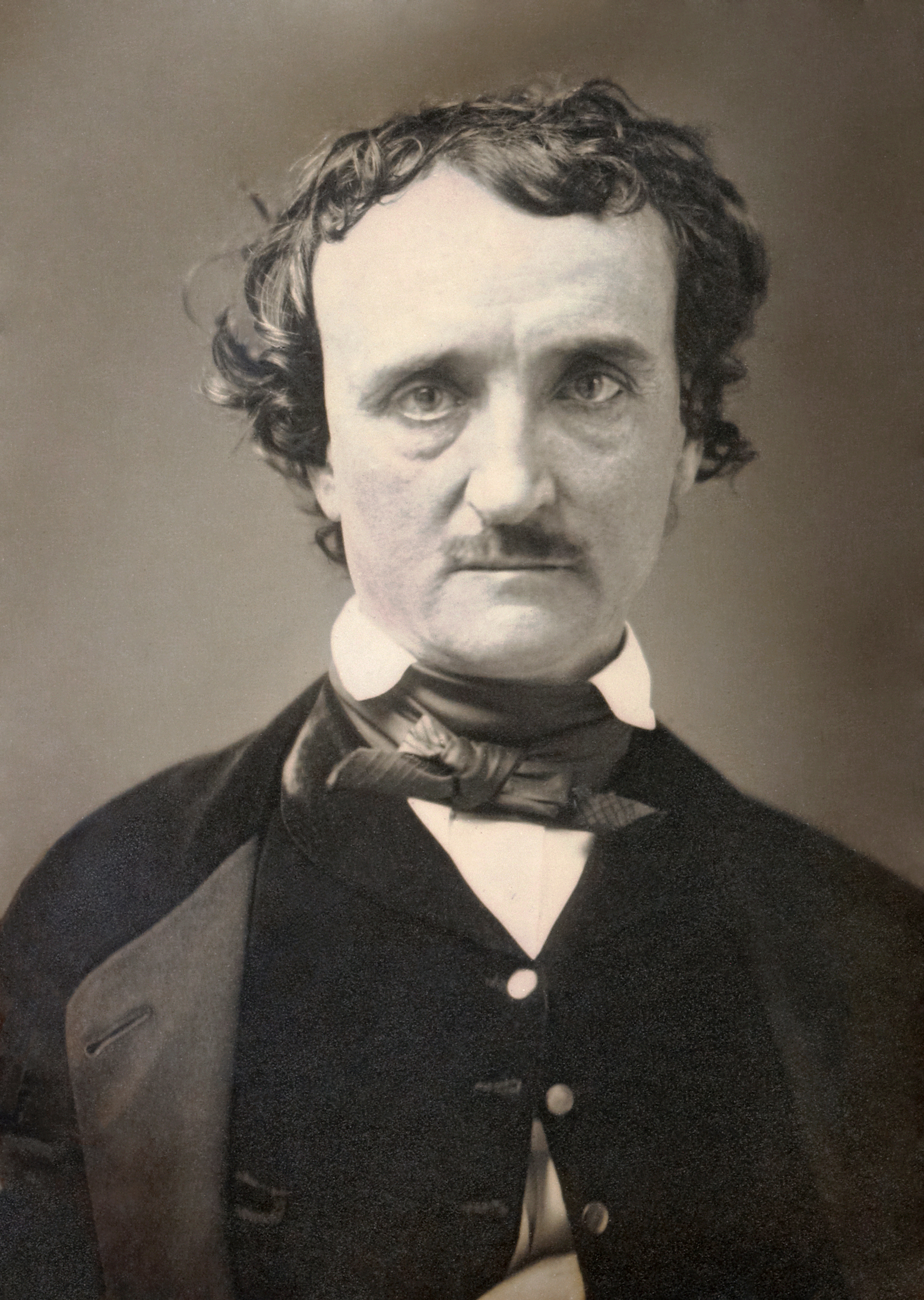
Edgar Allan Poe – amerykański poeta, nowelista, krytyk literacki i redaktor. Przedstawiciel romantyzmu w literaturze amerykańskiej. W jego twórczości dominowały wątki fantastyki i horroru. Zapoczątkował gatunek noweli kryminalnej . Stworzył także pierwszą w literaturze postać detektywa – C. Auguste’a Dupina.
Jego prozę charakteryzował silny psychologizm postaci oraz surrealistyczne, skrajnie brutalne opisy makabry, przywołujące na myśl stany epileptyczne czy upojenie alkoholowe. W twórczości Edgara Allana Poe odnaleźć można postawy choroby wieku – neurozy, świadomości dualizmu świata czy też bólu istnienia, które pod koniec XIX wieku stały się sztandarowymi pojęciami nowych nurtów sztuki: dekadentyzmu, ekspresjonizmu oraz symbolizmu.
Poe inspirował Baudelaire’a, Huysmansa, Dostojewskiego, Meyrinka, de Quinceya, Bierce'a, Lovecrafta, jak i całą rzeszę poetów surrealistycznych. Stephane Mallarme określił jego poemat Ulalume jako odbiegające od schematów swojej epoki arcydzieło poezji. Za jego przykładem szło wielu twórców, również polskich, np. Stefan Grabiński. Tadeusz Miciński wielokrotnie wspomina w swoich utworach inspirację fantastyczną wyobraźnią poety.
Zarówno poezję, jak i prozę Edgara Allana Poego tłumaczyło na polski wielu wybitnych literatów, jak np. Stanisław Wyrzykowski, Antoni Lange, Bolesław Leśmian, Tadeusz Miciński czy Zenon Przesmycki.
Twórczością Poego inspirowali się również filmowcy, tworząc mniej lub bardziej wierne ekranizacje jego opowiadań. Do najbardziej znanych dzieł filmowych należy nakręcony w latach 60. XX wieku cykl w reżyserii Rogera Cormana.
Mianem Edgarów nazywa się nagrody przyznawane przez organizację Mystery Writers of America. Wikipedia
„Nie w poznaniu jest szczęście, ale w poznawaniu.”
Not in knowledge is happiness, but in the acquisition of knowledge! (ang.)
Źródło: Potęga słowa
„Zawsze wierzyłem w głupców. Moi przyjaciele nazywają to wiarą w samego siebie.”
I have great faith in fools – self-confidence my friends will call it. (ang.) <br class="br">Źródło: Marginalia w: The works of Edgar Allan Poe http://books.google.pl/books?id=an1KAAAAYAAJ, tom 3, Widdleton, 1849, s. 525.
„Ci, co śnią za dnia, wiedzą o wielu rzeczach niedostępnych dla tych, co śnią tylko nocą.”
Edgar Allan Poe książka Eleonora
They who dream by day are cognizant of many things which escape those who dream only by night. (ang.)
Źródło: Eleonora
„Czas to pieniądz, a pieniądz to więcej niż czas.”
Time with me now, is money & money more than time. (ang.)
Źródło: Ligeja, przeł. Stanisław Wyrzykowski
Edgar Allan Poe książka William Wilson
William Wilson
Źródło: Opowieści nadzwyczajne tom II, tłum. Bolesław Leśmian, wyd. Tow. Akc. S. Orgelbranda S-ów, 1913.
Edgar Allan Poe książka William Wilson
Men usually grow base by degrees. From me, in an instant, all virtue dropped bodily as a mantle. (ang.)
William Wilson
Źródło: Opowieści nadzwyczajne tom II, tłum. Bolesław Leśmian, wyd. Tow. Akc. S. Orgelbranda S-ów, 1913.
„Jeśli chcesz od razu o czymś zapomnieć, zanotuj sobie, że to trzeba pamiętać.”
If you wish to forget anything on the spot, make a note that this thing is to be remembered. (ang.) <br class="br">Źródło: Marginalia w: The works of Edgar Allan Poe http://books.google.pl/books?id=an1KAAAAYAAJ, tom 3, Widdleton, 1849, s. 483.
Quoth the Raven, „Nevermore!”
Inna wersja: Rzekł kruk na to: „Nigdy już!” (tłum. Zenon Przesmycki)
Źródło: Kruk, 1845
„Zazwyczaj ludzie podleją stopniowo.”
Źródło: Wielka księga mądrości, wybór Jacek i Tomasz Ilga
"Dreamland", st. 1 (1845).
Kontekst: By a route obscure and lonely,
Haunted by ill angels only,
Where an Eidolon, named NIGHT,
On a black throne reigns upright,
I have reached these lands but newly
From an ultimate dim Thule —
From a wild weird clime that lieth, sublime,
Out of SPACE — out of TIME.
“I could not awaken
My heart to joy at the same tone —
And all I lov'd — I lov'd alone —”
" Alone http://gothlupin.tripod.com/valone.html", l. 1-8 (written 1829, published 1875). <br class="br">Kontekst: From childhood's hour I have not been<br>As others were — I have not seen<br>As others saw — I could not bring<br>My passions from a common spring —<br>From the same source I have not taken<br>My sorrow — I could not awaken<br>My heart to joy at the same tone —<br>And all I lov'd — I lov'd alone
Marginalia http://www.easylit.com/poe/comtext/prose/margin.shtml (November 1844)
Poe stating his arguments that Maelzel's Chess-Player was a hoax. Maelzel's Chess-Player http://www.eapoe.org/works/essays/maelzel.htm, Southern Literary Journal (April 1836).
Marginalia http://www.easylit.com/poe/comtext/prose/margin.shtml (November 1844)
Edgar Allan Poe książka The Angel of the Odd
"The Angel of the Odd" (1850).
Edgar Allan Poe książka The Tell-Tale Heart
The Tell-Tale Heart (1843)
“To observe attentively is to remember distinctly.”
Edgar Allan Poe książka The Murders in the Rue Morgue
"The Murders in the Rue Morgue" (1841).
“They who dream by day are cognizant of many things which escape those who dream only by night.”
" Eleonora http://www.classicreader.com/read.php/sid.6/bookid.9/" (1841).
Edgar Allan Poe Kruk
Quoth the Raven, "Nevermore."
Stanza 8.
The Raven (1844)
Edgar Allan Poe The City in the Sea
St. 5.
The City in the Sea (1831)
“A dark unfathom'd tide
Of interminable pride —
A mystery, and a dream,
Should my early life seem.”
Edgar Allan Poe książka Tamerlane and Other Poems
" Imitation http://www.americanpoems.com/poets/poe/17481", Tamerlane and Other Poems (1827).
Edgar Allan Poe książka The Tell-Tale Heart
The Tell-Tale Heart (1843)
Edgar Allan Poe książka The Premature Burial
"The Premature Burial" (1844).
“How many good books suffer neglect through the inefficiency of their beginnings!”
Marginalia http://www.easylit.com/poe/comtext/prose/margin.shtml (November 1844)
"The Angel Of The Odd: An Extravaganza".
“All religion, my friend, is simply evolved out of chicanery, fear, greed, imagination and poetry!”
Sometimes quoted as "All religion, my friend, is simply evolved out of fraud, fear, greed, imagination and poetry" <br class="br">According to John A. Joyce's much-criticized biography Edgar Allen Poe (1901), this was said by Poe to William Barton. <br class="br">Disputed <br class="br">Źródło: Google Books link https://books.google.com/books?id=_cdEAAAAYAAJ&printsec=frontcover&dq=John+Alexander+Joyce+poe&hl=en&sa=X&ved=0CBwQ6AEwAGoVChMIsuLtsoXUyAIVVSqICh2cqAI_#v=onepage&q=%22chicanery%2C%20fear%22&f=false
Marginalia http://www.easylit.com/poe/comtext/prose/margin.shtml (November 1844)
Edgar Allan Poe książka The Tell-Tale Heart
The Tell-Tale Heart (1843)
Edgar Allan Poe Kruk
Stanza 17.
The Raven (1844)
“Thus I pacified Psyche and kissed her,
And tempted her out of her gloom.”
Edgar Allan Poe Ulalume
St. 8.
Ulalume (1847)
" A Few Words on Secret Writing http://www.lfchosting.com/eapoe/works/essays/fwsw0741.htm" in Graham's Magazine (July 1841).
“This—all this—was in the olden
Time long ago.”
Edgar Allan Poe The Haunted Palace
"The Haunted Palace" (1839), st. 2.


