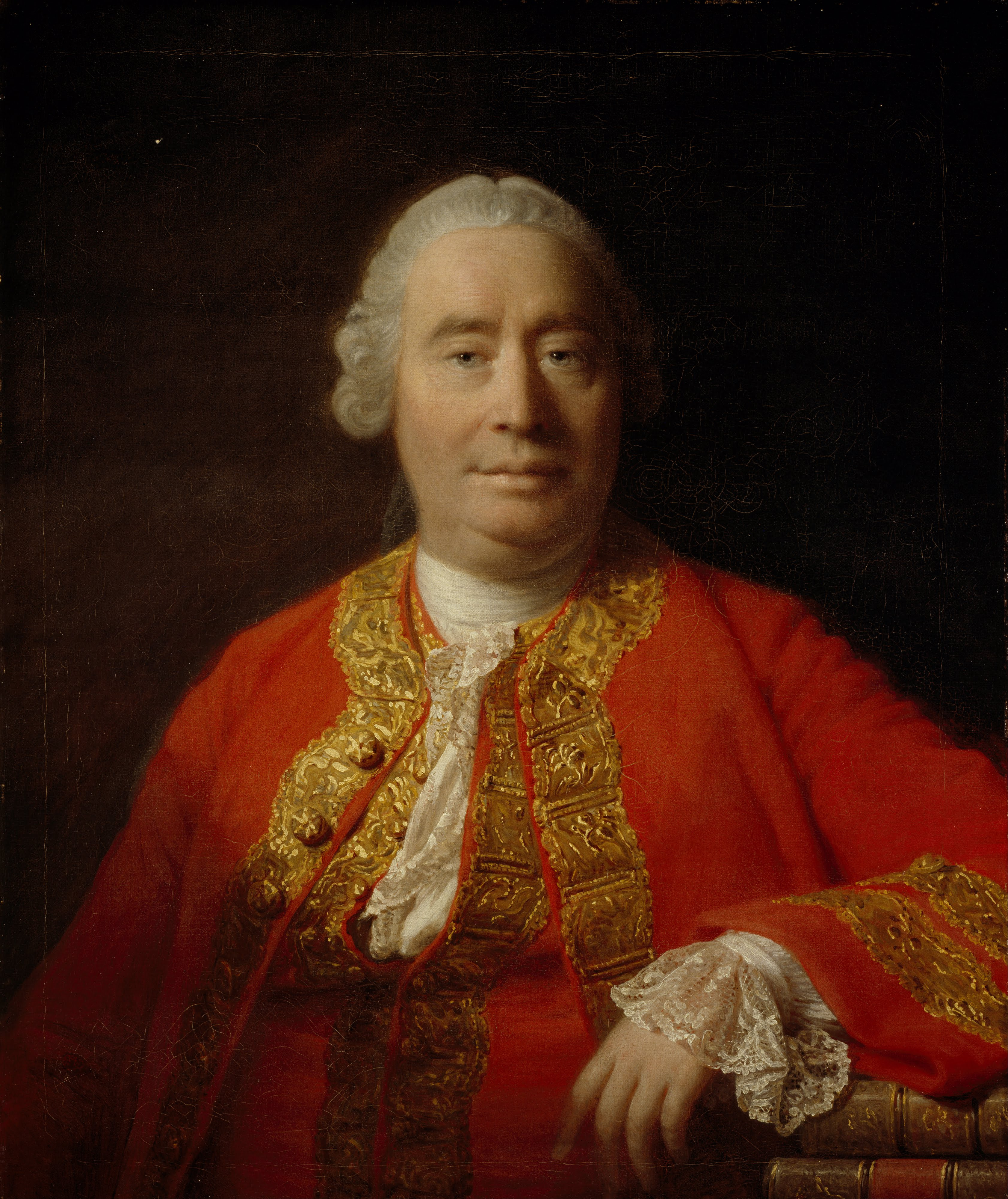
David Hume słynne cytaty
Źródło: Richard H. Popkin, Avrum Stroll, Filozofia, Poznań 1994, tłum. Jan Karłowski, Norbert Leśniewski, Andrzej Przyłębski, s. 234.
„Przedmiotem sądów rozumu są wyłącznie fakty lub stosunki.”
Badania dotyczące zasad moralności (1751)
„Wszystkie wnioski z doświadczenia wypływają z nawyku, a nie z rozumowania.”
Badania dotyczące rozumu ludzkiego (1748)
David Hume książka Traktat o naturze ludzkiej
Traktat o naturze ludzkiej (1740)
David Hume cytaty
Naturalna historia religii (1757)
Badania dotyczące rozumu ludzkiego (1748)
„Ciemność jest cierpieniem umysłu.”
Obscurity is painful to the mind. (ang.)
Badania dotyczące rozumu ludzkiego (1748)
„Możliwe jest także, że kawałek węgla położony na ogień nie będzie się palił…”
odpowiedź na pytanie przyjaciela, czy wierzy w istnienie życia po śmierci, udzielona na łożu śmierci.
Źródło: Jostein Gaarder, Świat Zofii. Cudowna podróż w głąb historii filozofii, Warszawa 1995, tłum. Iwona Zimnicka, s. 293.
„Nie jest sprzeczne z rozumem przedkładać zniszczenie całego świata nad zadrapanie mojego palca.”
David Hume książka Traktat o naturze ludzkiej
Traktat o naturze ludzkiej (1740)
Źródło: O studiowaniu historii (ang. Of the Study of History) (1741), tłum. Piotr Michalski
„Rzadko kiedy całą wolność traci się od razu.”
Źródło: Friedrich August von Hayek, motto książki Droga do zniewolenia (1944)
Badania dotyczące rozumu ludzkiego (1748)
David Hume: Cytaty po angielsku
David Hume książka Traktat o naturze ludzkiej
Part 4, Section 3
A Treatise of Human Nature (1739-40), Book 1: Of the understanding
David Hume książka An Enquiry Concerning Human Understanding
Section 4 : Sceptical Doubts Concerning The Operations of The Understanding
An Enquiry Concerning Human Understanding (1748)
David Hume książka Four Dissertations
Four Dissertations (1757)
David Hume książka Traktat o naturze ludzkiej
Part 2, 1.17
A Treatise of Human Nature (1739-40), Book 3: Of morals
Statement to a friend shortly before his death, as recounted in Men of Letters by Lord Henry Brougham
David Hume The Natural History of Religion
Part X - With regard to courage or abasement
The Natural History of Religion (1757)
David Hume książka Essays, Moral, Political, and Literary
Part I, Essay 23: Of The Standard of Taste
Essays, Moral, Political, and Literary (1741-2; 1748)
David Hume książka Traktat o naturze ludzkiej
Part 4, Section 5
A Treatise of Human Nature (1739-40), Book 1: Of the understanding
David Hume książka An Enquiry Concerning Human Understanding
Of Liberty and Necessity, Part II (http://www.bartleby.com/37/3/12.html)
An Enquiry Concerning Human Understanding (1748)
Kontekst: THERE is no method of reasoning more common, and yet none more blameable, than, in philosophical disputes, to endeavour the refutation of any hypothesis, by a pretence of its dangerous consequences to religion and morality. When any opinion leads to absurdities, it is certainly false; but it is not certain that an opinion is false, because it is of dangerous consequence. Such topics, therefore, ought entirely to be forborne; as serving nothing to the discovery of truth, but only to make the person of an antagonist odious.
David Hume książka Essays, Moral, Political, and Literary
Part I, Essay 8: Of Public Credit (This appears as a footnote in editions H to P. Other editions include it in the body of the text, and some number it Essay 9.)
Essays, Moral, Political, and Literary (1741-2; 1748)
David Hume książka An Enquiry Concerning Human Understanding
Section 12 : Of the Academical or Sceptical Philosophy Pt. 3
An Enquiry Concerning Human Understanding (1748)
David Hume książka Traktat o naturze ludzkiej
Part 1, Section 12
A Treatise of Human Nature (1739-40), Book 2: Of the passions
David Hume The Natural History of Religion
Part XV - General corollary
The Natural History of Religion (1757)
“Art may make a suit of clothes; but nature must produce a man.”
David Hume książka Essays, Moral, Political, and Literary
Part I, Essay 15: The Epicurean
Essays, Moral, Political, and Literary (1741-2; 1748)
E. C. Mossner, Life of David Hume (Clarendon Press, 2001), p. 311.
David Hume książka An Enquiry Concerning Human Understanding
Section 10 : Of Miracles Pt. 2
An Enquiry Concerning Human Understanding (1748)
Letter 138, To Gilbert Elliot of Minto; August 9, 1757
David Hume książka Traktat o naturze ludzkiej
Part 3, Section 12
A Treatise of Human Nature (1739-40), Book 1: Of the understanding
David Hume książka Essays, Moral, Political, and Literary
Part I, Essay 9: Of The Parties of Great Britain; final lines of this essay in the 1741 and 1742 editions of Essays, Moral and Political, they were not included in later editions.
Essays, Moral, Political, and Literary (1741-2; 1748)
David Hume książka Dialogues Concerning Natural Religion
Philo to Cleanthes, Part IV
Dialogues Concerning Natural Religion (1779)
David Hume książka Traktat o naturze ludzkiej
Part 4, Section 6
A Treatise of Human Nature (1739-40), Book 1: Of the understanding
David Hume książka Essays, Moral, Political, and Literary
Part I, Essay 16: The Stoic
Essays, Moral, Political, and Literary (1741-2; 1748)
David Hume książka An Enquiry Concerning Human Understanding
§ 8.23
An Enquiry Concerning Human Understanding (1748)
David Hume The Natural History of Religion
Part XIV - Bad influence of popular religions on morality
The Natural History of Religion (1757)
David Hume książka Traktat o naturze ludzkiej
Part 2, Section 12
A Treatise of Human Nature (1739-40), Book 2: Of the passions
David Hume książka Traktat o naturze ludzkiej
Part 1, Section 4
A Treatise of Human Nature (1739-40), Book 2: Of the passions
David Hume książka Dialogues Concerning Natural Religion
Pamphilus to Hermippus, Prologue
Dialogues Concerning Natural Religion (1779)
David Hume książka An Enquiry Concerning Human Understanding
§ 4.8
An Enquiry Concerning Human Understanding (1748)
David Hume książka Essays, Moral, Political, and Literary
Part I, Essay 22: Of the Standard of Taste
Essays, Moral, Political, and Literary (1741-2; 1748)
David Hume książka Dialogues Concerning Natural Religion
Demea to Philo, Part X
Dialogues Concerning Natural Religion (1779)


