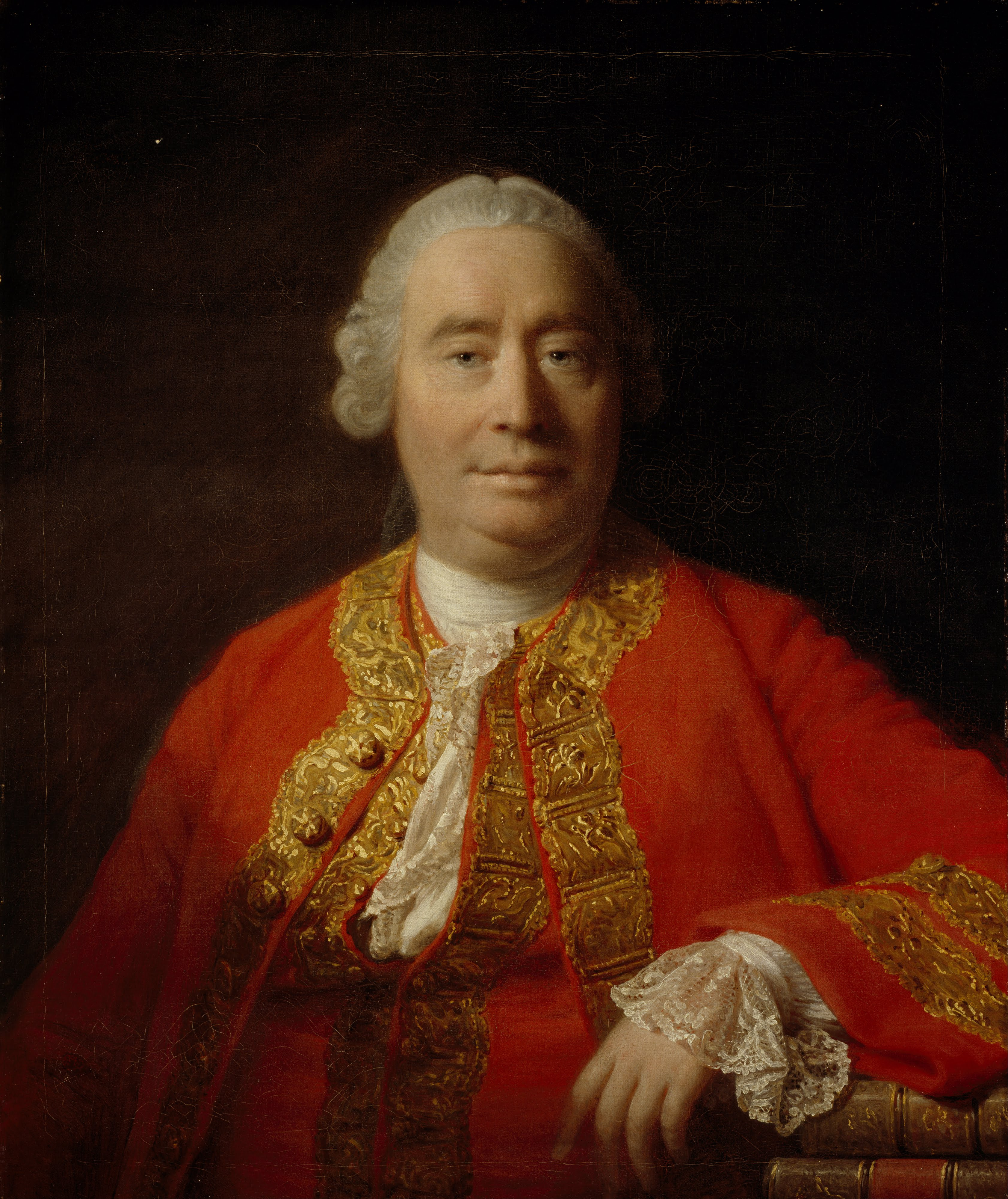
David Hume słynne cytaty
Źródło: Richard H. Popkin, Avrum Stroll, Filozofia, Poznań 1994, tłum. Jan Karłowski, Norbert Leśniewski, Andrzej Przyłębski, s. 234.
„Przedmiotem sądów rozumu są wyłącznie fakty lub stosunki.”
Badania dotyczące zasad moralności (1751)
„Wszystkie wnioski z doświadczenia wypływają z nawyku, a nie z rozumowania.”
Badania dotyczące rozumu ludzkiego (1748)
David Hume książka Traktat o naturze ludzkiej
Traktat o naturze ludzkiej (1740)
David Hume cytaty
Naturalna historia religii (1757)
Badania dotyczące rozumu ludzkiego (1748)
„Ciemność jest cierpieniem umysłu.”
Obscurity is painful to the mind. (ang.)
Badania dotyczące rozumu ludzkiego (1748)
„Możliwe jest także, że kawałek węgla położony na ogień nie będzie się palił…”
odpowiedź na pytanie przyjaciela, czy wierzy w istnienie życia po śmierci, udzielona na łożu śmierci.
Źródło: Jostein Gaarder, Świat Zofii. Cudowna podróż w głąb historii filozofii, Warszawa 1995, tłum. Iwona Zimnicka, s. 293.
„Nie jest sprzeczne z rozumem przedkładać zniszczenie całego świata nad zadrapanie mojego palca.”
David Hume książka Traktat o naturze ludzkiej
Traktat o naturze ludzkiej (1740)
Źródło: O studiowaniu historii (ang. Of the Study of History) (1741), tłum. Piotr Michalski
„Rzadko kiedy całą wolność traci się od razu.”
Źródło: Friedrich August von Hayek, motto książki Droga do zniewolenia (1944)
Badania dotyczące rozumu ludzkiego (1748)
David Hume: Cytaty po angielsku
David Hume książka Four Dissertations
Four Dissertations (1757)
David Hume książka Dialogues Concerning Natural Religion
Philo to Cleanthes, Part IV
Dialogues Concerning Natural Religion (1779)
David Hume książka Traktat o naturze ludzkiej
Part 1, Section 1
A Treatise of Human Nature (1739-40), Book 3: Of morals
David Hume książka Traktat o naturze ludzkiej
Part 3, Section 16
A Treatise of Human Nature (1739-40), Book 1: Of the understanding
David Hume książka Traktat o naturze ludzkiej
Part 3, Section 8
A Treatise of Human Nature (1739-40), Book 1: Of the understanding
David Hume książka Traktat o naturze ludzkiej
Part 2, Section 2
A Treatise of Human Nature (1739-40), Book 3: Of morals
David Hume książka An Enquiry Concerning Human Understanding
§ 8.27
An Enquiry Concerning Human Understanding (1748)
David Hume The Natural History of Religion
Part X - With regard to courage or abasement
The Natural History of Religion (1757)
David Hume książka Of the Standard of Taste
David Hume, Of the Standard of Taste, 1760
Wariant: The admirers and followers of the Alcoran insist on the excellent moral precepts interspersed through that wild and absurd performance. But it is to be supposed, that the Arabic words, which correspond to the English, equity, justice, temperance, meekness, charity were such as, from the constant use of that tongue, must always be taken in a good sense; and it would have argued the greatest ignorance, not of morals, but of language, to have mentioned them with any epithets, besides those of applause and approbation. But would we know, whether the pretended prophet had really attained a just sentiment of morals? Let us attend to his narration; and we shall soon find, that he bestows praise on such instances of treachery, inhumanity, cruelty, revenge, bigotry, as are utterly incompatible with civilized society. No steady rule of right seems there to be attended to; and every action is blamed or praised, so far only as it is beneficial or hurtful to the true believers.
David Hume The History of England
Volume V, Chapter LIV (Indianapolis: Liberty Fund, 1983), pp. 329-30; referring to the abolition of the Star Chamber
The History of England (1754-62)
“A propensity to hope and joy is real riches: One to fear and sorrow, real poverty.”
David Hume książka Essays, Moral, Political, and Literary
Part I, Essay 18: The Sceptic
Essays, Moral, Political, and Literary (1741-2; 1748)
David Hume książka Traktat o naturze ludzkiej
Part 4, Section 7
A Treatise of Human Nature (1739-40), Book 1: Of the understanding
David Hume książka An Enquiry Concerning Human Understanding
§ 4.11
An Enquiry Concerning Human Understanding (1748)
David Hume The Natural History of Religion
Introduction
The Natural History of Religion (1757)
David Hume książka Traktat o naturze ludzkiej
Part 3, Section 16
A Treatise of Human Nature (1739-40), Book 1: Of the understanding
David Hume książka Dialogues Concerning Natural Religion
Philo to Demea, Part V
Dialogues Concerning Natural Religion (1779)
David Hume książka Dialogues Concerning Natural Religion
Philo to Cleanthes, Part II
Dialogues Concerning Natural Religion (1779)
David Hume książka Four Dissertations
Four Dissertations (1757)
David Hume książka Traktat o naturze ludzkiej
Part 1, Section 1
A Treatise of Human Nature (1739-40), Book 3: Of morals
David Hume książka Dialogues Concerning Natural Religion
Demea to Philo, Part X
Dialogues Concerning Natural Religion (1779)
David Hume książka Traktat o naturze ludzkiej
Part 3, Section 16
A Treatise of Human Nature (1739-40), Book 1: Of the understanding
Letter to Henry Home (9 February 1848), quoted in J. Y. T. Greig, The Letters of David Hume: Volume I (Oxford: Clarendon Press, 1932), p. 111
David Hume książka Traktat o naturze ludzkiej
Part 1, Section 1
A Treatise of Human Nature (1739-40), Book 3: Of morals
“The role of reason is not to make us wise but to reveal our ignorance”
Commonly attributed to Hume, but without any apparent basis.
Misattributed
“Hypothetical liberty is allowed to everyone who is not a prisoner and in chains”
David Hume książka An Enquiry Concerning Human Understanding
§ 8.23
An Enquiry Concerning Human Understanding (1748)
David Hume książka Traktat o naturze ludzkiej
Part 3, Section 16
A Treatise of Human Nature (1739-40), Book 1: Of the understanding
David Hume The History of England
Volume III, Chapter LXI; referring to Oliver Cromwell
The History of England (1754-62)
David Hume książka Traktat o naturze ludzkiej
Part 1, Section 11
A Treatise of Human Nature (1739-40), Book 2: Of the passions
“Character is the result of a system of stereotyped principles.”
Hume never used the word "stereotype" (the term was not invented until 1798).
Misattributed


