„To jest puste, ciągnie się w nieskończoność i… O mój Boże, tam jest pełno gwiazd!”
Arthur C. Clarke książka 2001: Odyseja kosmiczna
ostatnie słowa nadane na Ziemię przez Davida Bowmana.
Odyseja Kosmiczna 2001
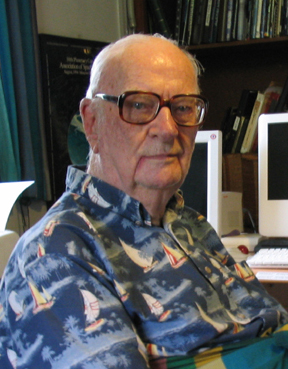
Arthur C. Clarke, właśc. sir Arthur Charles Clarke – brytyjski prozaik, pisarz fantastycznonaukowy, propagator kosmonautyki. M.in. na podstawie jego koncepcji powstały stacje orbitalne.
Jego najbardziej znanym dziełem jest książka 2001: Odyseja kosmiczna oraz nakręcony przez Stanleya Kubricka film o tym samym tytule według wspólnego scenariusza Clarke’a i Kubricka. Wikipedia
„To jest puste, ciągnie się w nieskończoność i… O mój Boże, tam jest pełno gwiazd!”
Arthur C. Clarke książka 2001: Odyseja kosmiczna
ostatnie słowa nadane na Ziemię przez Davida Bowmana.
Odyseja Kosmiczna 2001
Arthur C. Clarke książka 2001: Odyseja kosmiczna
Odyseja Kosmiczna 2001
„Nie chciałbym się upierać, Dave, ale ja jestem niezdolny do popełniania omyłek.”
Arthur C. Clarke książka 2001: Odyseja kosmiczna
Postać: HAL 9000
Odyseja Kosmiczna 2001
Źródło: Stanisław Lem, Fantastyka i futurologia
Źródło: Keith Tutt, W poszukiwaniu nieograniczonej energii, wyd. Amber, seria Tajemnice Nauki
„Dostatecznie zaawansowana technologia nie różni się od magii.”
Źródło: Gregory Hartley, Maryann Karinch, Podręcznik manipulacji, Warszawa 2011, wyd. Bellona, s. 65.
Arthur C. Clarke książka Breaking Strain
Breaking Strain, p. 184
2000s and posthumous publications, The Collected Stories of Arthur C. Clarke (2001)
Guardian Angel, p. 220
2000s and posthumous publications, The Collected Stories of Arthur C. Clarke (2001)
Arthur C. Clarke książka The Road to the Sea
The Road to the Sea, p. 265
2000s and posthumous publications, The Collected Stories of Arthur C. Clarke (2001)
Arthur C. Clarke książka The Road to the Sea
The Road to the Sea, p. 269
2000s and posthumous publications, The Collected Stories of Arthur C. Clarke (2001)
Arthur C. Clarke książka The Road to the Sea
The Road to the Sea, p. 284
2000s and posthumous publications, The Collected Stories of Arthur C. Clarke (2001)
“It was good to be alive; it was better to be young; it was best of all to be in love.”
Arthur C. Clarke książka The Road to the Sea
The Road to the Sea, p. 284
2000s and posthumous publications, The Collected Stories of Arthur C. Clarke (2001)
Arthur C. Clarke książka The Road to the Sea
The Road to the Sea, p. 292
2000s and posthumous publications, The Collected Stories of Arthur C. Clarke (2001)
Arthur C. Clarke książka The Road to the Sea
The Road to the Sea, p. 294
2000s and posthumous publications, The Collected Stories of Arthur C. Clarke (2001)
Arthur C. Clarke książka Patent Pending
Patent Pending, p. 500
2000s and posthumous publications, The Collected Stories of Arthur C. Clarke (2001)
Arthur C. Clarke książka Patent Pending
Patent Pending, p. 508
2000s and posthumous publications, The Collected Stories of Arthur C. Clarke (2001)
“For what is life but organized energy?”
Out of the Sun, p. 656
2000s and posthumous publications, The Collected Stories of Arthur C. Clarke (2001)
“This sounded promising, and my coefficient of cupidity jumped several points.”
Arthur C. Clarke książka I Remember Babylon
I Remember Babylon, p. 705
2000s and posthumous publications, The Collected Stories of Arthur C. Clarke (2001)
Arthur C. Clarke książka Death and the Senator
Death and the Senator, p. 744
2000s and posthumous publications, The Collected Stories of Arthur C. Clarke (2001)
Arthur C. Clarke książka Dog Star
Dog Star, p. 786
2000s and posthumous publications, The Collected Stories of Arthur C. Clarke (2001)
“The idea of death was utterly incongruous—as it is to all men until the final second.”
Maelstrom II, p. 789
2000s and posthumous publications, The Collected Stories of Arthur C. Clarke (2001)
An Ape About the House, p. 802
2000s and posthumous publications, The Collected Stories of Arthur C. Clarke (2001)
In both cases the cure is simple though usually very expensive.
"Appendix II: MITE for Morons," The Odyssey File (1984), p. 123
1960s, Clarke's Three Laws, et al (1962; 1973…)
But it is amazing how childishly gullible humans are. There are, for example, so many different religions — each of them claiming to have the truth, each saying that their truths are clearly superior to the truths of others — how can someone possibly take any of them seriously? I mean, that's insane. ...Though I sometimes call myself a crypto-Buddhist, Buddhism is not a religion. Of those around at the moment, Islam is the only one that has any appeal to me. But, of course, Islam has been tainted by other influences. The Muslims are behaving like Christians, I'm afraid. <br class="br"> "God, Science, and Delusion: A Chat With Arthur C. Clarke" Free Inquiry magazine, Volume 19, Number 2 (Spring 1999) http://www.secularhumanism.org/index.php?section=library&page=clarke_19_2 <br class="br">2000s and attributed from posthumous publications
2000s and posthumous publications, 90th Birthday Reflections (2007)
2000s and posthumous publications, 90th Birthday Reflections (2007)
“The false logic involved is: “We exist; therefore something—call it X—created us.””
Arthur C. Clarke książka Crusade
Once this assumption is made, the properties of the hypothetical X can be fantasied in an unlimited number of ways.
But the entire process is obviously fallacious; for by the same logic something must have created X—and so on. We are immediately involved in an infinite regress, which can have no meaning in the real universe.
Crusade, p. 878
2000s and posthumous publications, The Collected Stories of Arthur C. Clarke (2001)
“There may be a moral here. For the life of me I can’t find it.”
Arthur C. Clarke książka What Goes Up
Źródło: 2000s and posthumous publications, The Collected Stories of Arthur C. Clarke (2001), What Goes Up, p. 529
“History, it has been said, never repeats itself but historical situations recur.”
Earthlight, p. 347
2000s and posthumous publications, The Collected Stories of Arthur C. Clarke (2001)
Arthur C. Clarke książka The Road to the Sea
The Road to the Sea, p. 298
2000s and posthumous publications, The Collected Stories of Arthur C. Clarke (2001)
Arthur C. Clarke książka The Road to the Sea
The Road to the Sea, p. 298
2000s and posthumous publications, The Collected Stories of Arthur C. Clarke (2001)
“I doubt if such a word exists, and if it does, it shouldn’t.”
Arthur C. Clarke książka Silence Please
Silence Please, p. 247
2000s and posthumous publications, The Collected Stories of Arthur C. Clarke (2001)
“It is surprising how long it takes to do a simple addition when your life depends on the answer.”
Arthur C. Clarke książka Breaking Strain
Breaking Strain, p. 172
2000s and posthumous publications, The Collected Stories of Arthur C. Clarke (2001)
“Why should one be afraid of something merely because it is strange?”
Arthur C. Clarke książka The Wall of Darkness
The Wall of Darkness, p. 114
2000s and posthumous publications, The Collected Stories of Arthur C. Clarke (2001)
"Meeting of the Minds : Buzz Aldrin Visits Arthur C. Clarke" by Andrew Chaikin (27 February 2001) http://web.archive.org/web/20010302082528/http://www.space.com/peopleinterviews/aldrin_clarke_010227.html <br class="br">2000s and posthumous publications
"The Sentinel" (1948), originally titled "Sentinel of Eternity" this is the short story which later provided the fundamental ideas for 2001: A Space Odyssey (1968) written by Clarke and Stanley Kubrick. Full text in 10 Story Fantasy, Vol. 1, No. 1 (Spring 1951), p. 41 https://archive.org/details/10_Story_Fantasy_v01n01_1951-Spring_Tawrast-EXciter/page/n39. Two versions of the next to the last sentence have been widely published since at least 1951, the other being: "If you will pardon so commonplace a simile, we have set off the fire alarm and have nothing to do but to wait." <br class="br">1940s


