„To jest puste, ciągnie się w nieskończoność i… O mój Boże, tam jest pełno gwiazd!”
Arthur C. Clarke książka 2001: Odyseja kosmiczna
ostatnie słowa nadane na Ziemię przez Davida Bowmana.
Odyseja Kosmiczna 2001
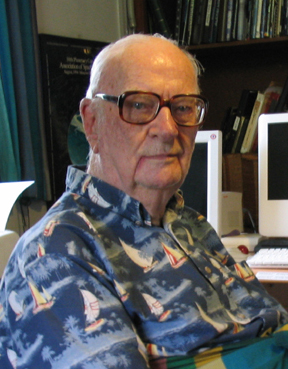
Arthur C. Clarke, właśc. sir Arthur Charles Clarke – brytyjski prozaik, pisarz fantastycznonaukowy, propagator kosmonautyki. M.in. na podstawie jego koncepcji powstały stacje orbitalne.
Jego najbardziej znanym dziełem jest książka 2001: Odyseja kosmiczna oraz nakręcony przez Stanleya Kubricka film o tym samym tytule według wspólnego scenariusza Clarke’a i Kubricka. Wikipedia
„To jest puste, ciągnie się w nieskończoność i… O mój Boże, tam jest pełno gwiazd!”
Arthur C. Clarke książka 2001: Odyseja kosmiczna
ostatnie słowa nadane na Ziemię przez Davida Bowmana.
Odyseja Kosmiczna 2001
Arthur C. Clarke książka 2001: Odyseja kosmiczna
Odyseja Kosmiczna 2001
„Nie chciałbym się upierać, Dave, ale ja jestem niezdolny do popełniania omyłek.”
Arthur C. Clarke książka 2001: Odyseja kosmiczna
Postać: HAL 9000
Odyseja Kosmiczna 2001
Źródło: Stanisław Lem, Fantastyka i futurologia
Źródło: Keith Tutt, W poszukiwaniu nieograniczonej energii, wyd. Amber, seria Tajemnice Nauki
„Dostatecznie zaawansowana technologia nie różni się od magii.”
Źródło: Gregory Hartley, Maryann Karinch, Podręcznik manipulacji, Warszawa 2011, wyd. Bellona, s. 65.
Arthur C. Clarke książka 3001: The Final Odyssey
Chapter 19
Źródło: 3001: The Final Odyssey
“The greatest tragedy in mankind's entire history may be the hijacking of morality by religion.”
"Credo" (1991); also in Greetings, Carbon-Based Bipeds! : Collected Essays, 1934-1998 (1999), p. 360
1990s
“Perhaps our role on this planet is not to worship God — but to create Him.”
"The Mind of the Machine" in Report on Planet Three and Other Speculations (1972)
1970s
“It has yet to be proven that intelligence has any survival value.”
As quoted in Duh! : The Stupid History of the Human Race (2000) by Bob Fenster, p. 208
2000s and attributed from posthumous publications
“A faith that cannot survive collision with the truth is not worth many regrets.”
Źródło: The Exploration of Space
“It must be wonderful to be seventeen, and to know everything.”
Arthur C. Clarke książka 2010: Odyssey Two
Źródło: 2010: Odyssey Two
“It was the mark of a barbarian to destroy something one could not understand.”
Arthur C. Clarke książka 2001: Odyseja kosmiczna
Źródło: 2001: A Space Odyssey
Arthur C. Clarke książka 2001: Odyseja kosmiczna
Źródło: 2001: A Space Odyssey
“Science is the only religion of mankind.”
Arthur C. Clarke książka Childhood's End
Źródło: Childhood's End
“Now I'm a scientific expert; that means I know nothing about absolutely everything.”
Arthur C. Clarke książka 2001: Odyseja kosmiczna
Źródło: 2001: A Space Odyssey
As quoted in The Making of Kubrick's 2001 (1970) by Jerome Agel, p. 300
1970s
Kontekst: One of the biggest roles of science fiction is to prepare people to accept the future without pain and to encourage a flexibility of mind. Politicians should read science fiction, not westerns and detective stories. Two-thirds of 2001 is realistic — hardware and technology — to establish background for the metaphysical, philosophical, and religious meanings later.
"Hazards of Prophecy: The Failure of Imagination" in Profiles of the Future (1962)
Perhaps the adjective "elderly" requires definition. In physics, mathematics, and astronautics it means over thirty; in the other disciplines, senile decay is sometimes postponed to the forties. There are, of course, glorious exceptions; but as every researcher just out of college knows, scientists of over fifty are good for nothing but board meetings, and should at all costs be kept out of the laboratory!
"Hazards of Prophecy: The Failure of Imagination" in Profiles of the Future (1962; as revised in 1973)
On Clarke's Laws
As quoted in The Peter Plan : A Proposal for Survival (1976) by Laurence J. Peter
1970s
“I will not be afraid because I understand… And understanding is happiness.”
Arthur C. Clarke książka Rama Revealed
Rama Revealed
Arthur C. Clarke książka 2010: Odyssey Two
Źródło: 2010: Odyssey Two
Arthur C. Clarke książka Childhood's End
Guardian Angel, p. 220
2000s and posthumous publications, The Collected Stories of Arthur C. Clarke (2001)
Źródło: Childhood's End
“Science can destroy religion by ignoring it as well as by disproving its tenets.”
Arthur C. Clarke książka Childhood's End
1950s
Źródło: Childhood's End (1953), p. 15
Kontekst: Science can destroy religion by ignoring it as well as by disproving its tenets. No one ever demonstrated, so far as I am aware, the non-existence of Zeus or Thor — but they have few followers now.
Arthur C. Clarke książka 2001: Odyseja kosmiczna
1960s
Źródło: 2001: A Space Odyssey (1968) "Foreword"
“Never attribute to malevolence what is merely due to incompetence”
Arthur C. Clarke książka 3001: The Final Odyssey
Źródło: 3001: The Final Odyssey
Arthur C. Clarke książka The Collected Stories of Arthur C. Clarke
Źródło: The Collected Stories of Arthur C. Clarke
Arthur C. Clarke książka 2010: Odyssey Two
Źródło: 2010: Odyssey Two


