Vincent van Gogh cytaty
strona 7

Vincent Willem van Gogh – holenderski malarz postimpresjonistyczny, którego twórczość dzięki żywej kolorystyce i emocjonalnemu oddziaływaniu wywarła dalekosiężny wpływ na sztukę XX w. Artysta w ciągu swego życia cierpiał na napady lękowe i narastające ataki spowodowane zaburzeniami psychicznymi. Zmarł w wieku 37 lat jako twórca nieznany szerszemu ogółowi, w wyniku postrzału z broni palnej – prawdopodobnie samobójczego.

Mało doceniany za życia, van Gogh zyskał sławę po śmierci. Dziś jest powszechnie uważany za jednego z największych malarzy w historii, artystę, którego twórczość stanowi istotne źródło sztuki współczesnej. Van Gogh zaczął malować na kilka lat przed ukończeniem 30. roku życia, a swe najbardziej znane dzieła stworzył w ciągu 2 ostatnich lat. Jest autorem ponad 2000 dzieł, w tym: 870 obrazów, 150 akwarel i ponad 1000 rysunków i 133 szkiców listowych. Dziś jego liczne autoportrety, pejzaże, portrety i słoneczniki należą do najbardziej rozpoznawalnych i najdroższych dzieł sztuki na świecie.

Lata wczesnej młodości van Gogh spędził, pracując w Goupil & Cie, firmie handlującej dziełami sztuki, i podróżując między Hagą, Londynem a Paryżem. Po powrocie do Anglii otrzymał posadę nauczyciela. Jego wczesnym pragnieniem zawodowym było zostanie pastorem. Od 1879 pracował jako misjonarz w górniczym zagłębiu w Belgii. W tym czasie rozpoczął sporządzanie szkiców ludzi z lokalnej społeczności. W 1885 namalował swoje pierwsze wielkie dzieło: Jedzący kartofle. Jego paleta w tamtym czasie składała się przeważnie z mrocznych, ziemistych odcieni i nie wykazywała ani odrobiny żywej kolorystyki, która charakteryzowała jego późniejsze prace. W marcu 1886 van Gogh przeniósł się do Paryża i odkrył francuskich impresjonistów. Później wyjechał na południe Francji i poddał się czarowi silnego światła słonecznego, które tam znalazł. Jego prace stały się jaśniejsze kolorystycznie, a on sam wypracował swój jedyny i bardzo rozpoznawalny styl, który w pełni rozwinął się podczas jego pobytu w Arles w 1888.

Rozmiar wpływu, jaki choroba umysłowa van Gogha wywarła na jego twórczość, stał się przedmiotem spekulacji po jego śmierci. Pomimo szeroko rozpowszechnionej tendencji do romantyzowania złego stanu jego zdrowia, współcześni krytycy widzą w nim artystę głęboko sfrustrowanego bezczynnością i chaosem myślowym wywołanym atakami choroby. Według krytyka sztuki Roberta Hughesa późne prace van Gogha ukazują go jako artystę w pełni zdolności twórczych i całkowicie panującego nad sobą. Wikipedia  

✵ 30. Marzec 1853 – 29. Lipiec 1890
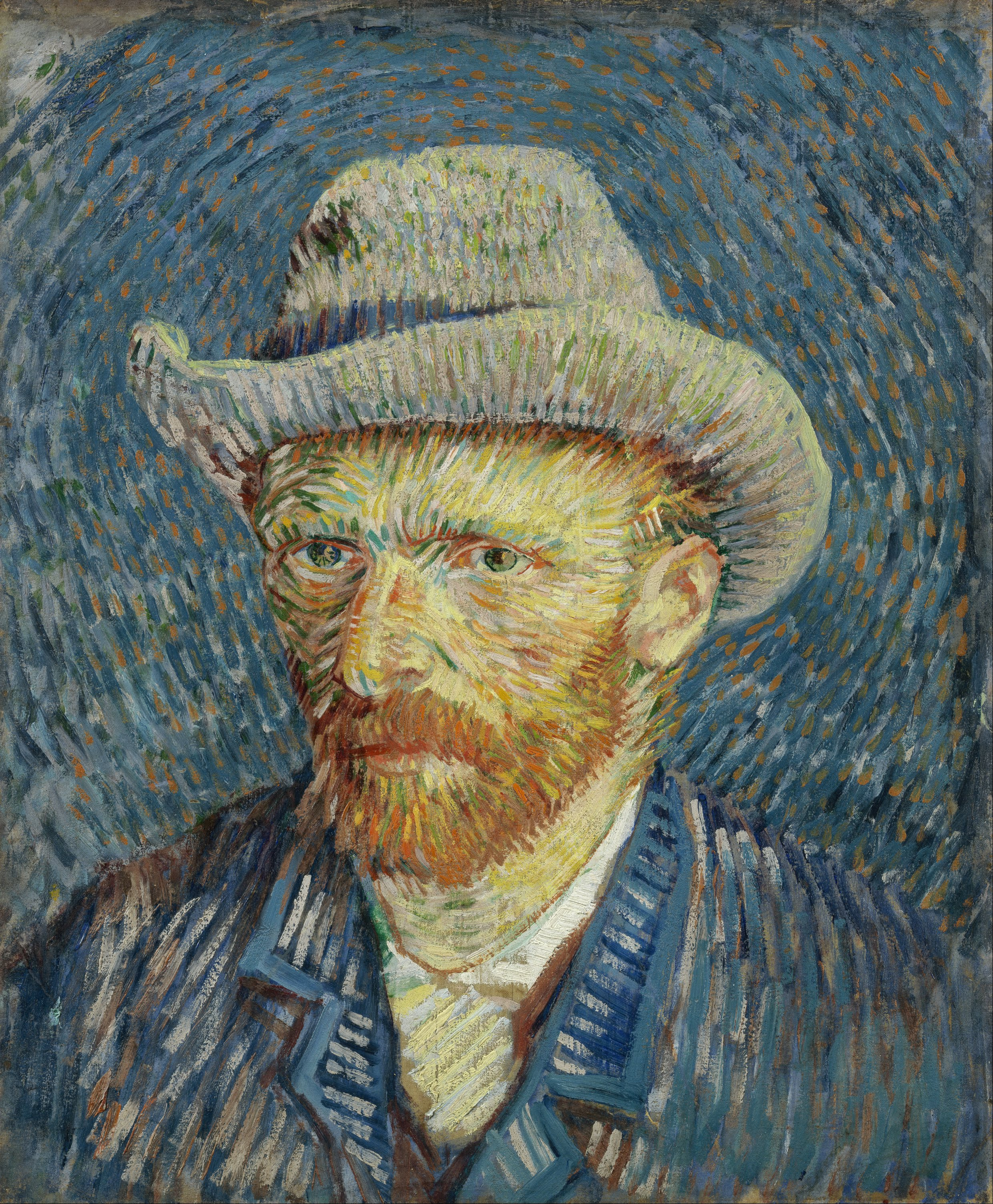
Vincent van Gogh Fotografia
Vincent van Gogh: 268 cytatów61 Polubień

Vincent van Gogh słynne cytaty

„Niedola będzie trwała wiecznie.”

Vincent van Gogh

ostatnie słowa przed śmiercią, wypowiedziane do brata. <br class="br">Źródło: Collin Wilson, Outsider-artysta (van Gogh), „Życie Literackie” nr 9, 2 marca 1958, s. 10 http://mbc.malopolska.pl/dlibra/doccontent?id=14903.

To tłumaczenie czeka na recenzję. Czy to jest poprawne?

Vincent van Gogh Cytaty o życiu

„Jeśli chodzi o moją pracę, naraziłem dla niej życie, a rozum mój załamał się.”

Vincent van Gogh

Źródło: Collin Wilson, Outsider-artysta (van Gogh), „Życie Literackie” nr 9, 2 marca 1958, s. 10 http://mbc.malopolska.pl/dlibra/doccontent?id=14903.

Vincent van Gogh cytaty

Vincent van Gogh: Cytaty po angielsku

“It is hard, terribly hard, to keep on working when one does not sell, and one literally has to pay for one's colors from what would not be too much for eating, drinking and lodgings, calculated ever so strictly. And then, besides, the models... All the same they are building State museums, and the like, for hundreds of thousands, but meanwhile, the artists can go to the dogs.”

Vincent Van Gogh

Quote in his letter, from Antwerp, Belgium, Dec. 1885; as quoted in Vincent van Gogh, edited by Alfred H. Barr; Museum of Modern Art, New York, 1935 https://www.moma.org/documents/moma_catalogue_1996_300061887.pdf, (letter 438) p. 35 <br class="br">1880s, 1885

“May God give me the wisdom which I need and grant me what I so fervently desire, that is, to finish my studies as quickly as possible and he ordained, so that I can perform the practical duties of a clergyman.”

Vincent Van Gogh

In a letter to Theo, from Amsterdam, 19 Nov. 1877; as quoted in Vincent van Gogh, edited by Alfred H. Barr; Museum of Modern Art, New York, 1935 https://www.moma.org/documents/moma_catalogue_1996_300061887.pdf, (letter 113), p. 18 <br class="br">as student, in Amsterdam, staying in the house of his uncle <br class="br">1870s

“Poetry surrounds us everywhere, but putting it on paper is, alas, not so easy as looking at it.”

Vincent Van Gogh

Quote in his letter tot Theo, from The Hague, Sunday, 18 March 1883; as cited in The Complete Letters of Vincent Van Gogh, Vol. 2 (1958) New York Graphic Society, p. 12
1880s, 1883

“If we study Japanese art, you see a man who is undoubtedly wise, philosophic and intelligent who spends his time how? In studying the distance between the earth and the moon? No. In studying the policy of Bismarck? No. He studies a single blade of grass..”

Vincent Van Gogh

Quote in Vincent&#x27;s letter to brother Theo, from Arles, Sept. 1888; as quoted in Vincent van Gogh, edited by Alfred H. Barr; Museum of Modern Art, New York, 1935 https://www.moma.org/documents/moma_catalogue_1996_300061887.pdf, (letter 542), p. 39 <br class="br">1880s, 1888

“I was certainly going the right way for a stroke when I left Paris. I paid for it nicely afterwards! When I stopped drinking, when I stopped smoking so much, when I began again to think instead of trying not to think - good Lord, the depression and the prostration of it! Work in these magnificent natural surroundings [of Arles ] has helped my morale.”

Vincent Van Gogh

Quote in his letter to brother Theo, from Arles, France, 4 May 1888; as quoted in Vincent van Gogh, edited by Alfred H. Barr; Museum of Modern Art, New York, 1935 https://www.moma.org/documents/moma_catalogue_1996_300061887.pdf, (letter 481), p 24 <br class="br">1880s, 1888

“Here, under a stronger sun, I have found true what Pissarro said, and what Gauguin wrote to me as well, the simplicity, the lack of color, the gravity of great sunlight effects.”

Vincent Van Gogh

Quote in his letter to brother Theo, from Arles, Oct. 1888; as quoted in Vincent van Gogh, edited by Alfred H. Barr; Museum of Modern Art, New York, 1935 https://www.moma.org/documents/moma_catalogue_1996_300061887.pdf, (letter 555) p. 28 <br class="br">1880s, 1888

“About staying in the south, even if it's more expensive — Look, we love Japanese painting, we've experienced its influence — all the Impressionists have that in common — and we wouldn't go to Japan, in other words, to what is the equivalent of Japan, the south? So I believe that the future of the new art still lies in the south after all. But it's bad policy to live there alone when two or three could help each other to live on little.”

Vincent Van Gogh

In a letter to brother Theo, from Arles, c. 5 June 1888, in &#x27;Van Gogh&#x27;s Letters&#x27;, letter 620 http://vangoghletters.org/vg/letters/let620/letter.html, Van Goghmuseum <br class="br">Vincent was busy, trying to convince a. o. Paul Gauguin to come to Arles, and to settle there <br class="br">1880s, 1888

“Of course I should be very happy to sell a drawing but I am happier still when a real artist like Weissenbruch says about an unsalable??? study or drawing: "That is true to nature, I could work from that myself."”

Vincent Van Gogh

quote in his letter to brother Theo, from The Hague, The Netherlands in Febr. 1882; as quoted in Vincent van Gogh, edited by Alfred H. Barr; Museum of Modern Art, New York, 1935 https://www.moma.org/documents/moma_catalogue_1996_300061887.pdf, p. 20 (letter 177) <br class="br">1880s, 1882

“As I feel a need to speak out frankly, I cannot hide from you that I am overcome by a feeling of great care, depression, a "je ne sais quoi" of discouragement and despair more than I can tell.
I take it so much to heart that I do not get on better with people in general; it quite worries me because on it depends so much my success in carrying out my work.”

Vincent Van Gogh

Quote in his letter to brother Theo, from Drenthe, The Netherlands, Autumn 1883; as quoted in Vincent van Gogh, edited by Alfred H. Barr; Museum of Modern Art, New York, 1935 https://www.moma.org/documents/moma_catalogue_1996_300061887.pdf, (letter 328) p. 21 <br class="br">1880s, 1883

“This art that we are all working in, we feel it has a long future before it, and one must have some settled base, like steady people, and not like decadents. Here my life will become more and more like a Japanese painter's, living close to nature like a petty tradesman.”

Vincent Van Gogh

Quote in his letter to brother Theo, from Arles, Autumn 1888; as quoted in Vincent van Gogh, edited by Alfred H. Barr; Museum of Modern Art, New York, 1935 https://www.moma.org/documents/moma_catalogue_1996_300061887.pdf, (letter 540), pp. 22-23 <br class="br">1880s, 1888

“To stroll on wharves, and in alleys and in streets and in the houses, waiting-rooms, even saloons, that is not a pleasant pastime unless for an artist. As such, one would rather be in the dirtiest place where there is something to draw, than at a tea party with charming ladies. Unless one wants to draw ladies, then a tea party is all right even for an artist.”

Vincent Van Gogh

quote in his letter to brother Theo, from The Hague, The Netherlands in Spring 1882; as quoted in Vincent van Gogh, edited by Alfred H. Barr; Museum of Modern Art, New York, 1935 https://www.moma.org/documents/moma_catalogue_1996_300061887.pdf, p. 34 (letter 190) <br class="br">1880s, 1882

“I am sure you will like it, it is such a fine business [art-dealer].... I am so glad that we shall both be in the same profession [art dealing] and in the same firm”

Vincent Van Gogh

Goupil and Co. <br class="br">Quote in his letter to brother Theo from The Hague, The Netherlands (13 December 1872); as quoted in Vincent van Gogh, edited by Alfred H. Barr; Museum of Modern Art, New York, 1935 https://www.moma.org/documents/moma_catalogue_1996_300061887.pdf, p. 17 (letter 2) <br class="br">Vincent&#x27;s profession then was picture dealer at Goupil and Co., with branches a. o. in The Hague, London and Paris <br class="br">1870s

“When I call myself a peasant painter, that is a real fact, and it will become more and more clear to you in the future, I feel at home there. By witnessing peasant life continually at all hours of the day I have become so absorbed in it that I hardly ever think of anything else.”

Vincent Van Gogh

Quote in his letter to brother Theo from Nuenen, The Netherlands, Summer 1885; as quoted in Vincent van Gogh, edited by Alfred H. Barr; Museum of Modern Art, New York, 1935 https://www.moma.org/documents/moma_catalogue_1996_300061887.pdf, (letter 400) p. 21 <br class="br">1880s, 1885

“I hope.... to paint some in a lighter gamut, more flesh and blood, but, at the same time, I am trying to get a still stronger soft soap and copper-like effect. In reality I daily see, in the gloomy huts, effects against the light or in the evening twilight.... which I compare to soft soap and brass color of a worn-out 10 centime piece.”

Vincent Van Gogh

Quote in his letter to brother Theo, from Nuenen, The Netherlands, June 1885; as quoted in Vincent van Gogh, edited by Alfred H. Barr; Museum of Modern Art, New York, 1935 https://www.moma.org/documents/moma_catalogue_1996_300061887.pdf, (letter 410) p. 31 <br class="br">1880s, 1885

“Do you know what I long for sometimes? To make a trip to Brabant. I should love to draw the old churchyard at Nuenen, and the weavers. To make, for instance, during a month, studies of Brabant, and to come back [to The Hague] with a lot of them, for a large drawing of a peasant funeral for instance.”

Vincent Van Gogh

Quote of letter 295, from The Hague, 1883; as cited in Vincent van Gogh, Alfred H. Barr; Museum of Modern Art, New York, 1935 https://www.moma.org/documents/moma_catalogue_1996_300061887.pdf, catalog-page: Dutch Period 2. - Weaver <br class="br">1880s, 1883

“I am busy painting every day studies of the weavers here, which I think are technically better than the painted studies from Drenthe, which I sent you.”

Vincent Van Gogh

1880s, 1884 <br class="br">Źródło: Quote from Letter 355, from Nuenen The Netherlands, January 1884; as quoted in Vincent van Gogh, edited by Alfred H. Barr; Museum of Modern Art, New York, 1935 https://www.moma.org/documents/moma_catalogue_1996_300061887.pdf, page: Catalog: Dutch Period 2. - Weaver

“Certainly after all you are right, damn well right - even making allowance for hope, the thing is to accept the probably disastrous reality. I am hoping to throw myself once again wholly in my work which has got behind hand.”

Vincent Van Gogh

Quote in his letter to brother Theo, from Arles, France, 29 March 1889; as quoted in Vincent van Gogh, edited by Alfred H. Barr; Museum of Modern Art, New York, 1935 https://www.moma.org/documents/moma_catalogue_1996_300061887.pdf, (letter 582), p 25 <br class="br">1880s, 1889

“And my intention is to try to form a collection of many such things, which would not be quite unworthy of the title 'heads of the people.' By working hard, boy, I hope to succeed in making something good. It isn't there yet, but I aim at it, and struggle for it. I want something serious, - some thing fresh - something with soul in it! Forward - forward”

Vincent Van Gogh

quote in his letter to brother Theo, from The Hague, The Netherlands, 3 Jan. 1883; as quoted in Vincent van Gogh, edited by Alfred H. Barr; Museum of Modern Art, New York, 1935 https://www.moma.org/documents/moma_catalogue_1996_300061887.pdf, (letter 257), pp. 20-21 <br class="br">1880s, 1883

“If I should find something it will probably be a position between clergy man and missionary in the suburbs of London among the working people. Do not speak to anybody about it yet.”

Vincent Van Gogh

In his letter to brother Theo from Welwyn, England, 17 June 1876; as quoted in Vincent van Gogh, edited by Alfred H. Barr; Museum of Modern Art, New York, 1935 https://www.moma.org/documents/moma_catalogue_1996_300061887.pdf, p. 17 (letter 69) <br class="br">as school teacher and lay preacher near London <br class="br">1870s

Podobni autorzy

Claude Monet Fotografia
Claude Monet7
malarz francuski None
Paul Cézanne Fotografia
Paul Cézanne19
malarz francuski None
Eugène Delacroix Fotografia
Eugène Delacroix22
malarz francuski None
William Blake Fotografia
William Blake19
angielski poeta, pisarz i malarz None
John Ruskin Fotografia
John Ruskin14
angielski krytyk i teoretyk sztuki None
Józef Chełmoński Fotografia
Józef Chełmoński1
malarz polski None
Edgar Degas Fotografia
Edgar Degas9
malarz i rzeźbiarz francuski None
Gustav Klimt Fotografia
Gustav Klimt2
austriacki malarz i grafik None
Auguste Renoir Fotografia
Auguste Renoir9
malarz francuski None
Stanisław Wyspiański Fotografia
Stanisław Wyspiański56
polski dramatopisarz, poeta, malarz, grafik, architekt None