Vincent van Gogh cytaty
strona 6

Vincent Willem van Gogh – holenderski malarz postimpresjonistyczny, którego twórczość dzięki żywej kolorystyce i emocjonalnemu oddziaływaniu wywarła dalekosiężny wpływ na sztukę XX w. Artysta w ciągu swego życia cierpiał na napady lękowe i narastające ataki spowodowane zaburzeniami psychicznymi. Zmarł w wieku 37 lat jako twórca nieznany szerszemu ogółowi, w wyniku postrzału z broni palnej – prawdopodobnie samobójczego.

Mało doceniany za życia, van Gogh zyskał sławę po śmierci. Dziś jest powszechnie uważany za jednego z największych malarzy w historii, artystę, którego twórczość stanowi istotne źródło sztuki współczesnej. Van Gogh zaczął malować na kilka lat przed ukończeniem 30. roku życia, a swe najbardziej znane dzieła stworzył w ciągu 2 ostatnich lat. Jest autorem ponad 2000 dzieł, w tym: 870 obrazów, 150 akwarel i ponad 1000 rysunków i 133 szkiców listowych. Dziś jego liczne autoportrety, pejzaże, portrety i słoneczniki należą do najbardziej rozpoznawalnych i najdroższych dzieł sztuki na świecie.

Lata wczesnej młodości van Gogh spędził, pracując w Goupil & Cie, firmie handlującej dziełami sztuki, i podróżując między Hagą, Londynem a Paryżem. Po powrocie do Anglii otrzymał posadę nauczyciela. Jego wczesnym pragnieniem zawodowym było zostanie pastorem. Od 1879 pracował jako misjonarz w górniczym zagłębiu w Belgii. W tym czasie rozpoczął sporządzanie szkiców ludzi z lokalnej społeczności. W 1885 namalował swoje pierwsze wielkie dzieło: Jedzący kartofle. Jego paleta w tamtym czasie składała się przeważnie z mrocznych, ziemistych odcieni i nie wykazywała ani odrobiny żywej kolorystyki, która charakteryzowała jego późniejsze prace. W marcu 1886 van Gogh przeniósł się do Paryża i odkrył francuskich impresjonistów. Później wyjechał na południe Francji i poddał się czarowi silnego światła słonecznego, które tam znalazł. Jego prace stały się jaśniejsze kolorystycznie, a on sam wypracował swój jedyny i bardzo rozpoznawalny styl, który w pełni rozwinął się podczas jego pobytu w Arles w 1888.

Rozmiar wpływu, jaki choroba umysłowa van Gogha wywarła na jego twórczość, stał się przedmiotem spekulacji po jego śmierci. Pomimo szeroko rozpowszechnionej tendencji do romantyzowania złego stanu jego zdrowia, współcześni krytycy widzą w nim artystę głęboko sfrustrowanego bezczynnością i chaosem myślowym wywołanym atakami choroby. Według krytyka sztuki Roberta Hughesa późne prace van Gogha ukazują go jako artystę w pełni zdolności twórczych i całkowicie panującego nad sobą. Wikipedia  

✵ 30. Marzec 1853 – 29. Lipiec 1890
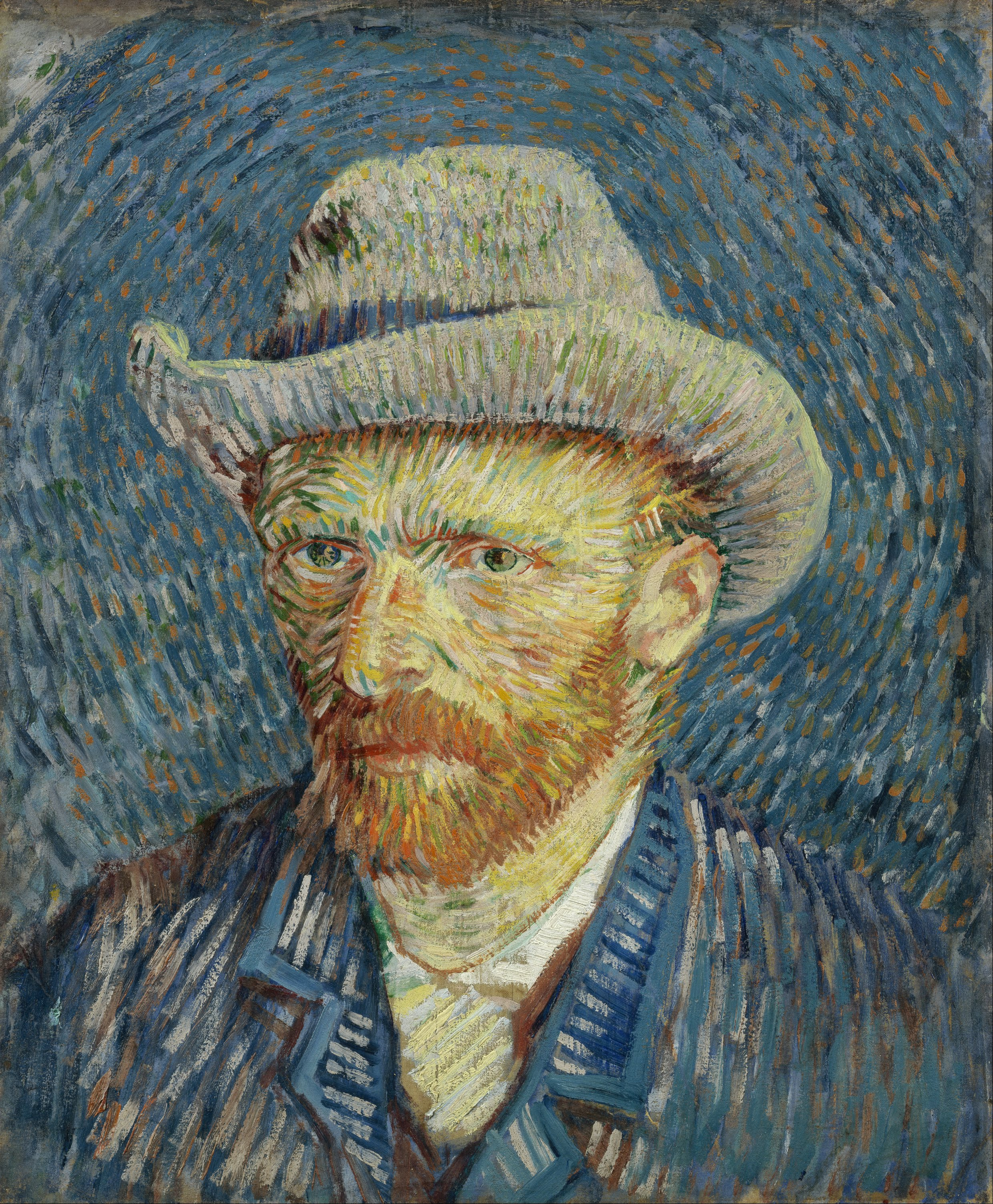
Vincent van Gogh Fotografia
Vincent van Gogh: 268 cytatów61 Polubień

Vincent van Gogh słynne cytaty

„Niedola będzie trwała wiecznie.”

Vincent van Gogh

ostatnie słowa przed śmiercią, wypowiedziane do brata. <br class="br">Źródło: Collin Wilson, Outsider-artysta (van Gogh), „Życie Literackie” nr 9, 2 marca 1958, s. 10 http://mbc.malopolska.pl/dlibra/doccontent?id=14903.

To tłumaczenie czeka na recenzję. Czy to jest poprawne?

Vincent van Gogh Cytaty o życiu

„Jeśli chodzi o moją pracę, naraziłem dla niej życie, a rozum mój załamał się.”

Vincent van Gogh

Źródło: Collin Wilson, Outsider-artysta (van Gogh), „Życie Literackie” nr 9, 2 marca 1958, s. 10 http://mbc.malopolska.pl/dlibra/doccontent?id=14903.

Vincent van Gogh cytaty

Vincent van Gogh: Cytaty po angielsku

“I hope I have just had simply an artist's freak, and then a lot of fever after very considerable loss of blood, as an artery was severed, but my appetite came back at once. My digestion is all right, and so from day to day serenity returns to my brain.”

Vincent Van Gogh

Quote in his letter to brother Theo, from Arles, France, Jan. 1889; as quoted in Vincent van Gogh, edited by Alfred H. Barr; Museum of Modern Art, New York, 1935 https://www.moma.org/documents/moma_catalogue_1996_300061887.pdf, (letter 569), p 24 <br class="br">Vincent wrote this letter about two weeks after his first attack, during which he had cut off his ear <br class="br">1880s, 1889

“Ill as well, and I have not been brave. Then face to face with the suffering of these attacks I feel very frightened too.... All the same I know well that healing comes - if one is brave - from within through profound resignation to suffering and death, through the surrender of your own will and of your self-love. But that is no use to me, I love to paint, to see people and things and everything that makes our life - artificial - if you like.”

Vincent Van Gogh

Quote in his letter to brother Theo, from Saint-Rémy-de-Provence, France, 10 Sept. 1889; as quoted in Vincent van Gogh, edited by Alfred H. Barr; Museum of Modern Art, New York, 1935 https://www.moma.org/documents/moma_catalogue_1996_300061887.pdf, (letter 605), p. 26 <br class="br">1880s, 1889

“.. How I paint I do not know myself. I sit down with a white board before the spot that strikes me, I look at what is before me, I say to myself that white board must become something, I come back dissatisfied - I put it away, and when I have rested a little I go to look at it with a kind of fear. Then I am still dissatisfied, because I have still too closely in my mind that splendid nature..”

Vincent Van Gogh

Quote in a letter of Vincent to Theo, from The Hague (Netherlands), Summer 1882; as quoted in Vincent van Gogh, edited by Alfred H. Barr; Museum of Modern Art, New York, 1935 https://www.moma.org/documents/moma_catalogue_1996_300061887.pdf, (letter 228), p. 30 <br class="br">1880s, 1882

“Someone has a great fire in his soul and nobody ever comes to warm themselves at it, and passers-by see nothing but a little smoke at the top of the chimney and then go on their way.”

Vincent Van Gogh

Quote in his Letter (no. 155), June 1880; published in the online version of http://www.vangoghletters.org/vg/letters/let155/letter.html &quot;Vincent van Gogh – The Letters; The Complete Illustrated and Annotated Edition&quot;]. Retrieved 29 July 2014 <br class="br">Variants: One may have a blazing hearth in one&#x27;s soul and yet no one ever came to sit by it. Passers-by see only a wisp of smoke from the chimney and continue on their way. // There may be a great fire in our hearts, yet no one ever comes to warm himself at it, and the passers-by see only a wisp of smoke. <br class="br">1880s, 1880

“.. At the end of the month I should like to go to the hospital at St. Remy or another institution of this kind. What comforts me a little, is that I am beginning to consider madness as a disease like any other and accept the thing as such, whereas during the crises themselves, I thought that everything I imagined was real... After all... I have perhaps still some almost normal years in front of me.”

Vincent Van Gogh

Quote in his letter to brother Theo, from Arles, France, 21 April 1889; as quoted in Vincent van Gogh, edited by Alfred H. Barr; Museum of Modern Art, New York, 1935 https://www.moma.org/documents/moma_catalogue_1996_300061887.pdf, (letter 585), p 25 <br class="br">1880s, 1889

“.. The thought crossed my mind, how society today in its fall, at moments seen against the light of a renewal, stands out as a large, gloomy silhouette. Yes, for me, the drama of storm in nature, the drama of sorrow in life, is the most impressive.”

Vincent Van Gogh

Quote in his letter to brother Theo, from The Hague, The Netherlands, Summer 1883; as quoted in Vincent van Gogh, edited by Alfred H. Barr; Museum of Modern Art, New York, 1935 https://www.moma.org/documents/moma_catalogue_1996_300061887.pdf, (letter 319) p. 21 <br class="br">1880s, 1883

“.. Here I am shut up for the livelong day under lock and key and with keepers in a cell.... I will not deny that I would rather have died than have caused and suffered such trouble.”

Vincent Van Gogh

Quote in his letter to brother Theo, from Arles, France, 9 March. 1889; as quoted in Vincent van Gogh, edited by Alfred H. Barr; Museum of Modern Art, New York, 1935 https://www.moma.org/documents/moma_catalogue_1996_300061887.pdf, (letter 579), p 25 <br class="br">1880s, 1889

“What surprising fellows those French painters are. A Millet, Delacroix, Corot, Troyon, Daubigny, Rousseau, and a Daumier.... Something else about Delacroix - he had a discussion with a friend about the question of working absolutely from nature, and said on that occasion that one should take one's 'studies' from nature - but that the 'actual painting' had to be made 'by heart'. This friend was walking along the boulevard when they had this discussion - which was already fairly heated. When they parted the other man was still not entirely persuaded. After they parted, Delacroix let him stroll on for a bit - then (making a trumpet of his two hands) bellowed after him in the middle of the street - to the consternation of the worthy passers-by:
'By heart! By heart!”

Vincent Van Gogh

(Par coeur! Par coeur!)<br>I can&#x27;t tell you how much I enjoyed reading this article and some other things about Delacroix.. <br class="br">In his letter to Anthon van Rappard, from Nuenen, The Netherlands, 8 and c. 15 August 1885 - original manuscript, letter 526, at Van Gogh Museum, location Amsterdam - inv. nos. b8390 V/2006, http://vangoghletters.org/vg/letters/let526/letter.html <br class="br">See for this anecdote, taken from Charles Blanc, Les artistes de mon temps, letter 496, n. 7. <br class="br">1880s, 1885

“Some good must come by clinging to the right. Conscience is a man's compass, and though the needle sometimes deviates, though one often perceives irregularities in directing one's course by it, still one must try to follow its direction.”

Vincent Van Gogh

Quote in a letter of Vincent to brother Theo, from The Hague, between c. 13 and c. 18 December 1882; as cited in Dear Theo: the Autobiography of Vincent Van Gogh; ed. Irving Stone and Jean Stone, (1995) p. 181 - ISBN 0452275040
1880s, 1882

“.. Now there is in the South of Belgium, in Hainault, in the neighborhood of Mons.... a district called the Borinage, that has a peculiar population of laborers who work in the numerous coal mines... I should very much like to go there as an evangelist.... St. Paul was three years in Arabia before he began to preach..”

Vincent Van Gogh

In his letter to brother Theo, from Laeken, near Brussels, 15 Nov. 1878, (letter 126); as quoted in Vincent van Gogh, edited by Alfred H. Barr; Museum of Modern Art, New York, 1935 https://www.moma.org/documents/moma_catalogue_1996_300061887.pdf, p. 18 <br class="br">1870s

“Text: Psalm 119:19. I am a stranger on the earth, hide not Thy command ments from me.
Are we what we dreamt we should be? No, but still the sorrows of life..., so much more numerous than we expected, the tossing to and fro in the world, they have covered it over, but it is not dead, it sleepeth.”

Vincent Van Gogh

Quote from van Gogh&#x27;s first sermon, 29 October, 1876; as quoted in Vincent van Gogh, edited by Alfred H. Barr; Museum of Modern Art, New York, 1935 https://www.moma.org/documents/moma_catalogue_1996_300061887.pdf, p. 18 <br class="br">1870s

“My intention is to make in Drenthe so much progress in painting that when I come back I may be qualified for the 'Society of Draughtsmen' [a group of London illustrators]. This stands again in connection with the second plan of going to England”

Vincent Van Gogh

to become an illustrator <br class="br">Quote in his letter to brother Theo, from The Hague, The Netherlands, Summer 1883; as quoted in Vincent van Gogh, edited by Alfred H. Barr; Museum of Modern Art, New York, 1935 https://www.moma.org/documents/moma_catalogue_1996_300061887.pdf, (letter 319) p. 21 <br class="br">1880s, 1883

“.. How glad I was when this doctor took me for an ordinary workingman and said: "I suppose you are an iron worker." That is just what I have tried to change in myself; when I was younger, I looked like one who has been intellectually overwrought, and now I look like a skipper or an iron worker.”

Vincent Van Gogh

Quote in his letter to brother Theo, from Antwerp, Belgium, 28 Dec. 1885; as quoted in Vincent van Gogh, edited by Alfred H. Barr; Museum of Modern Art, New York, 1935 https://www.moma.org/documents/moma_catalogue_1996_300061887.pdf, (letter 442) p. 22 <br class="br">1880s, 1885

“Believe me, I work, I drudge, I grind all day long and I do so with pleasure, but I should get very much discouraged if I could not go on working as hard or even harder... I feel, Theo, that there is a power within me, and I do what I can to bring it out and free it. It is hard enough, all the worry and bother with my drawings, and if I had too many other cares and could not pay the models I should lose my head.”

Vincent Van Gogh

quote in his letter to brother Theo, from The Hague, The Netherlands in Jan. 1882; as quoted in Vincent van Gogh, Alfred H. Barr; Museum of Modern Art, New York, 1935 https://www.moma.org/documents/moma_catalogue_1996_300061887.pdf, p. 20 (letter 171) <br class="br">1880s, 1882

“Formerly I felt repulsion for these creatures, and it was a harrowing thought for me to reflect that so many of our profession, Troyon, Marchal, Meryon, Jundt, M. Maris, Monticelli [all painter-artists], and heaps more had ended like this.”

Vincent Van Gogh

Quote in his letter to brother Theo, from Saint-Rémy-de-Provence, France, 25 May 1889; as quoted in Vincent van Gogh, edited by Alfred H. Barr; Museum of Modern Art, New York, 1935 https://www.moma.org/documents/moma_catalogue_1996_300061887.pdf, (letter 592), p 25 <br class="br">1880s, 1889

“. I have done well to come here [to the hospital of Saint-Remy, ] first of all that by seeing the actual truth about the life of the various madmen and lunatics in this menagerie I am losing the vague dread, the fear of the thing.”

Vincent Van Gogh

Quote in his letter to brother Theo, from Saint-Rémy-de-Provence, France, May 1889; as quoted in Vincent van Gogh, edited by Alfred H. Barr; Museum of Modern Art, New York, 1935 https://www.moma.org/documents/moma_catalogue_1996_300061887.pdf, (letter 591), p 25 <br class="br">1880s, 1889

Podobni autorzy

Claude Monet Fotografia
Claude Monet7
malarz francuski None
Paul Cézanne Fotografia
Paul Cézanne19
malarz francuski None
Eugène Delacroix Fotografia
Eugène Delacroix22
malarz francuski None
William Blake Fotografia
William Blake19
angielski poeta, pisarz i malarz None
John Ruskin Fotografia
John Ruskin14
angielski krytyk i teoretyk sztuki None
Józef Chełmoński Fotografia
Józef Chełmoński1
malarz polski None
Edgar Degas Fotografia
Edgar Degas9
malarz i rzeźbiarz francuski None
Gustav Klimt Fotografia
Gustav Klimt2
austriacki malarz i grafik None
Auguste Renoir Fotografia
Auguste Renoir9
malarz francuski None
Stanisław Wyspiański Fotografia
Stanisław Wyspiański56
polski dramatopisarz, poeta, malarz, grafik, architekt None