„Sprawa nie musi być koniecznie słuszna tylko dlatego, że ktoś oddał za nią życie.”
Źródło: „Dziś”, t. 12, Kier, 2001, s. 112.
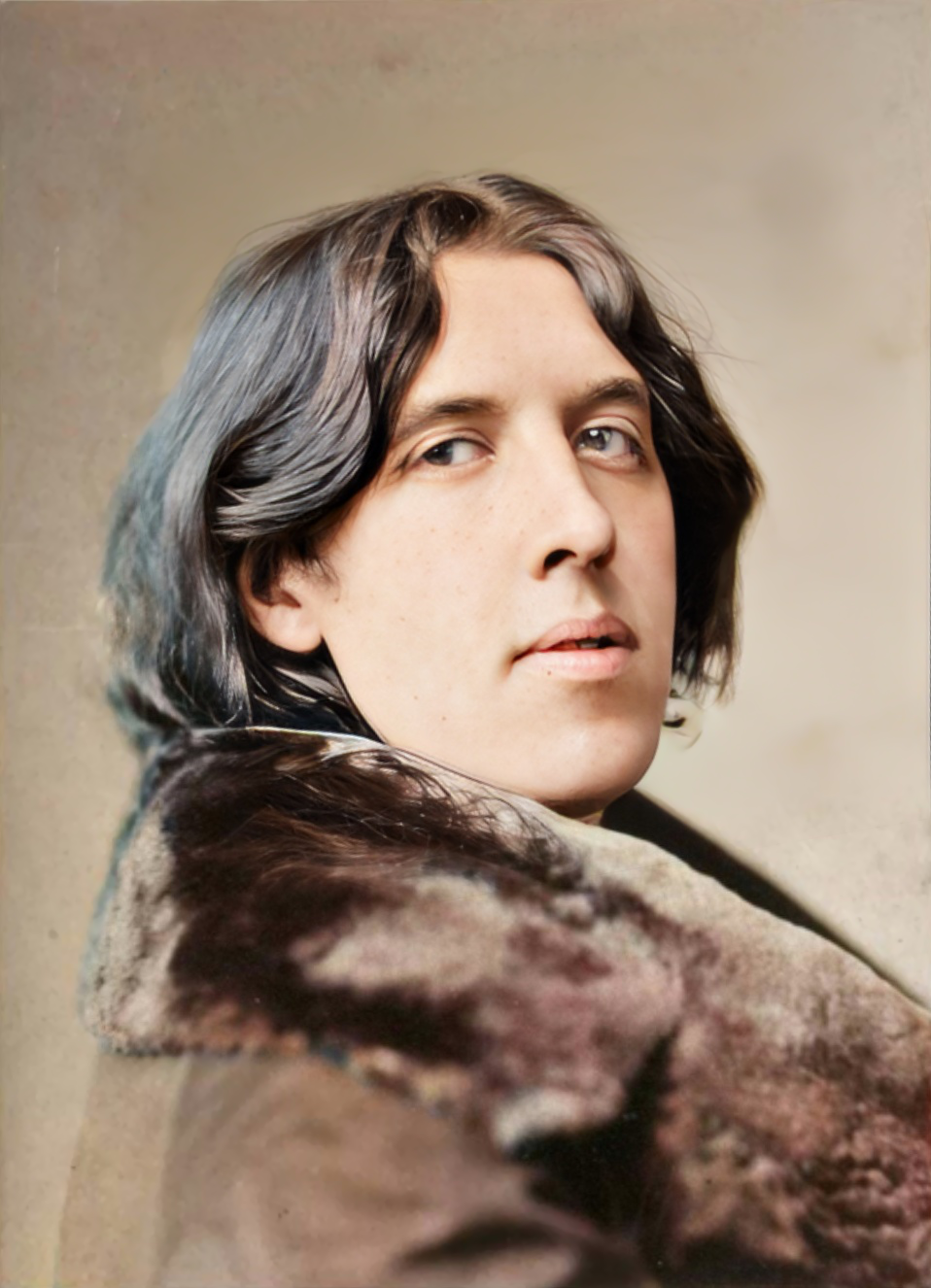
Oscar Fingal O'Flahertie Wills Wilde – irlandzki poeta, prozaik, dramatopisarz i filolog klasyczny. Przedstawiciel modernistycznego estetyzmu. Wikipedia
„Sprawa nie musi być koniecznie słuszna tylko dlatego, że ktoś oddał za nią życie.”
Źródło: „Dziś”, t. 12, Kier, 2001, s. 112.
„Uwielbiam gadanie o niczym. To jedyna rzecz, o której coś mogę powiedzieć.”
Mąż idealny
Źródło: akt I, s. 231.
„Gdziekolwiek jest popyt, tam nie ma podaży.”
Whenever there exists a demand, there is no supply. (ang.) <br class="br">Epigrams <br class="br">Źródło: s. 60 http://books.google.pl/books?id=M0LDv6xsaiMC&printsec=frontcover&source=gbs_ge_summary_r&cad=0#v=onepage&q&f=false
„Jedynymi prawdziwymi istotami są te, które nigdy nie istniały.”
Oscar Wilde książka The Decay of Lying
The only real people are the people who never existed. (ang.) <br class="br">The Decay of Lying (1889) <br class="br">Źródło: Kessinger Publishing, 2004, s. 6 http://books.google.pl/books?id=O4ltrffmYNsC&printsec=frontcover&source=gbs_ge_summary_r&cad=0#v=onepage&q&f=false
„Ambicja to ostatnie schronienie bankruta.”
Ambition is the last refuge of the failure. (ang.) <br class="br">Źródło: Shorter Prose Pieces http://books.google.pl/books?id=QfBfxcbQRNMC&printsec=frontcover&source=gbs_ge_summary_r&cad=0#v=onepage&q&f=false, ICON Group International, 2010, s. 3.
Yet each man kills the thing he loves<br>By each let this be heard,<br>Some do it with a bitter look,<br>Some with a flattering word,<br>The coward does it with a kiss,<br>The brave man with a sword! (ang.) <br class="br">Źródło: Ballada o więzieniu w Reading http://books.google.pl/books?id=C1SmxkCFB44C&printsec=frontcover&source=gbs_ge_summary_r&cad=0#v=onepage&q&f=false, Kessinger Publishing, 2004, s. 2, 3.
„Anglicy uważają, że każdy problem można rozwiązać przy pomocy książeczki czekowej.”
Mąż idealny
Źródło: akt III, s. 320.
„Stratę jednego z rodziców można uznać za nieszczęście. Utrata obojga wygląda na niedbalstwo.”
Oscar Wilde Bądźmy poważni na serio
To lose one parent may be regarded as a misfortune… to lose both seems like carelessness. (ang.)
Bądźmy poważni na serio (1895), Lady Bracknell
Źródło: akt I
„Zawsze przebaczaj swoim wrogom: nic nie zdoła bardziej ich rozzłościć.”
Always forgive your enemies; nothing annoys them so much. (ang.)
We men know life too early. And we women know life too late. That is the difference between men and women. <br class="br">Kobieta bez znaczenia <br class="br">Źródło: Arc Manor LLC, 2008, s. 120 http://books.google.pl/books?id=CNStNwJKrZEC.
„(…) jeśli bogowie chcą nas ukarać – spełniają nasze prośby.”
Mąż idealny
Źródło: akt II, s. 266.
„Nie dożyję nowego stulecia. Anglicy by mi tego nie darowali.”
Źródło: „Polityka”, wyd. 8–13, Wydawn. Prasowe Polityka, 2005, s. 60.
„Wierzy się w coś nie dlatego, że jest to racjonalne, lecz dlatego, że często powtarzane.”
Źródło: „Wprost”, wyd. 9–12, Agencja Wydawniczo-Reklamowa Wprost, 2007, s. 13.
Źródło: Waldemar Łysiak, Empirowy pasjans, Ex Libris, 2001, s. 325.
„Dawniej mieliśmy zwyczaj kanonizowania naszych bohaterów – obecnie ich trywializujemy.”
Formerly we used to canonize our heroes. The modern method is to vulgarize them. (ang.) <br class="br">The Critic as Artist (1891) <br class="br">Źródło: s. 342 http://books.google.pl/books?id=RqnxvCU8YzQC&printsec=frontcover&source=gbs_ge_summary_r&cad=0#v=onepage&q&f=false
„Współczesne kobiety rozumieją wszystko z wyjątkiem własnych mężów.”
Źródło: „Szpilki”, t. 53, Prasa-Książka-Ruch, 1988.
As a rule, I think they’re quite imposiible. Geniuses talk so much, don’t they? Such a bad habit! And they are always thinking about themselves, when I want them to to be thinking about me! (ang.)
Źródło: Rodney Shewan, Oscar Wilde. Art and Egotism, Barnes & Noble Books, 1977, s. 183.
Oscar Wilde książka The Decay of Lying
…) If Nature had been comfortable, mankind would never have invented architecture. (ang.
The Decay of Lying (1889)
„Gdy człowiek jest szczęśliwy, żyje w harmonii z samym sobą i swoim otoczeniem.”
Oscar Wilde książka The Soul of Man under Socialism
When man is happy, he is in harmony with himself and his environment. (ang.) <br class="br">The Soul of Man under Socialism <br class="br">Źródło: s. 40 http://books.google.pl/books?id=VGQhIBXSNOIC&printsec=frontcover&source=gbs_ge_summary_r&cad=0#v=onepage&q&f=false
„To potworne, że za plecami ludzie mówią o nas rzeczy, które są całkowicie i absolutnie prawdziwe.”
It is perfectly monstrous the way people go about, nowadays, saying things against one behind one’s back that are absolutely and entirely true. (ang.) <br class="br">Kobieta bez znaczenia <br class="br">Źródło: wyd. ReadHowYouWant.com, 2008, s. 23 http://books.google.pl/books?id=ghE5hpVIp3wC.
„Dawanie rad zawsze jest nierozsądne, ale danie dobrej rady jest bezwzględnie fatalne.”
It is always a silly thing to give advice, but to give good advice is absolutely fatal. (ang.) <br class="br">Źródło: The Portrait Of Mr. W. H. http://books.google.pl/books?id=_-HSHbNxkS8C&printsec=frontcover&source=gbs_ge_summary_r&cad=0#v=onepage&q&f=false, Kessinger Publishing, 2004, s. 5.
„Jeśli chcesz wiedzieć, co ma na myśli kobieta (…), nie słuchaj tego, co mówi, patrz na nią.”
If you want to know what a woman really means (…) – look at her, don’t listen to her. (ang.) <br class="br">Kobieta bez znaczenia <br class="br">Źródło: Arc Manor LLC, 2008, s. 78 http://books.google.pl/books?id=CNStNwJKrZEC&printsec=frontcover&source=gbs_ge_summary_r&cad=0#v=onepage&q&f=false.
„Idea, która nie jest niebezpieczna, niegodna jest miana idei.”
Oscar Wilde książka Intentions
An idea that is not dangerous is unworthy of being called an idea at all. (ang.) <br class="br">Źródło: Intentions http://books.google.pl/books?id=cL_RqzAS6k0C&printsec=frontcover&source=gbs_ge_summary_r&cad=0#v=onepage&q&f=false, Kessinger Publishing, 2004, s. 87.
But what is the good of friendship if one cannot say exactly what one means? Anybody can say charming things and try to please and to flatter, but a true friend always says unpleasant things, and does not mind giving pain. Indeed, if he is a really true friend he prefers it, for he knows that then he is doing good. (ang.) <br class="br">Źródło: Prawdziwy przyjaciel w: The Happy Prince, and Other Tales http://archive.org/details/happyprinceother00wild3, wyd. Brentano, Nowy Jork, s. 91.
„Chrystus nie umarł, żeby zbawiać ludzkość, ale żeby nauczyć ludzi, jak się zbawiać nawzajem.”
Christ did not die to save people, but to teach people how to save each other. (ang.) <br class="br">Listy <br class="br">Źródło: list do Roberta Ross z 2 marca 1898, cyt. za: Letters http://books.google.pl/books?ei=hJspTfSCHsqfOra8mKoC&ct=result&id=MY1bAAAAMAAJ&dq=Christ+did+not+die+to+save+people%2C+but+to+teach+people+how+to+save+each+Wilde&q=Christ+did+not+die+to+save+people%2C+but+to+teach+people+how+to+save+each+other#search_anchor, Harcourt, Brace, & World, 1962, s. 709.
„Każdy może tworzyć historię, ale tylko naprawdę wielki człowiek może ją pisać.”
Anybody can make history. Only a great man can write it. (ang.) <br class="br">The Critic as Artist (1891) <br class="br">Źródło: Wilde-online.info http://www.wilde-online.info/the-critic-as-artist.html


