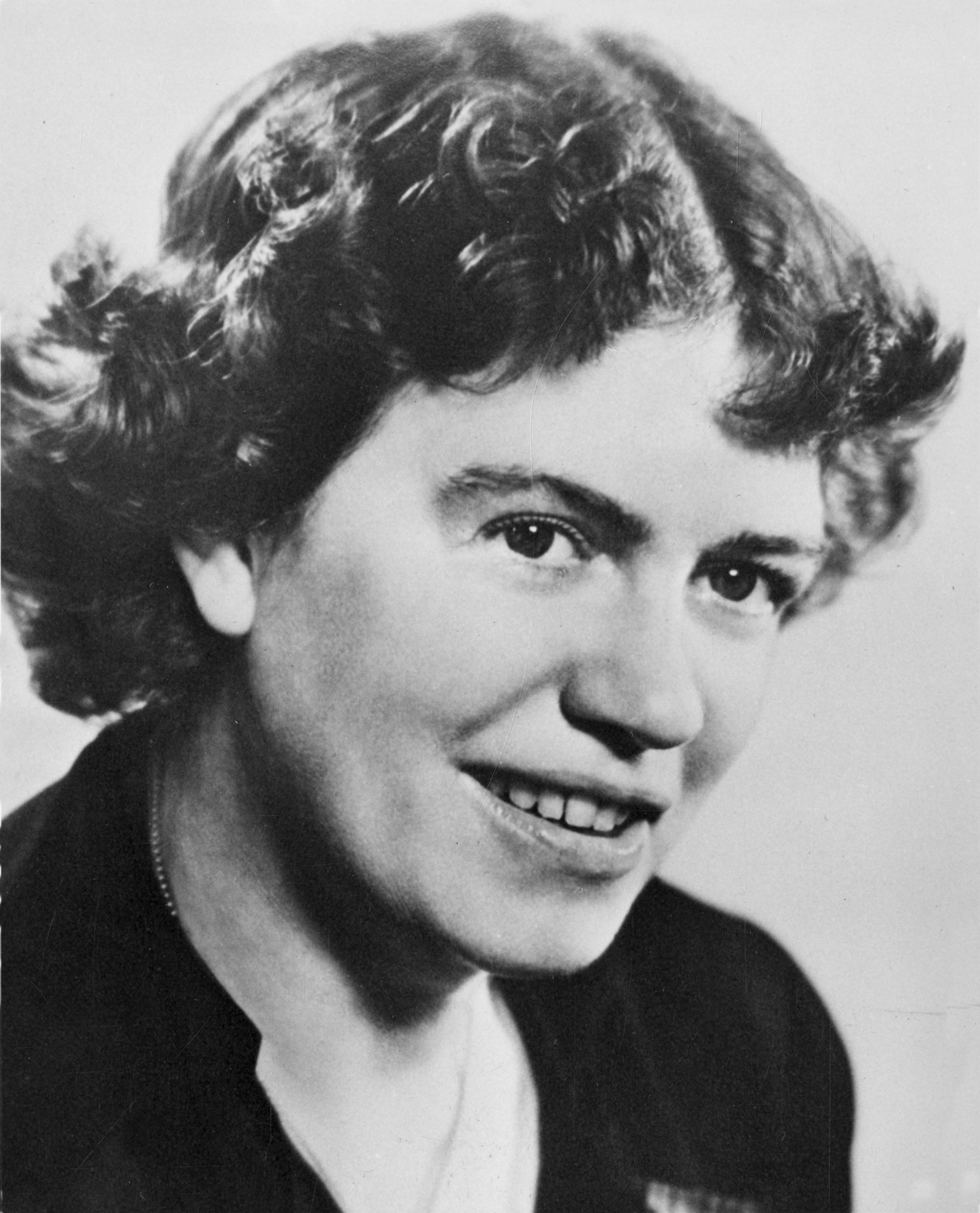
Margaret Mead słynne cytaty
Źródło: Jagodowa zima, cyt. za: Deborah G. Felder, 100 kobiet, które miały największy wpływ na dzieje ludzkości, wyd. Świat Książki, Warszawa 1998, ISBN 8371296665, s. 27, tłum. Maciej Świerkocki.
Źródło: Dojrzewanie na Samoa, PIW, Warszawa 1986, tłum. Ewa Życielińska.
Źródło: Deborah G. Felder, 100 kobiet, które miały największy wpływ na dzieje ludzkości, op. cit., s. 26.
o swojej babci, która była wykwalifikowaną nauczycielką oraz dyrektorką szkoły i nazywała się Martha Ramsey Mead; uczyła ona małą Margaret w domu.
Źródło: Deborah G. Felder, 100 kobiet, które miały największy wpływ na dzieje ludzkości, op. cit., s. 26.
Never doubt that a small group of thoughtful, committed citizens can change the world. Indeed, it is the only thing that ever has. (ang.) <br class="br">Źródło: puszka.waw.pl http://puszka.waw.pl/i/media/usr/957/2010-12-21%2010_copy.JPG
Źródło: Dojrzewanie na Samoa, tłum. Ewa Życieńska
Margaret Mead: Cytaty po angielsku
Źródło: 1930s, Sex and Temperament in Three Primitive Societies (1935), p. 322
Kontekst: Historically our own culture has relied for the creation of rich and contrasting values upon many artificial distinctions, the most striking of which is sex. It will not be by the mere abolition of these distinctions that society will develop patterns in which individual gifts are given place instead of being forced into an ill-fitting mould. If we are to achieve a richer culture, rich in contrasting values, we must recognize the whole gamut of human potentialities, and so weave a less arbitrary social fabric, one in which each diverse human gift will find a fitting place.
Źródło: 1920s, Coming of Age in Samoa (1928), p. 1
Źródło: 1940s, Balinese Character (1942), p. 7
Źródło: 1940s, Balinese Character (1942), p. 39 as cited in: E. Bruce Goldstein (1994) Psychology. p. 511
Źródło: 1930s, Sex and Temperament in Three Primitive Societies (1935), p. 55; cited inWomen, History, and Theory : The Essays of Joan Kelly (1986), by Joan Kelly, p. 137
“Throughout history, females have picked providers for mates. Males pick anything.”
Attributed in 3,500 Good Quotes for Speakers (1985) edited by Gerald F. Lieberman, p. 114
1980s
“Life in the twentieth century is like a parachute jump: you have to get it right the first time.”
As quoted in Margaret Mead, World's Grandmother (1975) by Ann Morse, Charles Morse, Harold Henriksen, p. 9
1970s
“The United States has the power to destroy the world, but not the power to save it alone.”
As quoted in Quotations for Our Time (1977), by Laurence J. Peter, p. 509
1970s
As quoted in Margaret Mead: A Life (1984) by Jane Howard; cited in Journey Through Womanhood : Meditations from Our Collective Soul (2002) by Tian Dayton, p. 46
1980s
Źródło: 1970s, Changing Styles of Anthropological Work, 1973, p. 1
“I learned the value of hard work by working hard.”
Attributed in You Vs. You: Sport Psychology Got Life (2005) by Wayne Mazzoni, p. 90
2000s
Źródło: 1950s, People and Places (1959), p. 198
Źródło: 1940s, Male and Female (1949), p. 84 as cited in: John Whiting, Eleanor Hollenberg Chasdi, Roy D'Andrade (2006) Culture and Human Development: The Selected Papers of John Whiting. p. 240
Źródło: 1940s, Balinese Character (1942), p. xi
Źródło: 1930s, Growing Up in New Guinea (1930), p. 406
“What people say, what people do, and what they say they do are entirely different things.”
Attributed in Teaching Music Through Performance In Band, Vol. 3 (2000), edited by Richard B. Miles, Larry Blocher, Eugene Corporon, p. 13
2000s
Źródło: 1930s, Sex and Temperament in Three Primitive Societies (1935), p. xvi
As quoted in Margaret Mead : Some Personal Views (1979) edited by Rhoda Métraux
As quoted in American Quotations (1992) by Gorton Carruth and Eugene H. Ehrlich
1970s
Wariant: At times it may be necessary temporarily to accept a lesser evil, but one must never label a necessary evil as good.
Źródło: 1940s, And Keep Your Powder Dry: An Anthropologist Looks at America (1942), p. 134
Źródło: 1970s, Changing Styles of Anthropological Work, 1973, p. 8
Źródło: 1930s, Sex and Temperament in Three Primitive Societies (1935), p. 39 as cited in: Guy R. Lefrançois (1973) Of children; an introduction to child development. p. 65
“Fathers are biological necessities, but social accidents.”
Attributed in Two Hugs for Survival (1982) by Harold A. Minden (1982), p. 22
1980s
Źródło: 1920s, Coming of Age in Samoa (1928), p. 131 (1973 edition)
Preface of 1950 edition of Sex and Temperament in Three Primitive Societies (1935), p. xxvi <!-- ; 1977 editon, p. ix -->
[Anthropology demands] the open-mindedness with which one must look and listen, record in astonishment and wonder that which one would not have been able to guess.
As quoted in Gaither's Dictionary of Scientific Quotations (2012) by Carl C. Gaither and Alma E. Cavazos-Gaither<!-- cited in Coming of Age in Second Life : An Anthropologist Explores the Virtually Human (2010) by Tom Boellstorff, p. 71 -->
1950s
Źródło: 1920s, Coming of Age in Samoa (1928), p. 6-7
Attributed to Mead in Mead Childhood Education Vol. 54 (1977) by Association for Childhood Education International, p. 126
1970s


.jpg)