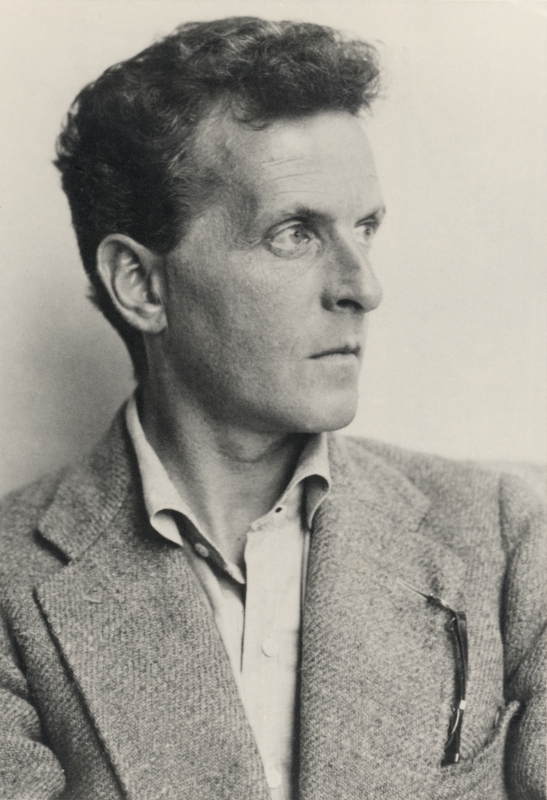
Ludwig Wittgenstein cytaty
strona 2

Ludwig Josef Johann Wittgenstein – filozof zajmujący się przede wszystkim językiem i logiką, poruszał także kwestie kluczowe dla filozofii umysłu i matematyki. Jego wczesne prace uczyniły z niego „ojca chrzestnego” neopozytywizmu, późniejsze natomiast stanowiły kluczowy wkład w badaniach nad pragmatyką. Wikipedia  

✵ 26. Kwiecień 1889 – 29. Kwiecień 1951  •  Natępne imiona Ludwig Josef Johann Wittgenstein
Ludwig Wittgenstein Fotografia
Ludwig Wittgenstein: 257 cytatów2 Polubienia

Ludwig Wittgenstein słynne cytaty

„2.021 Przedmioty stanowią substancję świata. Dlatego nie mogą być złożone.”

Ludwig Wittgenstein książka Traktat logiczno-filozoficzny

2.0211 Die Gegenstände bilden die Substanz der Welt. Darum können sie nicht zusammengesetzt sein.
Tractatus Logico-Philosophicus

„2.05 Przez ogół istniejących stanów rzeczy wyznaczone jest również to, jakie stany rzeczy nie istnieją.”

Ludwig Wittgenstein książka Traktat logiczno-filozoficzny

2.05 Die Gesamtheit der bestehenden Sachverhalte bestimmt auch, welche Sachverhalte nicht bestehen. (niem.)
Tractatus Logico-Philosophicus

„Stawiam niezliczone niestosowne pytania. Gdybym tylko zdołał przedrzeć się przez ten las.”

Ludwig Wittgenstein

Uwagi różne
Źródło: Uwagi różne, 1947.

„Oby Bóg dał filozofowi wgląd w to, co leży przed oczyma wszystkich.”

Ludwig Wittgenstein

Uwagi różne
Źródło: Uwagi różne, 1947.

„Wzajemne pozdrowienie filozofów powinno brzmieć: Nie spiesz się!”

Ludwig Wittgenstein

Uwagi różne
Źródło: Uwagi różne, 1949.

Ludwig Wittgenstein Cytaty o świecie

„2.04 Ogół istniejących stanów rzeczy jest światem.”

Ludwig Wittgenstein książka Traktat logiczno-filozoficzny

2.04 Die Gesamtheit der bestehenden Sachverhalte ist die Welt. (niem.)
Tractatus Logico-Philosophicus

„1.1 Świat to ogół faktów, nie rzeczy.”

Ludwig Wittgenstein książka Traktat logiczno-filozoficzny

1.1. Die Welt ist Gesamheit der Tatsachen, nicht der Dinge. (niem.)
Tractatus Logico-Philosophicus

„1. Świat jest wszystkim, co jest faktem.”

Ludwig Wittgenstein książka Traktat logiczno-filozoficzny

1. Die Welt is alles, was der Fall ist.
Tractatus Logico-Philosophicus

Ludwig Wittgenstein cytaty

„6.5 Dla odpowiedzi, której sformułować się nie da, nie da się także sformułować pytania.
Nie ma żadnej z a g a d k i.
Jeżeli da się w ogóle postawić pytanie, to m o ż n a również na nie odpowiedzieć.”

Ludwig Wittgenstein książka Traktat logiczno-filozoficzny

6.5 Zu einer Anwort, die man nicht aussprechen kann, kann man auch die Frage nich aussprechen.
D a s R ä t s e l gibt es nicht.
Wenn sich eine Frage überhaupt stellen läst, so k a n n sie auch beantworten werden. (niem.)
Tractatus Logico-Philosophicus

„Pozostaw czytelnikowi to, co on sam potrafi.”

Ludwig Wittgenstein

Uwagi różne
Źródło: Uwagi różne, 1948.

„6. 4311 Śmierć nie jest epizodem życia. Śmierci się nie doświadcza.”

Ludwig Wittgenstein książka Traktat logiczno-filozoficzny

6. 4311 Der Tod ist kein Ereignis des Lebens. Den Tod erlebt man nicht. (niem.)
Tractatus Logico-Philosophicus

„7. O czym nie da się mówić, to się musi przemilczeć.”

Ludwig Wittgenstein książka Traktat logiczno-filozoficzny

7. Wovon man nicht sprechen kann, darüber muss man schweigen. (niem.)
Tractatus Logico-Philosophicus

„Ambicja zabija myśl.”

Ludwig Wittgenstein

Uwagi różne
Źródło: Uwagi różne, 1948.

„2.024 Substancja jest tym, co istnieje niezależnie od tego, co jest faktem.”

Ludwig Wittgenstein książka Traktat logiczno-filozoficzny

2.024 Die Substanz ist das, was unabhängig von dem was der Fall ist, besteht. (niem.)
Tractatus Logico-Philosophicus

„2.0271 Przedmiot jest tym, co trwałe i stałe; konfiguracja – tym, co zmienne i nietrwałe.”

Ludwig Wittgenstein książka Traktat logiczno-filozoficzny

2.0271 Der Gegenstand ist das Feste, Bestehende; die Konfiguration ist das Wechselnde, Unbeständige. (niem.)
Tractatus Logico-Philosophicus

„2.02 Przedmiot jest prosty.”

Ludwig Wittgenstein książka Traktat logiczno-filozoficzny

2.02 Der Gegenstand ist einfach. (niem.)
Tractatus Logico-Philosophicus

„2.0232 Nawiasem mówiąc: przedmioty są bezbarwne.”

Ludwig Wittgenstein książka Traktat logiczno-filozoficzny

2.0232 Beiläufig gesprochen: Die Gegenstände sind farblos. (niem.)
Tractatus Logico-Philosophicus

„Jeżeli USA nie dostarczą nam czasopism detektywistycznych, nie będziemy im mogli dostarczyć filozofii i w ten sposób w ostateczności to Ameryka będzie stratna.”

Ludwig Wittgenstein

Źródło: list do Normana Malcolma, luty 1940 [za:] N. Malcolm, Ludwig Wittgenstein. A Memoir

„2.013 Każda rzecz jest niejako w przestrzeni możliwych stanów rzeczy. Przestrzeń tę mogę pomyśleć sobie jako pustą, ale nie mogę sobie pomyśleć rzeczy bez przestrzeni.”

Ludwig Wittgenstein książka Traktat logiczno-filozoficzny

2.013 Jedes Ding ist, gleichsam, in einem Raume möglicher Sachverhalte. Diesen Raum kann ich mir leer denken, nicht aber das Ding ohne den Raum. (niem.)
Tractatus Logico-Philosophicus

„5.6 Granice mojego języka oznaczają granice mojego świata.”

Ludwig Wittgenstein książka Traktat logiczno-filozoficzny

5.6 Die Grenzen meiner Sprache bedeuten die Grenzen meiner Welt. (niem.)
Tractatus Logico-Philosophicus
Źródło: „Słynną tezę 5.6 zachowaliśmy w utartym już w naszej literaturze filozoficznej przekładzie oddającym «bedeuten» jako «oznaczają». Trzeba jednak podkreślić, że jest to przekład mylący, gdyż nie chodzi tu o oznaczanie w sensie stosunku semantycznego, ani też o oznaczanie w sensie tożsamości denotatów. «Bedeuten» znaczy bowiem w niemczyźnie także «dać do zrozumienia» (pośrednio, lecz stanowczo) i to właśnie znaczenie zdaje się Wittgenstein mieć na myśli. Trafniejszym przekładem tej tezy byłoby zdanie: «Granice mego języka wskazują granice mego świata.»” – Bogusław Wolniewicz, wstęp do Tractatus Logico-Philosophicus, Państwowe Wydawnictwo Naukowe, 1970. W literaturze polskiej spotyka się również użycie sfomułowania wyznaczają.

„2.027 To, co stałe i trwałe, oraz przedmiot, są jednym i tym samym.”

Ludwig Wittgenstein książka Traktat logiczno-filozoficzny

2.027 Das Feste, das Bestehende und der Gegenstand sind Eins. (niem.)
Tractatus Logico-Philosophicus

„2.06 Istnienie i nieistnienie stanów rzeczy jest rzeczywistością.”

Ludwig Wittgenstein książka Traktat logiczno-filozoficzny

Istnienie stanów rzeczy nazywamy też faktem pozytywnym, nieistnienie – negatywnym.
2.06 Das Bestehen und Nichtbestehen von Sachverhalten ist die Wirklichkeit. (Das Bestehen von Sachverhalten nennen wir auch eine positive, das Nichtbestehen eine negative Tatsache.) (niem.)
Tractatus Logico-Philosophicus

Ludwig Wittgenstein: Cytaty po angielsku

“If I cannot say a priori what elementary propositions there are, then the attempt to do so must lead to obvious nonsense.”

Ludwig Wittgenstein

5.5571
Original German: Wenn ich die Elementarsätze nicht a priori angeben kann, dann muss es zu offenbarem Unsinn führen, sie angeben zu wollen.
1920s, Tractatus Logico-Philosophicus (1922)

“The world is my world: this is manifest in the fact that the limits of language (of that language which alone I understand) mean the limits of my world.”

Ludwig Wittgenstein

1920s, Tractatus Logico-Philosophicus (1922)
Kontekst: This remark provides the key to the problem, how much truth there is in solipsism. For what the solipsist means is quite correct; only it cannot be said, but makes itself manifest. The world is my world: this is manifest in the fact that the limits of language (of that language which alone I understand) mean the limits of my world. (5.62)

“What has to be overcome is not difficulty of the intellect but of the will.”

Ludwig Wittgenstein

Źródło: 1930s-1951, Philosophical Occasions 1912-1951 (1993), Ch. 9 : Philosophy (chapters 86–93 of the so called Big Typescript), p. 161
Corresponding to TS 213, Kapitel 86
Kontekst: What makes a subject difficult to understand — if it is significant, important — is not that some special instruction about abstruse things is necessary to understand it. Rather it is the contrast between the understanding of the subject and what most people want to see. Because of this the very things that are most obvious can become the most difficult to understand. What has to be overcome is not difficulty of the intellect but of the will. [Nicht eine Schwierigkeit des Verstandes, sondern des Willens ist zu überwinden. ]

“All testing, all confirmation and disconfirmation of a hypothesis takes place already within a system.”

Ludwig Wittgenstein książka On Certainty

On Certainty (1969)
Kontekst: 105. All testing, all confirmation and disconfirmation of a hypothesis takes place already within a system. And this system is not a more or less arbitrary and doubtful point of departure for all our arguments; no it belongs to the essence of what we call an argument. The system is not so much the point of departure, as the element in which our arguments have their life.

“One would like to say: This is what took place here; laugh, if you can.”

Ludwig Wittgenstein

Źródło: 1930s-1951, Philosophical Occasions 1912-1951 (1993), Ch. 7 : Remarks on Frazer's Golden Bough, p. 123
Kontekst: A religious symbol does not rest on any opinion. And error belongs only with opinion. One would like to say: This is what took place here; laugh, if you can.

“The world is the totality of facts, not things.”

Ludwig Wittgenstein

1.1
Original German: Die Welt ist die Gesamtheit der Tatsachen, nicht der Dinge
1920s, Tractatus Logico-Philosophicus (1922)

“A hero looks death in the face, real death, not just the image of death.”

Ludwig Wittgenstein

Źródło: Culture and Value (1980), p. 50e
Kontekst: A hero looks death in the face, real death, not just the image of death. Behaving honourably in a crisis doesn't mean being able to act the part of a hero well, as in the theatre, it means being able to look death itself in the eye.
For an actor may play lots of different roles, but at the end of it all he himself, the human being, is the one who has to die.

“The system is not so much the point of departure, as the element in which our arguments have their life.”

Ludwig Wittgenstein książka On Certainty

On Certainty (1969)
Kontekst: 105. All testing, all confirmation and disconfirmation of a hypothesis takes place already within a system. And this system is not a more or less arbitrary and doubtful point of departure for all our arguments; no it belongs to the essence of what we call an argument. The system is not so much the point of departure, as the element in which our arguments have their life.

“Man has to awaken to wonder — and so perhaps do peoples.”

Ludwig Wittgenstein

Źródło: Culture and Value (1980), p. 5e
Kontekst: Man has to awaken to wonder — and so perhaps do peoples. Science is a way of sending him to sleep again.

“The arrow points only in the application that a living being makes of it.”

Ludwig Wittgenstein książka Dociekania filozoficzne

§ 454
Philosophical Investigations (1953)
Kontekst: "Everything is already there in...." How does it come about that [an] arrow points? Doesn't it seem to carry in it something besides itself? — "No, not the dead line on paper; only the psychical thing, the meaning, can do that." — That is both true and false. The arrow points only in the application that a living being makes of it.

“Frazer is much more savage than most of his savages, for they are not as far removed from the understanding of spiritual matter as a twentieth-century Englishman.”

Ludwig Wittgenstein

Źródło: 1930s-1951, Philosophical Occasions 1912-1951 (1993), Ch. 7 : Remarks on Frazer's Golden Bough, p. 131
Kontekst: Frazer is much more savage than most of his savages, for they are not as far removed from the understanding of spiritual matter as a twentieth-century Englishman. His explanations of primitive practices are much cruder than the meaning of these practices themselves.

“What stands fast does so, not because it is intrinsically obvious or convincing; it is rather held fast by what lies around it.”

Ludwig Wittgenstein książka On Certainty

On Certainty (1969)
Kontekst: 144. The child learns to believe a host of things. I. e. it learns to act according to these beliefs. Bit by bit there forms a system of what is believed, and in that system some things stand unshakeably fast and some are more or less liable to shift. What stands fast does so, not because it is intrinsically obvious or convincing; it is rather held fast by what lies around it.

“To pray is to think about the meaning of life.”

Ludwig Wittgenstein

Journal entry (11 June 1916), p. 72e and 73e
1910s, Notebooks 1914-1916
Kontekst: What do I know about God and the purpose of life?
I know that this world exists.
That I am placed in it like my eye in its visual field.
That something about it is problematic, which we call its meaning.
This meaning does not lie in it but outside of it.
That life is the world.
That my will penetrates the world.
That my will is good or evil.
Therefore that good and evil are somehow connected with the meaning of the world.
The meaning of life, i. e. the meaning of the world, we can call God.
And connect with this the comparison of God to a father.
To pray is to think about the meaning of life.

“Translated: Whereof one cannot speak, thereof one must be silent.”

Ludwig Wittgenstein książka Traktat logiczno-filozoficzny

7
Wovon man nicht sprechen kann, darüber muss man schweigen.
Also: About what one can not speak, one must remain silent. (7)
Źródło: 1920s, Tractatus Logico-Philosophicus (1922)

“I am my world.”

Ludwig Wittgenstein

The microcosm.
5.63
Original German: Ich bin meine welt (Der Mikrokosmos.)
1910s, Notebooks 1914-1916
Wariant: Man is the microcosm:
I am my world.

“If people did not sometimes do silly things, nothing intelligent would ever get done.”

Ludwig Wittgenstein

Wariant: If people never did silly things nothing intelligent would ever get done.
Źródło: Culture and Value (1980), p. 50e

“The problems are solved, not by giving new information, but by arranging what we have known since long.”

Ludwig Wittgenstein książka Dociekania filozoficzne

Źródło: Philosophical Investigations

“Philosophy is a battle against the bewitchment of our intelligence by means of our language.”

Ludwig Wittgenstein książka Dociekania filozoficzne

Die Philosophie ist ein Kampf gegen die Verhexung unsres Verstandes durch die Mittel unserer Sprache.
§ 109
Źródło: Philosophical Investigations (1953)

Podobni autorzy

Friedrich August von Hayek Fotografia
Friedrich August von Hayek38
ekonomista austriacki, noblista None
Ludwig von Mises Fotografia
Ludwig von Mises36
ekonomista austriacki None
Rainer Maria Rilke Fotografia
Rainer Maria Rilke38
poeta austriacki None
Elias Canetti Fotografia
Elias Canetti58
poeta i dramaturg austriacki, noblista None
Zygmunt Freud Fotografia
Zygmunt Freud75
austriacki neurolog i psychiatra None
Alfred Adler Fotografia
Alfred Adler6
austriacki psychiatra i psycholog None
Erich Fromm Fotografia
Erich Fromm66
amerykański filozof, psycholog i psychoanalityk None
Hannah Arendt Fotografia
Hannah Arendt16
amerykańska teoretyk polityki, filozof i publicystka None
Martin Heidegger Fotografia
Martin Heidegger20
filozof niemiecki None
Henri Bergson Fotografia
Henri Bergson25
francuski filozof, noblista None