John Ronald Reuel Tolkien książka Hobbit, czyli tam i z powrotem
Hobbit, czyli tam i z powrotem
Źródło: rozdział 4, Górą i dołem, s. 63, 64
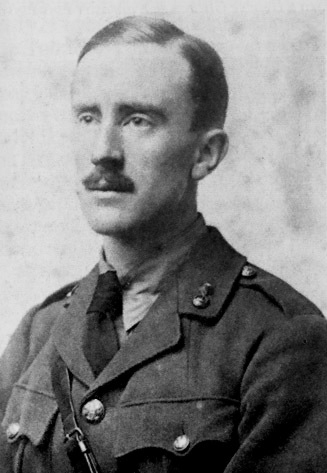
John Ronald Reuel Tolkien – brytyjski pisarz oraz profesor filologii klasycznej i literatury staroangielskiej na University of Oxford. Jako autor powieści Władca Pierścieni, której akcja rozgrywa się w mitycznym świecie Śródziemia, spopularyzował literaturę fantasy.
Jest autorem wielu opowieści rozgrywających się w mitycznym świecie Śródziemia: powieści Hobbit, czyli tam i z powrotem, Władca Pierścieni, Silmarillion oraz kilku krótkich form, opowiadań niezwiązanych lub luźno związanych z wielką mitologią, tzw. Legendarium Śródziemia .
Opublikował ponad 100 prac z dziedziny filologii i literatury dawnej, współpracował przy powstaniu największego słownika języka angielskiego, wydawanego zaraz po I wojnie, Oxford English Dictionary. Znał ponad 30 języków, głównie wymarłych, germańskich i celtyckich: m.in. łacinę, starożytną grekę, hebrajski, gocki, nordycki, staroislandzki, anglosaski, staroirlandzki, średniowieczny i współczesny walijski, niemiecki, niderlandzki, szwedzki, duński, norweski, hiszpański, francuski, lombardzki, włoski, fiński, esperanto, rosyjski, uczył się także polskiego, lecz uważał go za trudny język i nie potrafił się nim dobrze posługiwać.
John Ronald Reuel Tolkien książka Hobbit, czyli tam i z powrotem
Hobbit, czyli tam i z powrotem
Źródło: rozdział 4, Górą i dołem, s. 63, 64
John Ronald Reuel Tolkien Władca Pierścieni
przekład: Maria Skibniewska.
Władca Pierścieni
„Nie powiem: Nie płaczcie, bo nie wszystkie łzy są złe.”
John Ronald Reuel Tolkien Władca Pierścieni
Gandalf żegnając hobbitów w Szarej Przystani.
Władca Pierścieni
John Ronald Reuel Tolkien książka Silmarillion
Silmarillion
„Lepiej nie mówić, czego się chce, jeśli nie można tego otrzymać.”
John Ronald Reuel Tolkien książka Silmarillion
Postać: Túrin
Silmarillion
John Ronald Reuel Tolkien książka Opowieści z Niebezpiecznego Królestwa
Źródło: Opowieści z Niebezpiecznego Królestwa
„Zły to gość, który złe wieści przynosi.”
John Ronald Reuel Tolkien Władca Pierścieni
Grima Gadzi Język o Gandalfie.
Władca Pierścieni
John Ronald Reuel Tolkien książka Hobbit, czyli tam i z powrotem
pieśń śpiewana przez krasnoludy podczas spotkania u Bilba.
Hobbit, czyli tam i z powrotem
Źródło: rozdział 1, Nieproszeni gości, s. 9
„Boleść jest kamieniem szlifierskim dla silnego ducha.”
Źródło: Dzieci Hurina
John Ronald Reuel Tolkien książka Hobbit, czyli tam i z powrotem
Hobbit, czyli tam i z powrotem
Źródło: rozdział 1, Nieproszeni gości, s. 19
„Przyjaźń polega czasem na powstrzymaniu druha w szaleństwie.”
John Ronald Reuel Tolkien książka Silmarillion
Olwë do Fëanora.
Silmarillion
John Ronald Reuel Tolkien Władca Pierścieni
królewskie ziele.
Władca Pierścieni
John Ronald Reuel Tolkien książka Opowieści z Niebezpiecznego Królestwa
Źródło: Opowieści z Niebezpiecznego Królestwa
„Nikt prawie nie wie, dokąd go zaprowadzi droga, póki nie stanie u celu.”
John Ronald Reuel Tolkien Władca Pierścieni
Postać: Legolas
Władca Pierścieni
"A Philologist on Esperanto" in The British Esperantist (May 1932).
Years later, in a 1956 letter (quoted more extensively below) he stated that Esperanto and other constructed languages were "dead, far deader than ancient unused languages, because their authors never invented any Esperanto legends."
John Ronald Reuel Tolkien książka On Fairy-Stories
On Fairy-Stories (1939)
No. 163: On his discovery of Finnish language, in a letter to W. H. Auden (1955)
The Letters of J. R. R. Tolkien (1981)
“Wars are not favourable to delicate pleasures.”
John Ronald Reuel Tolkien książka A Secret Vice
"A Secret Vice" (lecture, 1931) published in The Monsters And The Critics And Other Essays (1983), edited by Christopher Tolkien
But it is, of course, a constant source of consolation and pleasure to me. And, I may say, a piece of singular good fortune, much envied by some of my contemporaries. Wonderful people still buy the book, and to a man 'retired' that is both grateful and comforting.
No. 165: To Houghton Mifflin Co. (30 June, 1955); also quoted in 'Tolkien on Tolkien' in Diplomat magazine (October 1966).
The Letters of J. R. R. Tolkien (1981)
“I liked him better than all the other characters, and much more so than Frodo.”
Speaking of Gollum. From J. R. R. Tolkien: An Audio Portrait, BBC Radio Collection (2001), ISBN 0-563-53692-6. CD 1, track 17.
“I think we shall have to give the region a name. What do you propose?”
John Ronald Reuel Tolkien książka Leaf by Niggle
"The Porter settled that some time ago," said the Second Voice. "Train for Niggle's Parish in the bay."
Leaf by Niggle (1945)
Źródło: The Letters of J. R. R. Tolkien (1981), No. 52: To his son Christopher Tolkien (29 November, 1943)
“I would rather spend one lifetime with you, than face all the ages of this world alone.”
John Ronald Reuel Tolkien Władca Pierścieni
Źródło: The Lord of the Rings, The Fellowship of the Ring
John Ronald Reuel Tolkien książka The Fellowship of the Ring
Źródło: The Fellowship of the Ring, Poem Riddle of Strider
Kontekst: Frodo: I wish the Ring had never come to me. I wish none of this had happened.
Gandalf: So do all who live to see such times, but that is not for them to decide. All we have to decide is what to do with the time that is given to us.
Kontekst: Do we walk in legends or on the green earth in the daylight? A man may do both, said Aragorn. For not we but those who come after will make the legends of our time. The green earth, say you? That is a mighty matter of legend, though you tread it under the light of day!
“If we stayed home and did nothing, doom would find us anyway, sooner or later.”
Kontekst: 'Of course, it is likely enough, my friends,' he said slowly, 'likely enough that we are going to our doom: the last march of the Ents. But if we stayed home and did nothing, doom would find us anyway, sooner or later. That thought has long been growing in our hearts; and that is why we are marching now. It was not a hasty resolve. Now at least the last march of the Ents may be worth a song.
Incorrectly attributed to Tolkien. It is a line from the Hobbit movie that did not appear in the books.


