„Każda władza deprawuje, a władza absolutna deprawuje absolutnie.”
Power tends to corrupt, absolute power corrupts absolutely. (ang.)
Źródło: list do biskupa Mandella Creightona, 3 kwietnia 1887
John Acton, właśc. John Emerich Edward Dalberg-Acton, 1. baron Acton – brytyjski historyk, filozof polityczny, teoretyk wolności i polityk. Bardziej znany jako Lord Acton. Najbardziej znany jest ze stwierdzenia "Władza korumpuje, a władza absolutna korumpuje absolutnie" . Wikipedia
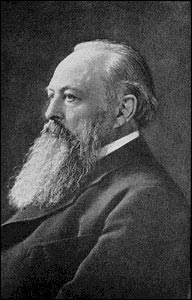
„Każda władza deprawuje, a władza absolutna deprawuje absolutnie.”
Power tends to corrupt, absolute power corrupts absolutely. (ang.)
Źródło: list do biskupa Mandella Creightona, 3 kwietnia 1887
John Dalberg-Acton, 1st Baron Acton
The History of Freedom in Christianity (1877)
John Dalberg-Acton, 1st Baron Acton
"The Vatican Council," http://babel.hathitrust.org/cgi/pt?id=uc1.b3011302;view=1up;seq=187 The North British Review (1870)
John Dalberg-Acton, 1st Baron Acton
The History of Freedom in Christianity (1877)
John Dalberg-Acton, 1st Baron Acton
"Nationality" (1862)
John Dalberg-Acton, 1st Baron Acton
The History of Freedom in Antiquity (1877)
John Dalberg-Acton, 1st Baron Acton
p, 125
The History of Freedom in Antiquity (1877)
John Dalberg-Acton, 1st Baron Acton
James Anthony Froude, in the lecture "The Science of History" (5 February 1864); published in Representative Essays (1885) by George Haven Putnam, p. 274; Lord Acton quoted Froude in an address "The Study of History" (11 June 1895) http://www.fordham.edu/halsall/mod/1906acton.html, which led to this being widely attributed to him. The phrase has also sometimes been misquoted as: Opinions alter, manners change, creeds rise and fall, but the moral laws are written on the table of eternity. <br class="br">Misattributed
John Dalberg-Acton, 1st Baron Acton
p, 125
The History of Freedom in Antiquity (1877)
John Dalberg-Acton, 1st Baron Acton
The History of Freedom in Antiquity (1877)
John Dalberg-Acton, 1st Baron Acton
p, 125
The History of Freedom in Antiquity (1877)
John Dalberg-Acton, 1st Baron Acton
As quoted in Essays on Freedom and Power, Introduction, p. xlvii (1949) https://mises.org/sites/default/files/Essays%20on%20Freedom%20and%20Power_3.pdf
John Dalberg-Acton, 1st Baron Acton
"The Vatican Council," http://babel.hathitrust.org/cgi/pt?id=uc1.b3011302;view=1up;seq=187 The North British Review (1870)
John Dalberg-Acton, 1st Baron Acton
Źródło: The History of Freedom in Antiquity (1877)
John Dalberg-Acton, 1st Baron Acton
Introductory note to G.P. Gooch's Annals of Politics and Culture https://archive.org/stream/annalsofpolitics00goociala#page/n5/mode/2up, p. xxxlv (1901)
John Dalberg-Acton, 1st Baron Acton
p, 125
The History of Freedom in Antiquity (1877)
John Dalberg-Acton, 1st Baron Acton
The History of Freedom in Antiquity (1877)
John Dalberg-Acton, 1st Baron Acton
The History of Freedom in Antiquity (1877)
John Dalberg-Acton, 1st Baron Acton
Letter (4 November 1866) http://www.lewrockwell.com/orig3/acton-lee.html to Robert E. Lee
John Dalberg-Acton, 1st Baron Acton
p, 125
The History of Freedom in Antiquity (1877)
John Dalberg-Acton, 1st Baron Acton
"Nationality" (1862)
John Dalberg-Acton, 1st Baron Acton
Letter (23 January 1861), published in Lord Acton and his Circle (1906) by Abbot Gasquet, Letter 74
John Dalberg-Acton, 1st Baron Acton
The Study of History (1895)
John Dalberg-Acton, 1st Baron Acton
As quoted in Maxed Out : Hard Times, Easy Credit, and the Era of Predatory Lenders (2007) by James D. Scurlock; The quote does not appear in any of Acton's published writings. Ezra Pound attributes the exact quotation to Sir Alexander James Cockburn, Lord Chief Justice of England in Pound, Ezra. "'Ezra Pound Speaking': Radio Speeches of World War II", ed. Leonard W. Doob (Westport: Greenwood Press, 1978), 219. https://archive.org/stream/EzraPoundSpeaking-RadioSpeechesOfWorldWarIi/EzraPoundSpeaking#page/n116/mode/1up/search/Lord+Chief+Justice
Misattributed
John Dalberg-Acton, 1st Baron Acton
The History of Freedom in Antiquity (1877)


