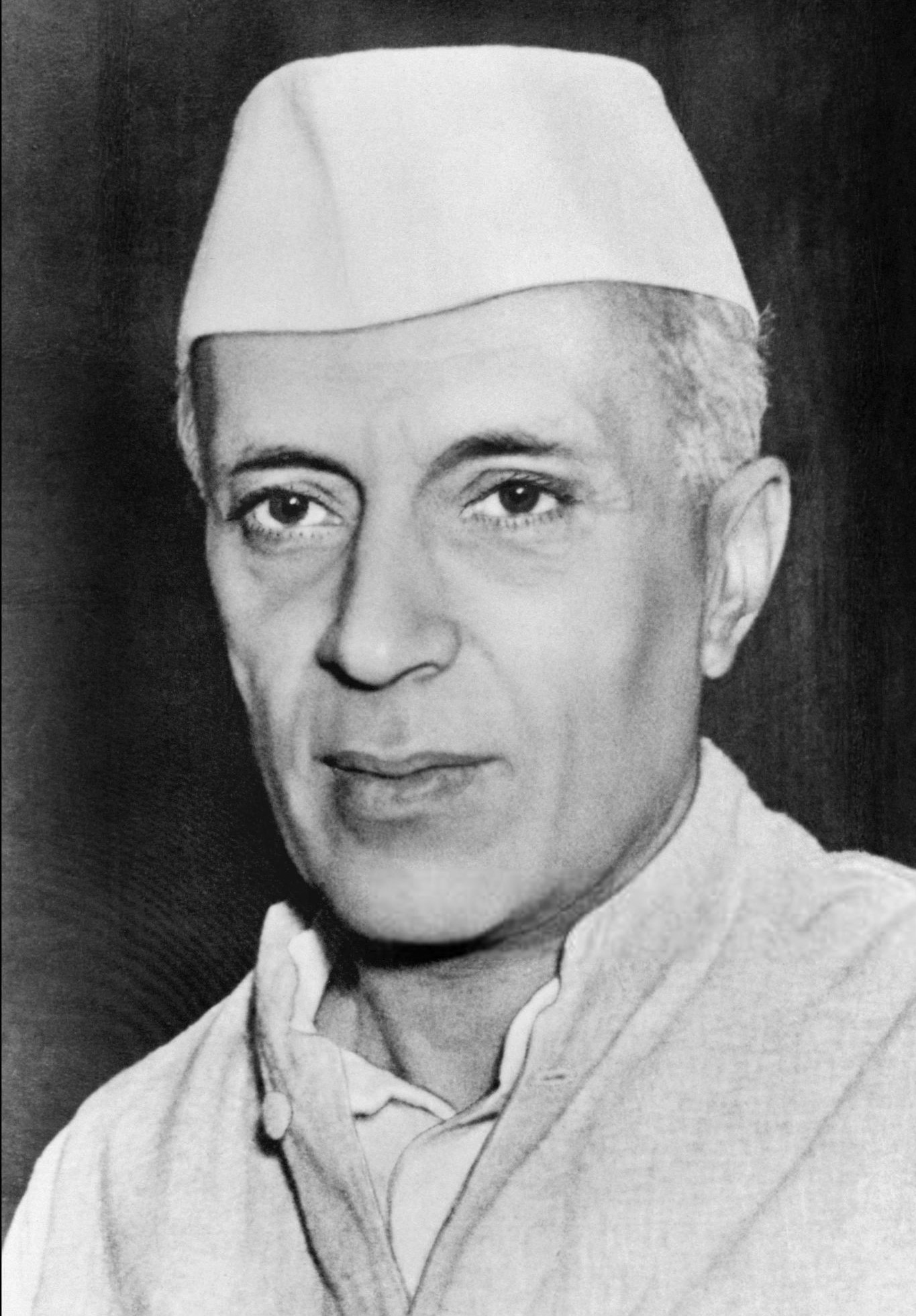
Jawaharlal Nehru słynne cytaty
„Nie jestem pewny, czy szczęście jest stanem bardzo zadowalającym.”
Źródło: Nic, co ludzkie... Aforyzmy, sentencje i przysłowia, oprac. Henryk Jurand, LSW, 1982, s. 57.
„Nie wiem, czym jest niewiadome.”
Źródło: Ija Lazari-Pawłowska, Nehru, Wiedza Powszechna, Warszawa 1991, s. 160.
podczas ceremonii proklamowania niepodległości przez Indie (15 sierpnia 1947).
Źródło: B. Wizimirska, Drogi kariery. Zulfikar Ali Bhutto i jego partnerzy: Indira Gandhi i Mujibur Rahman, Warszawa, Krajowa Agencja Wydawnicza, 1983, s. 117.
Jawaharlal Nehru cytaty
wypowiedziane w 1949.
Źródło: Ija Lazari-Pawłowska, Nehru, op. cit., s. 9.
w 1949.
Źródło: Ija Lazari-Pawłowska, Nehru, op. cit., s. 8.
Jawaharlal Nehru: Cytaty po angielsku
Jawaharlal Nehru's Speeches 1949 - 1953 (1954), p. 235
Jawaharlal Nehru's Speeches 1949 - 1953 (1954), p. 144
“America is a country no one should go to for the first time.”
As quoted in The Traveling Curmudgeon: Irreverent Notes, Quotes, and Anecdotes on Dismal Destinations, Excess Baggage, The Full Upright Position, and Other Reasons Not To Go There (2003) by Jon Winokur, p. 5
On the defeat of the forces of Darius the Great of Persia at the Battle of Marathon, in Glimpses of World History; Being Further Letters to His Daughter, Written In Prison, And Containing A Rambling Account of History For Young People (1942); also in Nehru on World History (1960} edited by Saul K. Padover, p. 14
The Light Has Gone Out (1948)
Speech to the US Congress (13 October 1949)
Nehru wrote this resolution of Purna Swaraj (Complete Independence), which was adopted in the Congress session at Lahore on 26 January 1930; this was later celebrated as Independence Day until August 1947, and after 26 January 1950 as Republic Day; as quoted in India http://books.google.com/books?id=nHnOERqf-MQC&pg=PA204 (1999) by Stanley A. Wolpert
Statement of 1961, as quoted in Locked Minds, Modern Myths (1997) by T. N. Madan <!-- Oxford University Press, Delhi -->
As quoted in A Tribute to Hinduism : Thoughts and Wisdom Spanning Continents and Time about India and Her Culture (2008) by Sushama Londhe, p. 191
“Great causes and little men go ill together.”
The Indian Annual Register Vol.1 (January-June 1939)
Speech to the US Congress (13 October 1949)
“Without peace, all other dreams vanish and are reduced to ashes.”
Address to the United Nations (28 August 1954); as quoted in The Macmillan Dictionary of Political Quotations (1993) by Lewis D. Eigen and Jonathan Paul Siegel, p. 698
“I am English by education, Muslim by culture and Hindu merely by accident.”
While this is often attributed to Nehru, it was actually something said by the Hindu Mahasabha leader, N. B. Khare. <br class="br">Khare states, "Nehru’s is a very complex personality. As he himself has explained in his Autobiography, he is English by education, Muslim by culture and Hindu by an accident of birth." <br class="br">"The Angry Aristocrat", N. B. Khare in A Study of Nehru, Rafiq Zakaria (ed.), 1960. <br class="br">No such passage exists in Nehru's autobiography. https://www.altnews.in/did-jawaharlal-nehru-ever-say-i-am-english-by-education-muslim-by-culture-and-hindu-by-accident/ <br class="br">Misattributed
Autobiography (1936; 1949; 1958)
Autobiography (1936; 1949; 1958)
Autobiography (1936; 1949; 1958)
Autobiography (1936; 1949; 1958)
Autobiography (1936; 1949; 1958)
Autobiography (1936; 1949; 1958)
Soviet Russia: Some Random Sketches and Impressions (1949)
Soviet Russia: Some Random Sketches and Impressions (1949)
Soviet Russia: Some Random Sketches and Impressions (1949)
Soviet Russia: Some Random Sketches and Impressions (1949)
Soviet Russia: Some Random Sketches and Impressions (1949)
Soviet Russia: Some Random Sketches and Impressions (1949)
Jawaharlal Nehru książka Glimpses of World History
Glimpses of World History (1949)
Jawaharlal Nehru książka Glimpses of World History
Glimpses of World History (1949)


