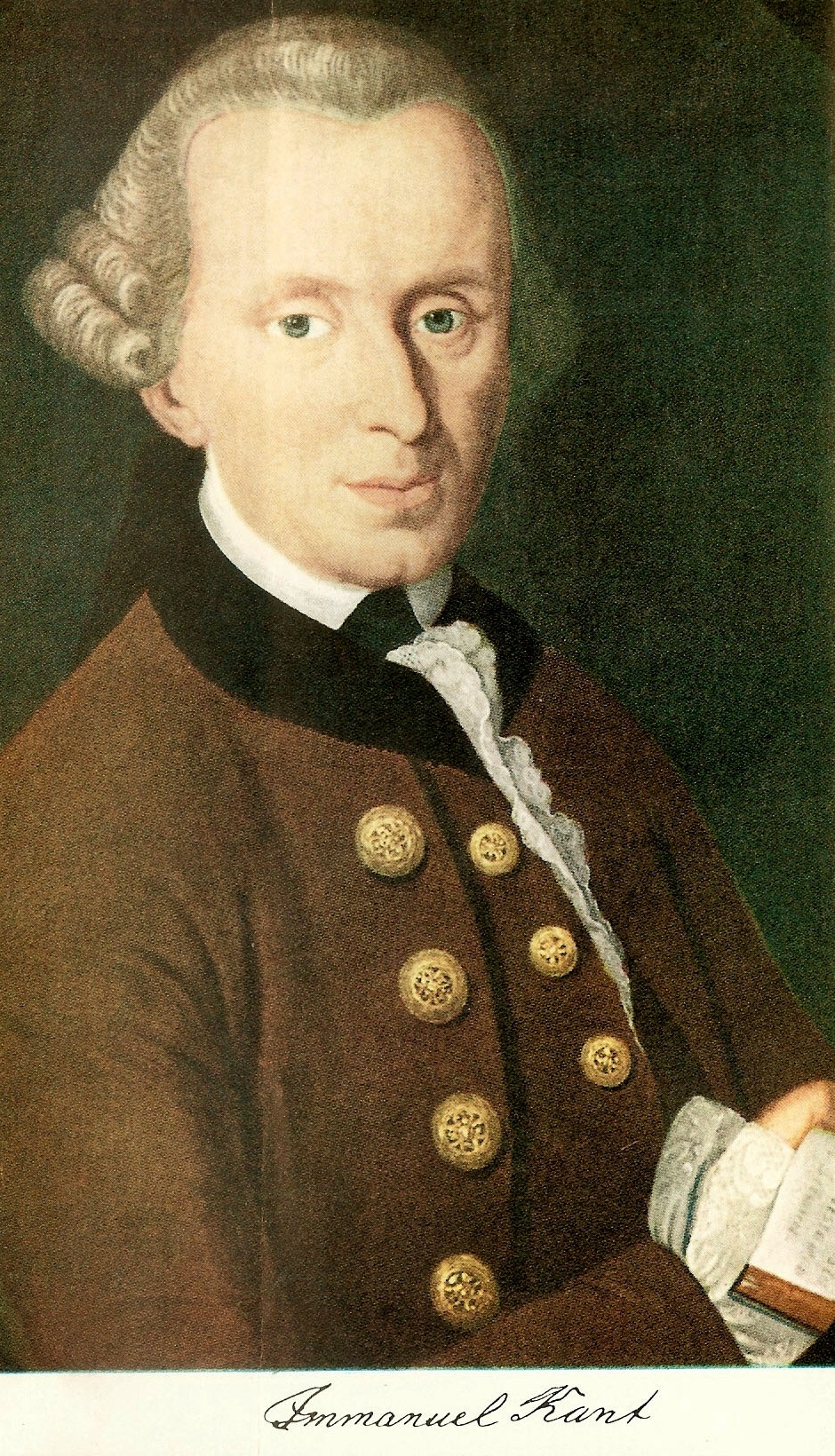
Immanuel Kant słynne cytaty
„Moralną koniecznością jest zakładać istnienie Boga.”
Źródło: Jostein Gaarder, Świat Zofii. Cudowna podróż w głąb historii filozofii, tłum. Iwona Zimnicka, Warszawa 1995, s. 356.
„Zaletą literatury jest to, że pozwala ludziom postawić się na miejscu innych.”
Źródło: Adam Żółtowski, Filozofia Kanta, 1923.
„Zawsze masz traktować człowieka jako cel sam w sobie, a nie tylko środek do celu.”
imperatyw kategoryczny.
Źródło: Jostein Gaarder, Świat Zofii. Cudowna podróż w głąb historii filozofii, tłum. Iwona Zimnicka, Warszawa 1995, s. 359.
Immanuel Kant cytaty
Zwei Dinge erfüllen das Gemüt mit immer neuer und zunehmender Bewunderung und Ehrfurcht, je öfter und anhaltender sich das Nachdenken damit beschäftigt: Der bestirnte Himmel über mir, und das moralische Gesetz in mir. (niem.)
Inna wersja: Są dwie rzeczy, które napełniają duszę podziwem i czcią, niebo gwiaździste nade mną, prawo moralne we mnie. Są to dla mnie dowody, że jest Bóg nade mną i Bóg we mnie.
Źródło: O dwóch rzeczach, które napełniają duszę podziwem
Inne tłumaczenie: Istnieje tylko jeden imperatyw kategoryczny: postępuj tylko wedle takiej maksymy, co do której możesz zarazem chcieć, żeby stała się powszechnym prawem.
imperatyw kategoryczny.
Źródło: Jostein Gaarder, Świat Zofii. Cudowna podróż w głąb historii filozofii, tłum. Iwona Zimnicka, Warszawa 1995, s. 359.
Źródło: Spór fakultetów, tłum. Mirosław Żelazny, Wydawnictwo Rolewski, Toruń 2003, s. 136–137.
Źródło: Z. Kuderowicz, Kant, s. 53.
Der Himmel hat den Menschen als Gegengewicht gegen die vielen Mühseligkeiten (des Lebens) drei Dinge gegeben: Die Hoffnung, den Schlaf und das Lachen. (niem.)
„Matematyka jest warunkiem wszelkiego dokładnego poznania.”
Mathematik ist eine Bedingung aller exakten Erkenntnis. (niem.)
„W każdej nauce jest tyle prawdy, ile jest w niej matematyki.”
Źródło: Leksykon złotych myśli, wybór Krzysztof Nowak, Warszawa 1998.
Immanuel Kant książka Universal Natural History and Theory of Heaven
Źródło: Allgemeine Naturgeschichte und Theorie des Himmels
Źródło: Antropologia w ujęciu pragmatycznym, Warszawa 2005
Źródło: Uzasadnienie metafizyki moralności
Źródło: O wiecznym pokoju, tłum. Feliks Przybylak, Wrocław 1995.
Źródło: Richard H. Popkin, Avrum Stroll, Filozofia, tłum. Jan Karłowski, Norbert Leśniewski, Andrzej Przyłębski, Poznań 1994, s. 67.
Źródło: Adam Hlebowicz, Kaliningrad bez wizy, Oskar, Gdańsk 2012, ISBN 978-83-63709-17-4, s. 86.
Immanuel Kant: Cytaty po angielsku
Book IV, Part 1, Section 2, “The Christian religion as a natural religion”
Religion within the Limits of Reason Alone (1793)
What is Enlightenment? (1784)
Seventh Thesis
Idea for a Universal History from a Cosmopolitan Point of View (1784)
Die menschliche Vernunft hat hier, wie allerwärts in ihrem reinen Gebrauche, so lange es ihr an Kritik fehlt, vorher alle mögliche unrechte Wege versucht, ehe es ihr gelingt, den einzigen wahren zu treffen.
Groundwork of the Metaphysics of Morals (1785)
“I have no knowledge of myself as I am, but merely as I appear to myself.”
Immanuel Kant książka Critique of Pure Reason
B 158
Critique of Pure Reason (1781; 1787)
Immanuel Kant książka Critique of Pure Reason
A xix
Critique of Pure Reason (1781; 1787)
“It is precisely in knowing its limits that philosophy consists.”
Immanuel Kant książka Critique of Pure Reason
A 727, B 755
Critique of Pure Reason (1781; 1787)
Immanuel Kant książka Critique of Pure Reason
B 832-833
Critique of Pure Reason (1781; 1787)
Ninth Thesis
Idea for a Universal History from a Cosmopolitan Point of View (1784)
“All natural capacities of a creature are destined to evolve completely to their natural end.”
First Thesis
Variant translations:
All natural capacities of a creature are destined sooner or later to be developed completely and in conformity with their end.
All natural capacities of a creature are destined to develop themselves completely and to their purpose.
Idea for a Universal History from a Cosmopolitan Point of View (1784)
Seventh Thesis
Idea for a Universal History from a Cosmopolitan Point of View (1784)
Kontekst: What is the use of working toward a lawful civic constitution among individuals, i. e., toward the creation of a commonwealth? The same unsociability which drives man to this causes any single commonwealth to stand in unrestricted freedom in relation to others; consequently, each of them must expect from another precisely the evil which oppressed the individuals and forced them to enter into a lawful civic state. The friction among men, the inevitable antagonism, which is a mark of even the largest societies and political bodies, is used by Nature as a means to establish a condition of quiet and security. Through war, through the taxing and never-ending accumulation of armament, through the want which any state, even in peacetime, must suffer internally, Nature forces them to make at first inadequate and tentative attempts; finally, after devastations, revolutions, and even complete exhaustion, she brings them to that which reason could have told them at the beginning and with far less sad experience, to wit, to step from the lawless condition of savages into a league of nations. In a league of nations, even the smallest state could expect security and justice, not from its own power and by its own decrees, but only from this great league of nations … from a united power acting according to decisions reached under the laws of their united will.
Immanuel Kant książka Critique of Pure Reason
Preface, A vii
Critique of Pure Reason (1781; 1787)
Part III : Selection on Education from Kant's other Writings, Ch. I Pedagogical Fragments, # 52
The Educational Theory of Immanuel Kant (1904)
Immanuel Kant książka Critique of Pure Reason
Preface to 2nd edition, Tr. F. Max Müller (1905)
Critique of Pure Reason (1781; 1787)
Immanuel Kant książka Critique of Practical Reason
Critique of Practical Reason (1788)
Die Verehrung mächtiger unsichtbarer Wesen, welche dem hülflosen Menschen durch die natürliche, auf dem Bewusstsein seines Unvermögens gegründete Furcht abgenöthigt wurde, …
Book IV, Part 2, Section 3
Religion within the Limits of Reason Alone (1793)
Part II, pp. 212-213
Lectures on Ethics (1924)
Preface, Tr. Bax (1883) citing Isaac Newton's Principia
(1786)
Preface, Tr. Bax (1883)
(1786)
A lecture at Königsberg (1775), as quoted in A New Dictionary of Quotations on Historical Principles from Ancient and Modern Sources (1946) by H. L. Mencken, p. 1017
Part II, p. 146
Lectures on Ethics (1924)
“Happiness is not an ideal of reason but of imagination.”
Fundamental Principles of the Metaphysics of Ethics (1785)
Immanuel Kant książka Critique of Pure Reason
A 120
Critique of Pure Reason (1781; 1787)
As quoted in German Thought, From The Seven Years' War To Goethe's Death : Six Lectures (1880) by Karl Hillebrand, p. 207
Part Two : Metaphysical Principles of Virtue
Metaphysics of Morals (1797)
Immanuel Kant książka Critique of Pure Reason
A 627, B 655 (Physico-Theological Proof Impossible)
Critique of Pure Reason (1781; 1787)
Immanuel Kant książka Prolegomena to Any Future Metaphysics
Variant translation: I freely admit: it was David Hume's remark that first, many years ago, interrupted my dogmatic slumber and gave a completely different direction to my enquiries in the field of speculative philosophy.
Prolegomena to Any Future Metaphysics (1783)
Immanuel Kant książka Critique of Judgment
Critique of Judgment (1790)


