„Zbrodnią byłoby przedstawiać piękno wojny, nawet gdyby istniało.”
Ce serait un crime de montrer les beaux côtés de la guerre, même s'il y en avait. (fr.)
Źródło: Ogień: pamiętnik oddziału w okopach, 1916
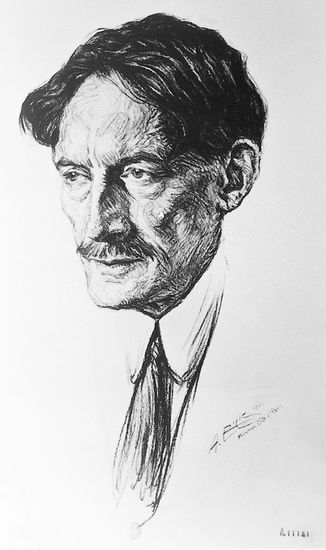
Henri Barbusse wym. /ɑ̃:ʀi baʀbys/, – francuski pisarz, dziennikarz i komunista.
Sławę przyniosła mu powieść Ogień, oparta na jego doświadczeniach z okresu I wojny światowej. W sposób realistyczny ukazuje on w niej swoją nienawiść do militaryzmu. Książka ta zdobyła Nagrodę Goncourtów. W swoich kolejnych utworach prezentuje bardziej rewolucyjny punkt widzenia, a także swoją przychylność dla idei bolszewizmu, rewolucji październikowej a później stalinizmu. W 1923 wstąpił do Francuskiej Partii Komunistycznej. Podróżował po Związku Radzieckim. Był członkiem założonej w 1927 Ligi przeciw Imperializmowi. Został pochowany na paryskim cmentarzu Père-Lachaise. Wikipedia
„Zbrodnią byłoby przedstawiać piękno wojny, nawet gdyby istniało.”
Ce serait un crime de montrer les beaux côtés de la guerre, même s'il y en avait. (fr.)
Źródło: Ogień: pamiętnik oddziału w okopach, 1916
The Inferno (1917), Ch. XVII
Light (1919), Ch. XXIII - Face To Face
Light (1919), Ch. XXIII - Face To Face
Henri Barbusse książka Under Fire
Under Fire (1916), Ch. 24 - The Dawn
The Inferno (1917), Ch. XV
Light (1919), Ch. XIV - The Ruins
Light (1919), Ch. XVI - De Profundis Clamavi
Light (1919), Ch. XV - An Apparition
Light (1919), Ch. XXIII - Face To Face
The Inferno (1917), Ch. XV
Light (1919), Ch. XXII - Light
The Inferno (1917), Ch. XV
Light (1919), Ch. XXIII - Face To Face
the human being's real quality, the delicate lights and shadows of human dreams, the sweet and complicated mystery of personalities, sensuous lovers deride them, both of them! They are two egoists, falling fiercely on each other. Together they sacrifice themselves, utterly in a flash of pleasure.
Light (1919), Ch. XXIII - Face To Face
“It would be a crime to exhibit the fine side of war, even if there were one!”
Henri Barbusse książka Under Fire
murmured one of the somber soldiers.
The first man continued. "They'll say those things to us by way of paying us with glory, and to pay themselves, too, for what they haven't done. But military glory — it isn't even true for us common soldiers. It's for some, but outside those elect the soldier's glory is a lie, like every other fine-looking thing in war. In reality, the soldier's sacrifice is obscurely concealed. The multitudes that make up the waves of attack have no reward. They run to hurl themselves into a frightful inglorious nothing. You cannot even heap up their names, their poor little names of nobodies."
Under Fire (1916), Ch. 24 - The Dawn


