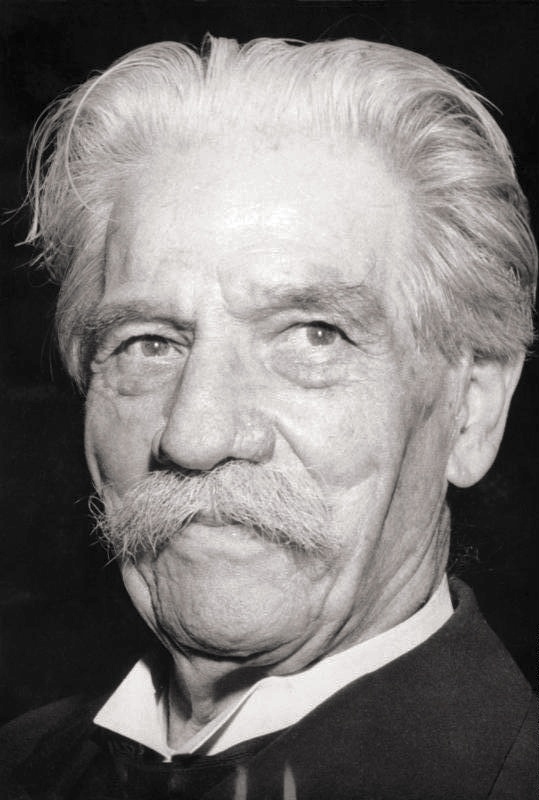
Albert Schweitzer słynne cytaty
„Jestem życiem, które pragnie żyć, pośród życia, które pragnie żyć.”
Ich bin Leben, das leben will, inmitten von Leben, das leben will. (niem.)
Źródło: Die Ehrfurcht vor dem Leben, C.H. Beck, 2008, s. 111.
„Szczęście to jedyna rzecz, która się mnoży, gdy się ją dzieli.”
Das Glück ist das einzige, was sich verdoppelt, wenn man es teilt. (niem.)
„Ten, kto ma odwagę sądzić samego siebie, staje się coraz lepszy.”
Źródło: Przykazania etyki prawniczej: księga myśli, norm i rycin, oprac. Roman Tokarczyk, wyd. Wolters Kluwer Polska, s. 163.
Albert Schweitzer Cytaty o ludziach
„Ludzie wiedzą, że są nieszczęśliwi, ale mało kto wie, że mógłby być szczęśliwy.”
Viele Menschen wissen, daß sie unglücklich sind. Aber noch mehr Menschen wissen nicht, daß sie glücklich sind. (niem.)
Źródło: Przemysław Słowiński, Sławni ludzie w anegdocie, Videograf II, Katowice 2009, ISBN 9788371837272.
Viel Kälte ist unter den Menschen, weil wir nicht wagen, uns so herzlich zu geben, wie wir sind. (niem.)
Źródło: Die Ehrfurcht vor dem Leben, C.H. Beck, 2008, s. 76.
Albert Schweitzer cytaty
„Propaganda jest matką wydarzeń.”
Die Propaganda die Mutter des Geschehens. (niem.) <br class="br">Źródło: Albert Schweitzer Lesebuch http://books.google.pl/books?id=iHwumGn4CtgC&printsec=frontcover&source=gbs_ge_summary_r&cad=0#v=onepage&q&f=false, C.H. Beck, 1995, s. 104.
„Szczęścia nie ma, ale istnieją przyjemności.”
Źródło: „Przekrój” nr 1744, 10 września 1978
„Harmonia i siła są w nas, gdy nasze myślenie i działanie stanowią jedność.”
Źródło: Teresa Bętkowska, Ojciec kochał – matka wychowywała, „Alma Mater” nr 156–157, kwiecień-maj 2013, s. 26.
Źródło: „Przekrój”, wydania 1–8, Krakowskie Wydawnictwo Prasowe, 2001, s. 5.
„Żaden promień słońca nie ginie, lecz zieleń, którą on budzi, potrzebuje czasu, aby wzrosnąć.”
Kein Sonnenstrahl geht verloren. Aber das Grün, das er weckt, braucht Zeit zum Sprießen. (niem.) <br class="br">Źródło: Albert Schweitzer Lesebuch http://books.google.pl/books?id=iHwumGn4CtgC&printsec=frontcover&source=gbs_ge_summary_r&cad=0#v=onepage&q&f=false, C.H. Beck, 1995, s. 57.
Źródło: Leksykon złotych myśli, wyboru dokonał Krzysztof Nowak, Warszawa 1998.
„Groby żołnierzy są najlepszymi kazaniami o pokoju.”
Die Soldatengräber sind die größten Prediger für den Frieden. (niem.)
Źródło: Gerhard Eller, Erzählte Geschichte, Books on Demand, 2009, s. 80.
„Wcześniej czy później musi nadejść ostateczny renesans, który przyniesie światu pokój.”
Früher oder später muß die wahre endgültige Renaissance anbrechen, die der Welt den Frieden bringt. (niem.)
Źródło: Aus meinem Leben und Denken, R. Meiner, 1950, s. 147.
Albert Schweitzer: Cytaty po angielsku
Epilogue, p. 242
Out of My Life and Thought : An Autobiography (1933)
Memoirs of Childhood and Youth (1924)
Kontekst: One thing that specially saddened me was that the unfortunate animals had to suffer so much pain and misery. The sight of an old limping horse, tugged forward by one man while another kept beating it with a stick to get it to the knacker's yard at Colmar, haunted me for weeks. It was quite incomprehensible to me — this was before I began going to school — why in my evening prayers I should pray for human beings only. It was quite incomprehensible to me — this was before I began going to school — why in my evening prayers I should pray for human beings only. So when my mother had prayed with me and had kissed me good-night, I used to add silently a prayer that I had composed myself for all living creatures. It ran thus: "O, heavenly Father, protect and bless all things that have breath; guard them from all evil, and let them sleep in peace."
Źródło: Kulturphilosophie (1923), Vol. 2 : Civilization and Ethics, Chapter 26 "The Civilizing Power of the Ethics of Reverence for Life"
Źródło: The Spiritual Life (1947), p. 248
“The purpose of human life is to serve and to show compassion and the will to help others.”
Wariant: The purpose of human life is to serve, and to show compassion and the will to help others.
Źródło: The Spiritual Life (1947), p. 164
Kontekst: Anyone who proposes to do good must not expect people to roll stones out of his way, but must accept his lot calmly if they even roll a few more upon it. A strength which becomes clearer and stronger through its experience of such obstacles is the only strength that can conquer them. Resistance is only a waste of strength.
Albert Schweitzer książka The Quest of the Historical Jesus
Źródło: The Quest of the Historical Jesus
“I am life which wants to live admidst of lives that want to live.”
Ich bin Leben, das leben will, inmitten von Leben, das leben will. <br class="br">Reverence for Life (1969) <br class="br">Źródło: Die Ehrfurcht vor dem Leben http://books.google.pl/books?id=q7MCqUIN7hkC&printsec=frontcover&source=gbs_ge_summary_r&cad=0#v=onepage&q&f=false, C.H.Beck, 2008, p. 111
Reverence for Life (1969)
Albert Schweitzer książka The Quest of the Historical Jesus
Źródło: The Quest of the Historical Jesus (1906), p. 296
Źródło: The Spiritual Life (1947), p. 264
Źródło: Kulturphilosophie (1923), Vol. 2 : Civilization and Ethics, Chapter 26
Źródło: The Spiritual Life (1947), p. 309
Źródło: The Spiritual Life (1947), p. 290
Preface, p. vi
Indian Thought And Its Development (1936)
Kulturphilosophie (1923), Vol. 2 : Civilization and Ethics
Memoirs of Childhood and Youth (1924)
Źródło: The Spiritual Life (1947), p. 164
Źródło: The Spiritual Life (1947), p. 32
Ch. 9 : I Resolve to Become a Jungle Doctor http://books.google.com/books?id=qSihr5VGV4YC&q=%22Every+start+upon+an+untrodden+path+is+a+venture+which+only+in+unusual+circumstances+looks+sensible+and+likely+to+be+successful%22&pg=PA90#v=onepage <br class="br">Out of My Life and Thought : An Autobiography (1933)
Reverence for Life (1969)


