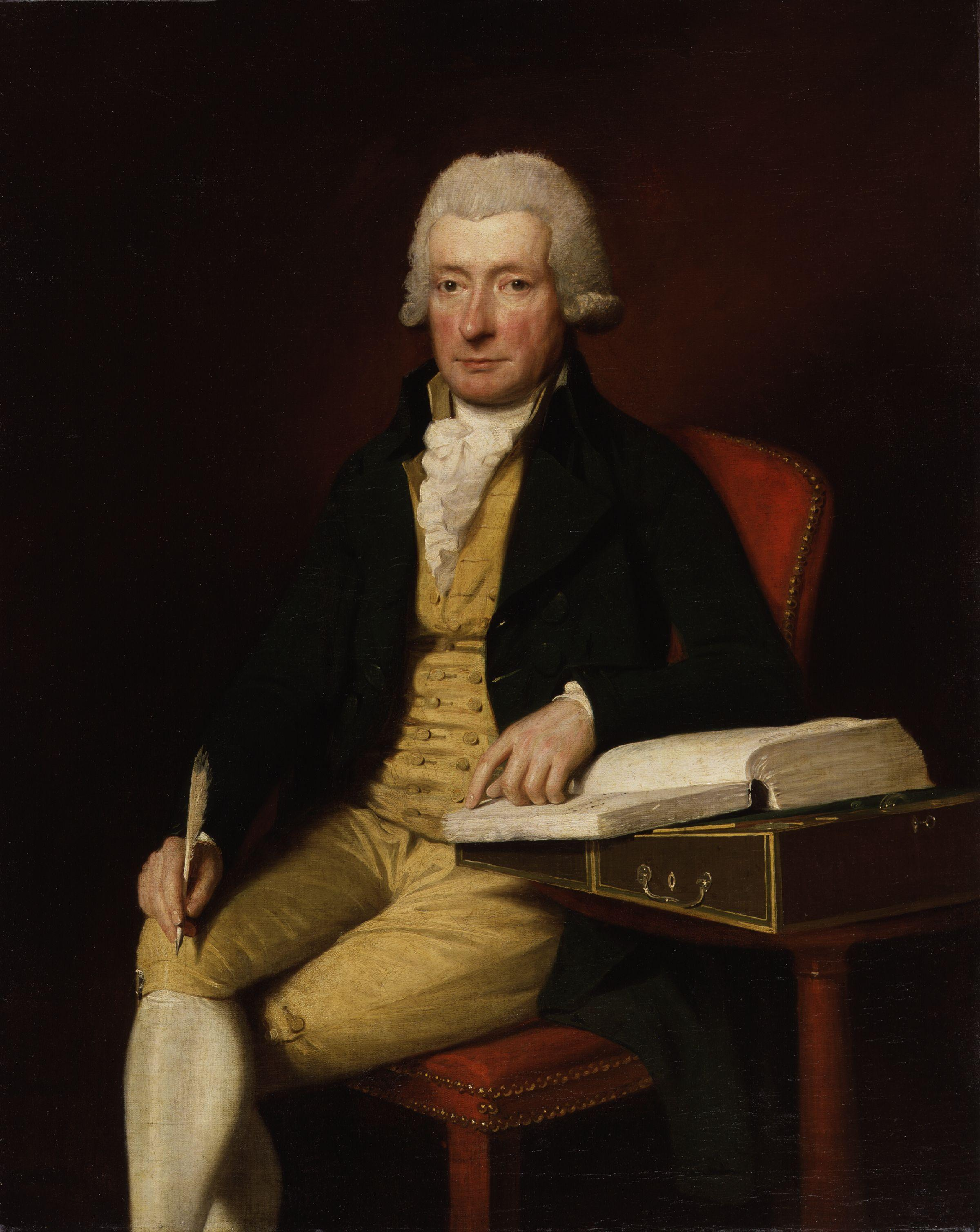
William Cowper cytaty
William Cowper: Cytaty po angielsku
“Freedom has a thousand charms to show,
That slaves, howe'er contented, never know.”
Źródło: Table Talk (1782), Line 260.
“How much a dunce that has been sent to roam
Excels a dunce that has been kept at home!”
Źródło: The Progress of Error (1782), Line 415.
“T is Providence alone secures
In every change both mine and yours.”
A Fable, Moral.
Bartlett's Familiar Quotations, 10th ed. (1919)
“No wild enthusiast ever yet could rest,
Till half mankind were like himself possess'd.”
Źródło: The Progress of Error (1782), Line 470.
“The solemn fop; significant and budge;
A fool with judges, amongst fools a judge.”
Źródło: Conversation (1782), Line 299.
“It seems the part of wisdom.”
William Cowper The Task
Źródło: The Task (1785), Book IV, The Winter Evening, Line 336.
The Jackdaw (translation from Vincent Bourne).
Bartlett's Familiar Quotations, 10th ed. (1919)
“A worm is in the bud of youth,
And at the root of age.”
Stanzas subjoined to a Bill of Mortality.
Bartlett's Familiar Quotations, 10th ed. (1919)
“That good diffused may more abundant grow.”
Źródło: Conversation (1782), Line 443.
“His wit invites you by his looks to come,
But when you knock it never is at home.”
Źródło: Conversation (1782), Line 303.
“Prove that you have human feelings,
Ere you proudly question ours!”
Źródło: The Negro's Complaint (1788), Lines 55-56
William Cowper The Task
Źródło: The Task (1785), Book II, The Timepiece, Line 363.
“Oh that those lips had language! Life has pass'd
With me but roughly since I heard thee last.”
On the Receipt of my Mother's Picture.
Bartlett's Familiar Quotations, 10th ed. (1919)
“Though on pleasure she was bent,
She had a frugal mind.”
St. 8.
The Diverting History of John Gilpin (1785)
William Cowper The Task
Źródło: The Task (1785), Book II, The Timepiece, Line 206.
“Behind a frowning providence
He hides a smiling face.”
No. 35, "Light Shining out of Darkness".
Olney Hymns (1779)
“But strive still to be a man before your mother.”
Connoisseur. Motto of No. iii.
Bartlett's Familiar Quotations, 10th ed. (1919)
“Presume to lay their hand upon the ark
Of her magnificent and awful cause.”
William Cowper The Task
Źródło: The Task (1785), Book II, The Timepiece, Line 231.
“United yet divided, twain at once:
So sit two kings of Brentford on one throne.”
William Cowper The Task
Źródło: The Task (1785), Book I, The Sofa, Line 77.
“And the tear that is wiped with a little address,
May be follow'd perhaps by a smile.”
The Rose.
Bartlett's Familiar Quotations, 10th ed. (1919)
Źródło: Verses supposed to be written by Alexander Selkirk (1782), Line 9.
The Iliad of Homer: translated into English blank verse (1791), Book VIII, line 643.
“Thus neither the praise nor the blame is our own.”
"From a Letter to the Rev. Mr. Newton", line 21. (1782).
“Absence from whom we love is worse than death,
And frustrate hope severer than despair.”
"Hope, like the short-lived ray that gleams awhile", line 35.
Letter to the Rev. John Johnson, (29 September1793).
“Absence of occupation is not rest,
A mind quite vacant is a mind distressed.”
William Cowper Retirement
Źródło: Retirement (1782), Line 623.
William Cowper The Task
Źródło: The Task (1785), Book III, The Garden, Line 624.
“I shall not ask Jean Jacques Rousseau
If birds confabulate or no.”
Pairing Time Anticipated.
Bartlett's Familiar Quotations, 10th ed. (1919)
No. 1, "Walking With God".
Olney Hymns (1779)