
Stephen R. Covey książka The 8th Habit: From Effectiveness to Greatness
Źródło: The 8th Habit: From Effectiveness to Greatness
Stephen R. Covey – autor bestsellerowych pozycji na temat przywództwa, rozwoju osobistego, twórca teorii 7 nawyków skutecznego działania, mówca motywacyjny.
W roku 1996 amerykański tygodnik Time umieścił Stephena R. Coveya na liście najbardziej wpływowych ludzi Ameryki. W roku 1998 Covey uhonorowany został m.in. odznaczeniem Thomas Moore College Medallion. W tym samym roku otrzymał także międzynarodową nagrodę pokojową – Sik'h 1998 International Man of Peace Award.
Covey posiadał dyplom licencjata z zarządzania na uniwersytecie Utah, a także MBA z Harvard University. Był także wykładowcą na Brigham Young University w Provo.
Covey w 1984 porzucił karierę uniwersytecką i założył w Salt Lake City organizację Covey Leadership Center. Została ona przejęta w 1997 przez FranklinQuest i obecnie nosi nazwę Franklin Covey Company.
Publicznie Covey występował też jako członek Kościoła Jezusa Chrystusa Świętych w Dniach Ostatnich . Był ojcem dziewięciorga dzieci oraz dziadkiem pięćdziesięciu jeden wnucząt. Zmarł w lipcu 2012 w wieku 79 lat w wyniku obrażeń odniesionych w wypadku rowerowym w kwietniu tego roku. Wikipedia
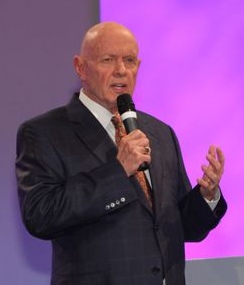
Stephen R. Covey książka The 8th Habit: From Effectiveness to Greatness
Źródło: The 8th Habit: From Effectiveness to Greatness
Stephen R. Covey książka The Seven Habits of Highly Effective People
Źródło: The 7 Habits of Highly Effective People: Powerful Lessons in Personal Change
Stephen R. Covey książka The Seven Habits of Highly Effective People
Źródło: The 7 Habits of Highly Effective People: Powerful Lessons in Personal Change
“But borrowing strength builds weakness.”
Stephen R. Covey książka The Seven Habits of Highly Effective People
Źródło: The 7 Habits of Highly Effective People: Powerful Lessons in Personal Change
“We can't live without eating, but we don't live to eat.”
Stephen R. Covey książka The Seven Habits of Highly Effective People
Źródło: The 7 Habits of Highly Effective People
“Interdependence is a choice only independent people can make”
Stephen R. Covey książka The Seven Habits of Highly Effective People
Źródło: The 7 Habits of Highly Effective People: Powerful Lessons in Personal Change
“Your attitude determines your altitude”
Stephen R. Covey książka The Seven Habits of Highly Effective People
The 7 Habits of Highly Effective People: Powerful Lessons in Personal Change
Źródło: Principle-Centered Leadership (1992), Ch. 11 : Thirty Methods of Influence
“Until you live, learn how to live.”
Stephen R. Covey książka First Things First
First Things First (1994), Disputed
“Often we are so busy with sawing that we forget to sharpen the saw..”
Stephen R. Covey książka First Things First
First Things First (1994), Disputed
Stephen R. Covey książka The 8th Habit: From Effectiveness to Greatness
The 8th Habit : From Effectiveness to Greatness (2004), p. 63
The 8th Habit : From Effectiveness to Greatness (2004)
Źródło: Principle-Centered Leadership (1992), Ch. 11
“In the last analysis, what we are communicates far more eloquently than anything we say or do.”
Źródło: Principle-Centered Leadership (1992), Ch. 4 : Primary Greatness, p. 58
“Wisdom is synergy of mind and heart.”
Stephen R. Covey książka First Things First
First Things First (1994), Disputed
“Our life is result of our choices.”
Stephen R. Covey książka First Things First
First Things First (1994), Disputed
“Make your life work instead of making life full of work.”
Stephen R. Covey książka First Things First
First Things First (1994), Disputed
“Live the law of love. We encourage obedience to the laws of life when we live the laws of love.”
Źródło: Principle-Centered Leadership (1992), Ch. 11
“Self growth is tender; it's holy ground. There's no higher investment.”
Stephen R. Covey książka The Seven Habits of Highly Effective People
Źródło: The Seven Habits Of Highly Effective People (1989), p. 62
“…when you get a good night's sleep and wake up ready to produce throughout the day.”
Stephen R. Covey książka The Seven Habits of Highly Effective People
Źródło: The Seven Habits Of Highly Effective People (1989), p. 59
“Instead of looking at fragments, try to see the whole picture.”
Stephen R. Covey książka First Things First
First Things First (1994), Disputed
“Spiritual Intelligence represents our drive for meaning and connection with the infinite.”
Stephen R. Covey książka The 8th Habit: From Effectiveness to Greatness
Źródło: The 8th Habit : From Effectiveness to Greatness (2004), p. 53
“We don't invent our missions, we detect them.”
As quoted in What Matters Most : The Power of Living Your Values (2001) by Hyrum W. Smith , p. 111
Stephen R. Covey książka First Things First
First Things First (1994), Disputed
Stephen R. Covey książka The 8th Habit: From Effectiveness to Greatness
Źródło: The 8th Habit : From Effectiveness to Greatness (2004), p. 62
Stephen R. Covey książka First Things First
Źródło: First Things First (1994), p. 169
“Management is doing things right; leadership is doing the right things.”
Stephen R. Covey książka The Seven Habits of Highly Effective People
Peter Drucker, and Warren Bennis, as quoted by Covey, in The Seven Habits Of Highly Effective People (1989), this has sometimes become misattributed to him.
Misattributed
Stephen R. Covey książka The 8th Habit: From Effectiveness to Greatness
Źródło: The 8th Habit : From Effectiveness to Greatness (2004), p. 62
“There will be real happiness, peace of mind and balance, when living by heart and right-mindedly.”
Stephen R. Covey książka First Things First
First Things First (1994), Disputed
“Change happens at the speed of trust. (cf. The SPEED of Trust, 2008)”
Stephen R. Covey książka First Things First
First Things First (1994), Disputed