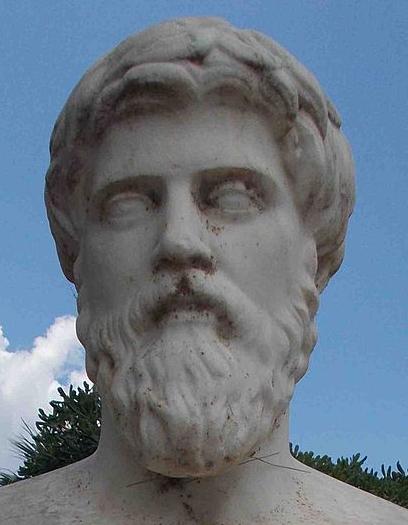
Plutarch: 284 cytaty13 Polubień
Plutarch słynne cytaty
„Trzeba żyć, a nie tylko istnieć.”
Źródło: Leksykon złotych myśli, wyboru dokonał Krzysztof Nowak, Warszawa 1998.
„Umysł nie jest naczyniem, które należy napełnić, lecz ogniem, który trzeba rozniecić.”
Źródło: Gordon Dryden, Jeanette Vos, Rewolucja w uczeniu, wyd. Moderski i S-ka, Poznań 2000, tłum. Bożena Jóźwiak, s. 302.
Plutarch Cytaty o życiu
„Życie nie jest koniecznie, konieczna jest podróż.”
Vivere non est necesse, sed est necesse navigare. (łac.)
Plutarch cytaty
„Synowie władców i wysoko urodzonych powinni przede wszystkim doskonalić naukę jazdy konno.”
Źródło: Łukasz Marcińczak, Końskie posągi, „Akcent” nr 1 (99), 2005
„Bardziej królewską rzeczą niż zwyciężanie jest panowanie nad samym sobą.”
Żywoty sławnych mężów
Źródło: żywot Aleksandra Wielkiego
„Działać (…) powinniśmy zawsze z pełną świadomością celu.”
Żywoty sławnych mężów
Źródło: żywot Tymoleona
„Śmierć jest końcem wszystkich spraw życia ludzkiego, wyjąwszy przesądy i zabobony.”
Źródło: Mikołaj Kozakiewicz, O miłości prawie wszystko, LSW, Warszawa 1982, s. 110.
Plutarch: Cytaty po angielsku
Plutarch książka Moralia
On the Fortune of Alexander, I, 332A Loeb, F.C Babbitt
Moralia, Others
63 Pelopidas
Apophthegms of Kings and Great Commanders
“King Agis said, "The Lacedæmonians are not wont to ask how many, but where the enemy are."”
58 Agis
Apophthegms of Kings and Great Commanders
“As it is in the proverb, played Cretan against Cretan.”
Life of Lysander
Bartlett's Familiar Quotations, 10th ed. (1919)
Consolation to Apollonius
“Be ruled by time, the wisest counsellor of all.”
Plutarch książka Parallel Lives
Parallel Lives, Pericles
“He was a man, which, as Plato saith, is a very inconstant creature.”
On the Tranquillity of the Mind
Bartlett's Familiar Quotations, 10th ed. (1919)
Plutarch książka Parallel Lives
Demetrius, sec. 1
Parallel Lives
How a Young Man ought to hear Poems, 4
Bartlett's Familiar Quotations, 10th ed. (1919)
“These Macedonians," said he, "are a rude and clownish people, that call a spade a spade.”
39 Philip
Apophthegms of Kings and Great Commanders
Plutarch książka Parallel Lives
Aemilius, sec. 26
Parallel Lives
“When men are arrived at the goal, they should not turn back.”
Plutarch książka Moralia
Moralia, Of the Training of Children
Remarkable Speeches
Bartlett's Familiar Quotations, 10th ed. (1919)
“It is a difficult task, O citizens, to make speeches to the belly, which has no ears.”
Life of Marcus Cato
Bartlett's Familiar Quotations, 10th ed. (1919)
43 Alexander
Apophthegms of Kings and Great Commanders
48 Themistocles
Apophthegms of Kings and Great Commanders
Which are the most crafty, Water or Land Animals?, 7
Bartlett's Familiar Quotations, 10th ed. (1919)
“For to err in opinion, though it be not the part of wise men, is at least human.”
Plutarch książka Moralia
Against Colotes
Moralia, Others
Plutarch książka Moralia
οὐ γὰρ ὡς ἀγγεῖον ὁ νοῦς ἀποπληρώσεως ἀλλ' ὑπεκκαύματος μόνον ὥσπερ ὕλη δεῖται ὁρμὴν ἐμποιοῦντος εὑρετικὴν καὶ ὄρεξιν ἐπὶ τὴν ἀλήθειαν. ὥσπερ οὖν εἴ τις ἐκ γειτόνων πυρὸς δεόμενος, εἶτα πολὺ καὶ λαμπρὸν εὑρὼν αὐτοῦ καταμένοι διὰ τέλους θαλπόμενος, οὕτως εἴ τις ἥκων λόγου μεταλαβεῖν πρὸς ἄλλον οὐχ οἴεται δεῖν φῶς οἰκεῖον ἐξάπτειν καὶ νοῦν ἴδιον, ἀλλὰ χαίρων τῇ ἀκροάσει κάθηται θελγόμενος, οἷον ἔρευθος ἕλκει καὶ γάνωμα τὴν δόξαν ἀπὸ τῶν λόγων, τὸν δ᾽ ἐντὸς: εὐρῶτα τῆς ψυχῆς καὶ ζόφον οὐκ ἐκτεθέρμαγκεν οὐδ᾽ ἐξέωκε διὰ φιλοσοφίας.
On Listening to Lectures, Plutarch, Moralia 48C (variously called De auditione Philosophorum or De Auditu or De Recta Audiendi Ratione)
Moralia, Others
Of Bashfulness
Bartlett's Familiar Quotations, 10th ed. (1919)
42 Alexander
Apophthegms of Kings and Great Commanders
Plutarch książka Moralia
On the Fortune Of Alexander, I, 4, 328B Loeb, F.C. Babbitt
Moralia, Others
Life of Marcus Cato
Bartlett's Familiar Quotations, 10th ed. (1919)
“It is wise to be silent when occasion requires, and better than to speak, though never so well.”
Plutarch książka Moralia
Moralia, Of the Training of Children
Plutarch książka Parallel Lives
Aemilius Paulus, sec. 29
Parallel Lives
“Fate, however, is to all appearance more unavoidable than unexpected.”
Plutarch książka Parallel Lives
Parallel Lives, Caesar
Plutarch książka Parallel Lives
Aemilius, sec. 5
Parallel Lives


