
Nassim Nicholas Taleb książka Antifragile: Things That Gain from Disorder
Źródło: Antifragile: Things That Gain from Disorder (2012), p. 20
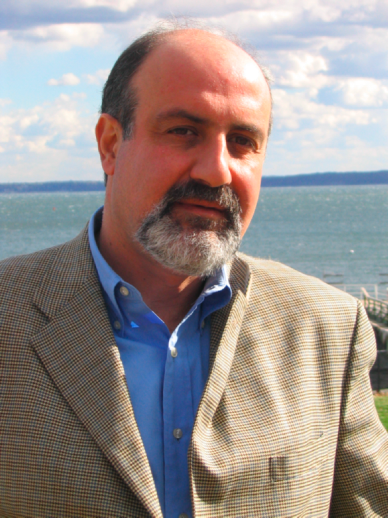
Nassim Nicholas Taleb – amerykański ekonomista, filozof i trader pochodzenia libańskiego. Magister nauk przyrodniczych i doktor zarządzania. W swoich pracach skupia się na zagadnieniach prawdopodobieństwa, przypadkowości i niepewności. Obecnie profesor Uniwersytetu Nowojorskiego .
Autor bestsellerów Czarny Łabędź. O skutkach nieprzewidywalnych zdarzeń oraz Antykruchość. O rzeczach, którym służą wstrząsy. Wikipedia
Nassim Nicholas Taleb książka Antifragile: Things That Gain from Disorder
Źródło: Antifragile: Things That Gain from Disorder (2012), p. 20
Nassim Nicholas Taleb książka The Bed of Procrustes: Philosophical and Practical Aphorisms
Źródło: The Bed of Procrustes: Philosophical and Practical Aphorisms (2010), p. 41
Źródło: The Black Swan: The Impact of the Highly Improbable (2007), p. 142
Nassim Nicholas Taleb książka Antifragile: Things That Gain from Disorder
Źródło: Antifragile: Things That Gain from Disorder (2012), p. 72
Nassim Nicholas Taleb książka The Bed of Procrustes: Philosophical and Practical Aphorisms
Źródło: The Bed of Procrustes: Philosophical and Practical Aphorisms (2010), p. 54
Nassim Nicholas Taleb książka The Bed of Procrustes: Philosophical and Practical Aphorisms
Źródło: The Bed of Procrustes: Philosophical and Practical Aphorisms (2010), p. 105
Źródło: The Black Swan: The Impact of the Highly Improbable (2007), p. 127
“The fool generalizes the particular; the nerd particularizes the general; … the wise does neither.”
Nassim Nicholas Taleb książka The Bed of Procrustes: Philosophical and Practical Aphorisms
Źródło: The Bed of Procrustes: Philosophical and Practical Aphorisms (2010), p. 53
Źródło: The Black Swan: The Impact of the Highly Improbable (2007), pp. 225-226
“A good maxim allows you to have the last word without even starting a conversation.”
Nassim Nicholas Taleb książka The Bed of Procrustes: Philosophical and Practical Aphorisms
Źródło: The Bed of Procrustes: Philosophical and Practical Aphorisms (2010), p. 45
Źródło: The Black Swan: The Impact of the Highly Improbable (2007), p. 162
“You can tell how uninteresting a person is by asking him whom he finds interesting.”
Nassim Nicholas Taleb książka The Bed of Procrustes: Philosophical and Practical Aphorisms
Źródło: The Bed of Procrustes: Philosophical and Practical Aphorisms (2010), p. 28
“Much of modern life is preventable chronic stress injury.”
Nassim Nicholas Taleb książka Antifragile: Things That Gain from Disorder
Źródło: Antifragile: Things That Gain from Disorder (2012), p. 64
“Greatness starts with the replacement of hatred with polite disdain.”
Nassim Nicholas Taleb książka The Bed of Procrustes: Philosophical and Practical Aphorisms
Źródło: The Bed of Procrustes: Philosophical and Practical Aphorisms (2010), p. 64
Nassim Nicholas Taleb książka Antifragile: Things That Gain from Disorder
Źródło: Antifragile: Things That Gain from Disorder (2012), p. 174
“It is all about redundancy. Nature likes to overinsure itself.”
Nassim Nicholas Taleb książka Antifragile: Things That Gain from Disorder
Źródło: Antifragile: Things That Gain from Disorder (2012), p. 44
“Procrastination is the soul rebelling against entrapment.”
Nassim Nicholas Taleb książka The Bed of Procrustes: Philosophical and Practical Aphorisms
Źródło: The Bed of Procrustes: Philosophical and Practical Aphorisms (2010), p. 8
“Social science means inventing a certain brand of human we can understand.”
Nassim Nicholas Taleb książka The Bed of Procrustes: Philosophical and Practical Aphorisms
Źródło: The Bed of Procrustes: Philosophical and Practical Aphorisms (2010), p. 95
“You have a real life if and only if you do not compete with anyone in any of your pursuits.”
Nassim Nicholas Taleb książka The Bed of Procrustes: Philosophical and Practical Aphorisms
Źródło: The Bed of Procrustes: Philosophical and Practical Aphorisms (2010), p. 39
Źródło: The Black Swan: The Impact of the Highly Improbable (2007), p. 149
Źródło: The Black Swan: The Impact of the Highly Improbable (2007), p. 192
“Don't cross a river if it is four feet deep on average.”
Źródło: The Black Swan: The Impact of the Highly Improbable (2007), p. 161
“Randomness works well in search—sometimes better than humans.”
Nassim Nicholas Taleb książka Antifragile: Things That Gain from Disorder
Źródło: Antifragile: Things That Gain from Disorder (2012), p. 103
“Intelligence consists in ignoring things that are irrelevant.”
Nassim Nicholas Taleb książka The Bed of Procrustes: Philosophical and Practical Aphorisms
Źródło: The Bed of Procrustes: Philosophical and Practical Aphorisms (2010), p. 78
“Rank beliefs not according to their plausibility but by the harm they may cause.”
Źródło: The Black Swan: The Impact of the Highly Improbable (2007), p. 203
“If humans fight the last war, nature fights the next one.”
Nassim Nicholas Taleb książka Antifragile: Things That Gain from Disorder
Źródło: Antifragile: Things That Gain from Disorder (2012), p. 46
Źródło: The Black Swan: The Impact of the Highly Improbable (2007), p. xxi
Nassim Nicholas Taleb książka The Bed of Procrustes: Philosophical and Practical Aphorisms
Źródło: The Bed of Procrustes: Philosophical and Practical Aphorisms (2010), p. 24
“Simplicity is not so simple to attain.”
Nassim Nicholas Taleb książka Antifragile: Things That Gain from Disorder
Źródło: Antifragile: Things That Gain from Disorder (2012), p. 11
Źródło: The Black Swan: The Impact of the Highly Improbable (2007), pp. 40–41 (Taleb attributes the parable of the turkey to Bertrand Russell, who originally wrote of a chicken.)