Ken Wilber cytaty
strona 2

Ken Wilber, właśc. Kenneth Earl Wilber Jr. − amerykański filozof, socjolog, psycholog, teoretyk systemów oraz pisarz. W swojej pracy zajmuje się również kulturą, duchowością i mistycyzmem. Jest twórcą integralnej teorii świadomości, propagatorem integralnej praktyki oraz założycielem "Instytutu Integralnego". Podobnie jak Stanislav Grof uważany jest za twórcę psychologii transpersonalnej. Autor systematycznie odmawia uczestnictwa w standardowej naukowej wymianie myśli i nie poddaje swoich prac procedurze krytyki . Wikipedia  

✵ 31. Styczeń 1949
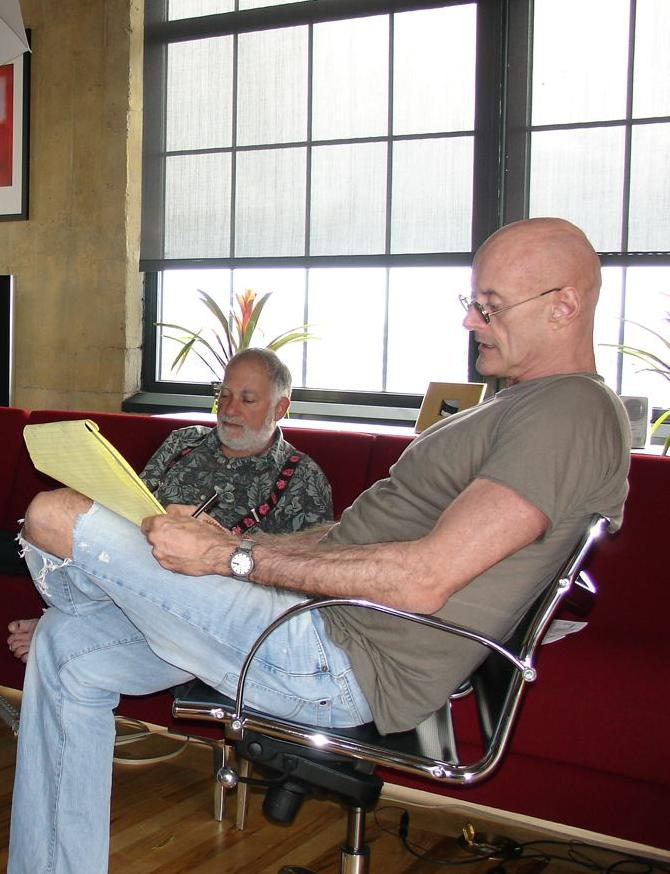
Ken Wilber Fotografia
Ken Wilber: 57 cytatów0 Polubień

Ken Wilber: Cytaty po angielsku

“An integral approach even makes room for those who did the disowning to you.”

Ken Wilber

Integral Spirituality in Real Life
Kontekst: What often happens if you study this integral map is that it begins to make room in your psyche, in your being, in your soul, for all the parts of you that were disowned, whether by society, your parents, your peers, whomever. An integral approach even makes room for those who did the disowning to you.

“If humanity is ever to cease its swarming hostilities and be united in one family, without squashing the significant and important differences among us, then something like an integral approach seems the only way. Until that time, religions will continue to brutally divide humanity, as they have throughout history, and not unite, as they must if they are to be a help, not a hindrance, to tomorrow's existence.”

Ken Wilber

Why Do Religions Teach Love and Yet Cause So Much War?
Kontekst: In my previous column I didn't spell out, or really indicate what an "integral approach" to spirituality would include. Many readers naturally assumed that this was simply another version of "universalism" — the belief that there are certain truths contained in all the world's religions. But the integral approach emphatically does not make that suggestion. Other readers maintained that I was offering a version of the "perennial philosophy" espoused by Aldous Huxley or Huston Smith. Does the integral approach believe that all religions are saying essentially the same thing from a different perspective? No, almost the opposite.
Yet the integral approach does claim to be able to "unite," in some sense, the world's great spiritual traditions, which is what has caused much of the interest in this approach. If humanity is ever to cease its swarming hostilities and be united in one family, without squashing the significant and important differences among us, then something like an integral approach seems the only way. Until that time, religions will continue to brutally divide humanity, as they have throughout history, and not unite, as they must if they are to be a help, not a hindrance, to tomorrow's existence.

“Science is clearly one of the most profound methods that humans have yet devised for discovering truth, while religion remains the single greatest force for generating meaning”

Ken Wilber

The Marriage of Sense and Soul (1998)
Kontekst: There is arguably no more important and pressing topic than the relation of science and religion in the modern world. Science is clearly one of the most profound methods that humans have yet devised for discovering truth, while religion remains the single greatest force for generating meaning. Truth and meaning, science and religion; but we still cannot figure out how to get the two of them together in a fashion that both find acceptable.

“I have one major rule: Everybody is right. More specifically, everybody — including me — has some important pieces of truth, and all of those pieces need to be honored, cherished, and included in a more gracious, spacious, and compassionate embrace.”

Ken Wilber

Introduction, Collected Works of Ken Wilber, vol. VIII (2000) http://wilber.shambhala.com/html/books/cowokev8_intro.cfm/ <br class="br">Kontekst: The real intent of my writing is not to say, you must think in this way. The real intent is: here are some of the many important facets of this extraordinary Kosmos; have you thought about including them in your own worldview? My work is an attempt to make room in the Kosmos for all of the dimensions, levels, domains, waves, memes, modes, individuals, cultures, and so on ad infinitum. I have one major rule: Everybody is right. More specifically, everybody — including me — has some important pieces of truth, and all of those pieces need to be honored, cherished, and included in a more gracious, spacious, and compassionate embrace. To Freudians I say, Have you looked at Buddhism? To Buddhists I say, Have you studied Freud? To liberals I say, Have you thought about how important some conservative ideas are? To conservatives I say, Can you perhaps include a more liberal perspective? And so on, and so on, and so on... At no point I have ever said: Freud is wrong, Buddha is wrong, liberals are wrong, conservatives are wrong. I have only suggested that they are true but partial. My critical writings have never attacked the central beliefs of any discipline, only the claims that the particular discipline has the only truth — and on those grounds I have often been harsh. But every approach, I honestly believe, is essentially true but partial, true but partial, true but partial.<br>And on my own tombstone, I dearly hope that someday they will write: He was true but partial...
“The truth will not necessarily set you free, but truthfulness will.”

Ken Wilber

Źródło: A Brief History of Everything

“Anybody can they say they are being "spiritual"”

Ken Wilber

and they are, because everybody has some type and level of concern. Let us therefore see their actual conception, in thought and action, and see how many perspectives it is in fact concerned with, and how many perspectives it actually takes into account, and how many perspectives it attempts to integrate, and thus let us see how deep and how wide runs that bodhisattva vow to refuse rest until all perspectives whatsoever are liberated into their own primordial nature.
The Eye of Spirit : An Integral Vision for a World Gone Slightly Mad (1997)

Podobni autorzy

Zygmunt Bauman Fotografia
Zygmunt Bauman58
polski socjolog, filozof, eseista None
Umberto Eco Fotografia
Umberto Eco74
włoski filozof i pisarz None
Ayn Rand Fotografia
Ayn Rand57
amerykańska pisarka pochodzenia rosyjskiego, filozof None
Henri Bergson Fotografia
Henri Bergson25
francuski filozof, noblista None
Ezra Pound Fotografia
Ezra Pound10
poeta amerykański None
Erich Fromm Fotografia
Erich Fromm66
amerykański filozof, psycholog i psychoanalityk None
Hannah Arendt Fotografia
Hannah Arendt16
amerykańska teoretyk polityki, filozof i publicystka None
Morihei Ueshiba Fotografia
Morihei Ueshiba11
japoński twórca aikido None
Albert Einstein Fotografia
Albert Einstein166
fizyk niemiecki, noblista None
Ludwig Wittgenstein Fotografia
Ludwig Wittgenstein29
filozof austriacki None